Bush Dog
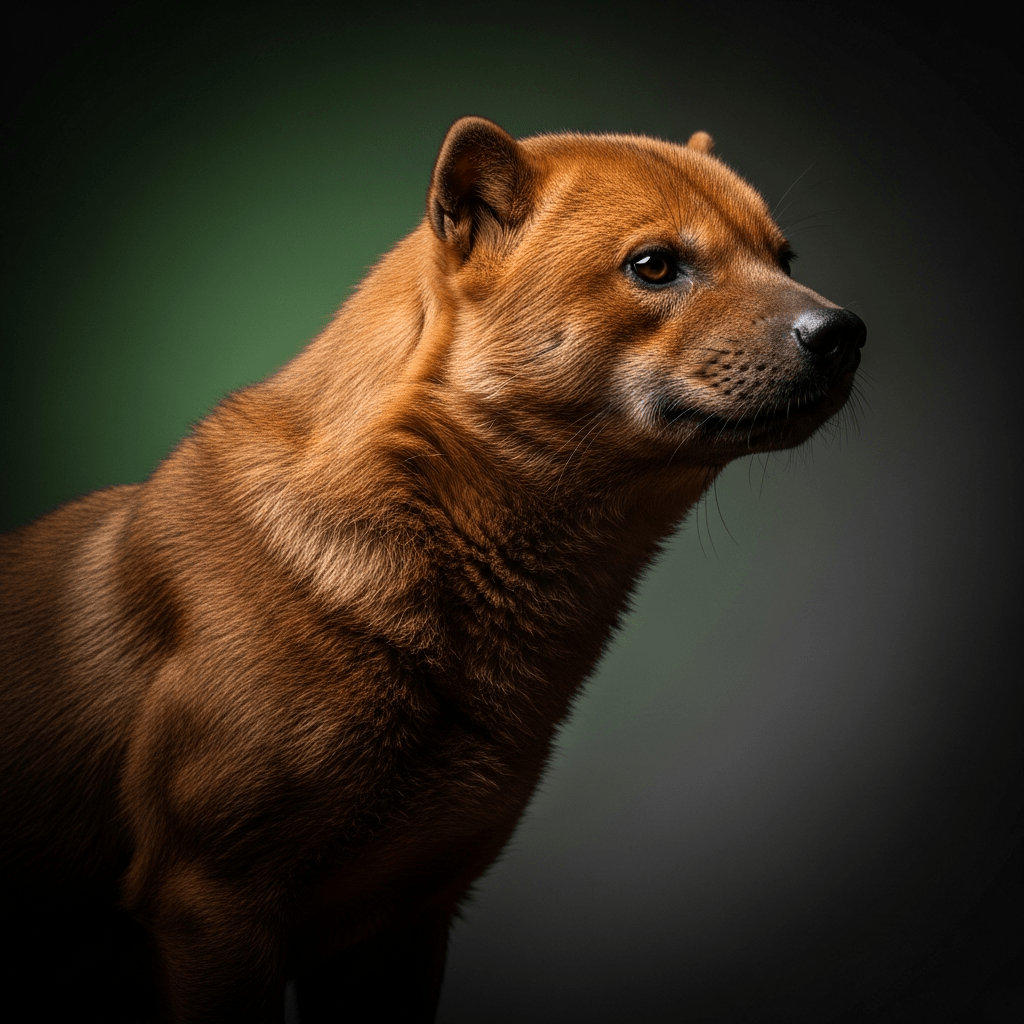
The Bush Dog (Speothos venaticus) is a small, elusive wild canine of Central and South America, renowned for its pack-hunting prowess and semi-aquatic adaptations.
The Bush Dog (Speothos venaticus) is a small, elusive wild canine of Central and South America, renowned for its pack-hunting prowess and semi-aquatic adaptations.
First scientifically described in 1842 by Lund from Brazilian specimens, the Bush Dog’s lineage is a distinct branch within the dog family. Unlike most canids, it has no recognized subspecies or domesticated variants. Genetic studies reveal its closest relatives are other South American canids, such as the maned wolf, marking it as a unique evolutionary offshoot adapted to the continent’s humid forests and wetlands.
The Bush Dog belongs to the family Canidae, under the genus Speothos and species Speothos venaticus. This places it among the diverse canid family, which includes wolves, foxes, and domestic dogs. However, its genus is monotypic—containing only the Bush Dog—highlighting its singular place within canid diversity and its evolutionary divergence from other South American wild dogs.
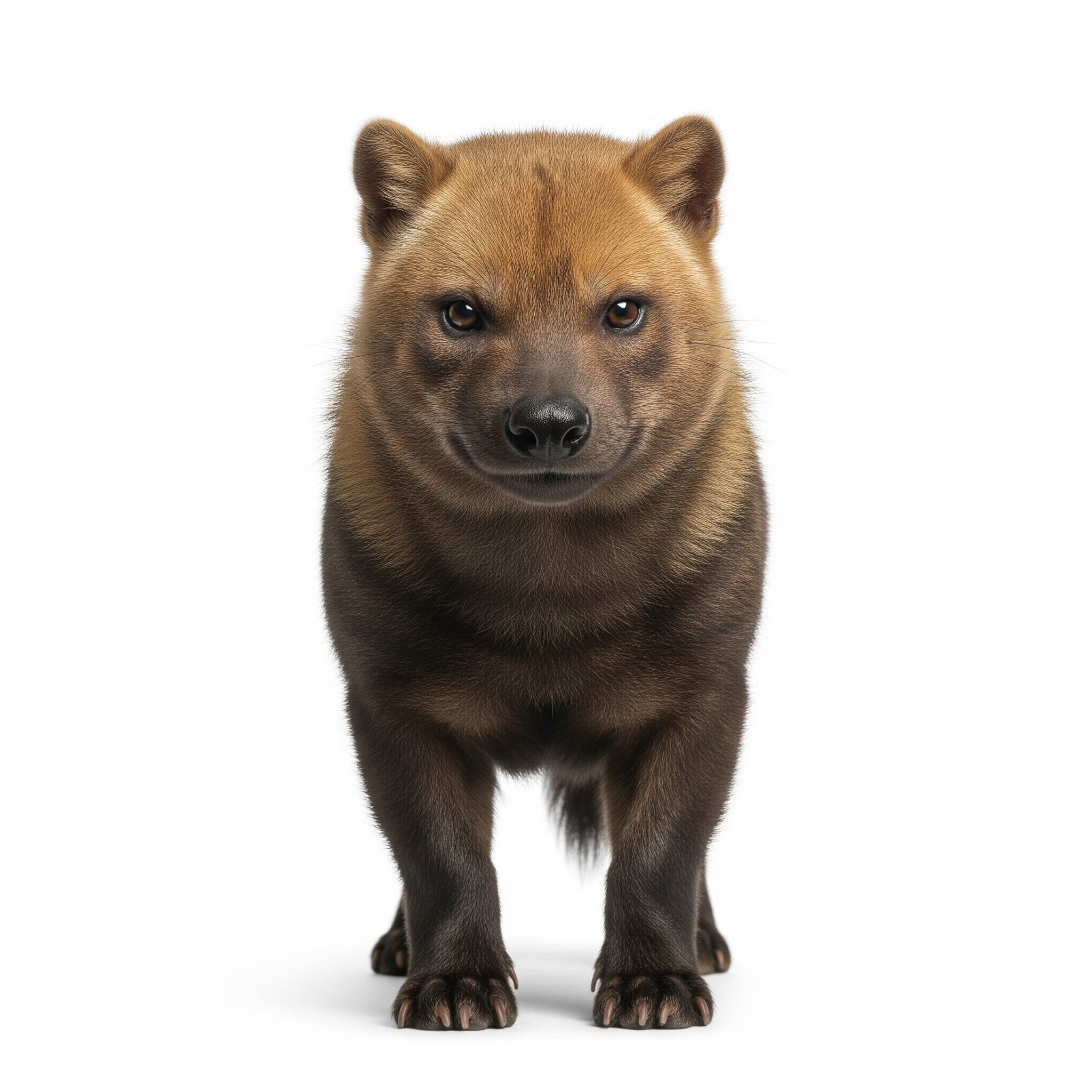
Compact and low-slung, Bush Dogs measure 57–75 cm in body length and weigh 5–8 kg. Their dense, soft fur ranges from reddish-brown to dark brown, with paler underparts and a short, bushy tail. Short, robust limbs and partially webbed feet make them adept swimmers and diggers. Their overall form evokes a blend of otter-like agility and canine sturdiness, well-suited to navigating flooded forests and tangled undergrowth.
Bush Dogs are highly social, forming packs of up to 12 individuals. They hunt cooperatively, often targeting rodents and small mammals, but can bring down larger prey through teamwork. Their semi-aquatic lifestyle is supported by webbed feet and a fondness for wet habitats. Unlike domestic dogs, Bush Dogs have no role in agriculture or companionship; their ecological function is as mesopredators, regulating prey populations and maintaining forest health.
Bring this kind into your world � illustrated posters, mugs, and shirts.
Archival print, museum-grade paper
Buy Poster
Stoneware mug, dishwasher safe
Buy Mug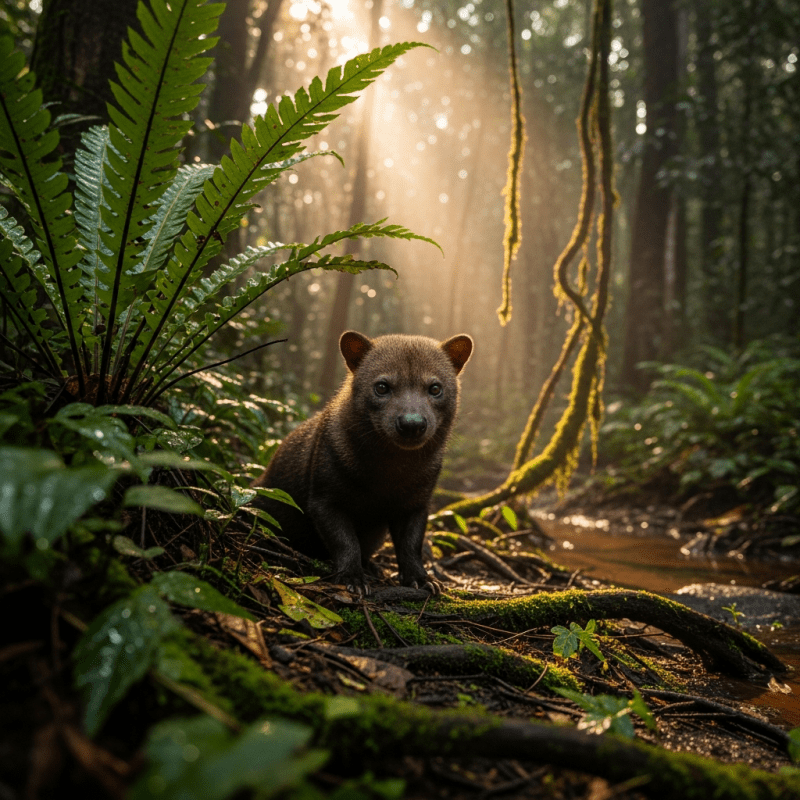
Soft cotton tee, unisex sizes
Buy ShirtWhile not prominent in global folklore, the Bush Dog is a symbol of South American wilderness and biodiversity. Regional names like "vinegar dog" and "zorro vinagre" reflect local recognition, often tied to their musky scent. In conservation circles, they represent the enigmatic and fragile nature of tropical forest ecosystems, inspiring efforts to protect lesser-known species.
Unlike domestic dogs, Bush Dogs have never been domesticated. Their evolutionary path diverged early from other canids, with genetic studies linking them to the maned wolf and other South American species. The broader story of canine domestication centers on the transformation of wolves into companion animals, while Bush Dogs remain strictly wild, shaped by natural selection for life in humid forests and wetlands.

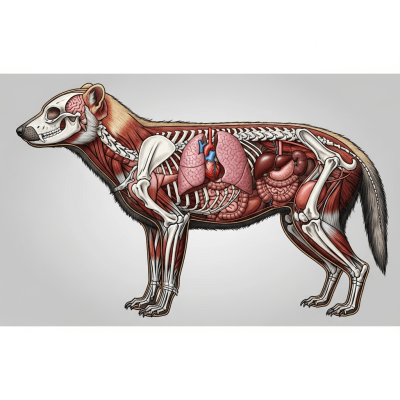
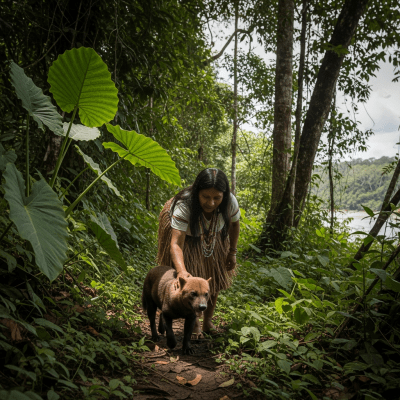


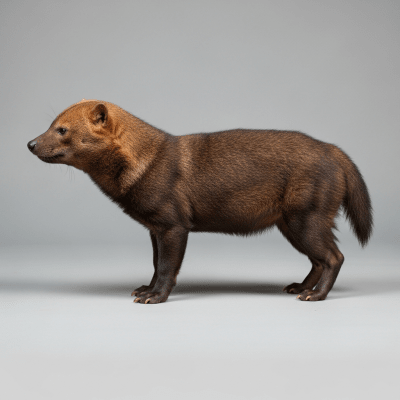
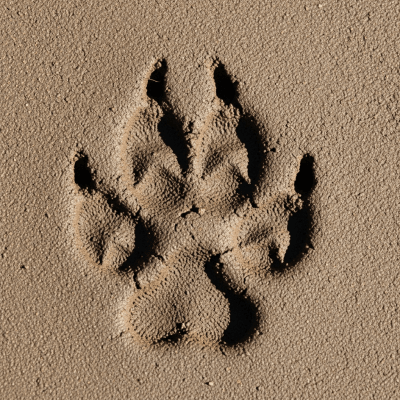
Bush Dogs exemplify the traits of wild canines: elusive, self-sufficient, and highly adapted to their environment. In contrast to domestic dogs, which have been bred for companionship and utility, Bush Dogs rely on pack cooperation and specialized physical traits for survival. Their lack of domestication means they have retained behaviors and forms suited to the challenges of the wild, such as hunting in teams and thriving in aquatic landscapes.
The Bush Dog is the sole member of its genus (Speothos), with no recognized subspecies or breeds. This sets it apart from other canines, such as domestic dogs, which encompass hundreds of breeds, and foxes or wolves, which have multiple species and subspecies. Its uniqueness lies in its adaptation to South American forests and its evolutionary separation from other canids.
As an apex mesopredator, the Bush Dog plays a vital role in regulating populations of small and medium-sized mammals within its ecosystem. Its cooperative hunting strategies allow it to impact prey populations more effectively than solitary predators. By maintaining balance among prey species, Bush Dogs contribute to the health and diversity of tropical forests and wetlands.
Bush Dogs face threats from habitat fragmentation, disease, and human encroachment. Their welfare in the wild depends on the preservation of large, undisturbed forested areas. In captivity, they are rare and managed primarily for conservation, with little data available on specific health issues. Like many wild canines, they are susceptible to diseases transmitted by domestic dogs and environmental stressors.
Unlike domestic dogs or wolves, Bush Dogs have not entered popular culture through individual fame. Their rarity and elusive nature mean that notable individuals are typically known only within scientific or conservation circles, such as those observed in pioneering field studies or featured in conservation breeding programs.
The Bush Dog is listed as Near Threatened by the IUCN Red List, with populations declining due to habitat loss, fragmentation, and disease. Conservation efforts focus on protecting forest habitats, monitoring populations, and mitigating threats from human activity. Their elusive nature makes population assessments challenging, but their status highlights the need for ongoing protection of South America’s wild canids.
Bush Dogs are found from Panama through northern South America to central Brazil, Paraguay, and Bolivia. While some authorities have proposed regional variants, these distinctions are not widely accepted, and no subspecies are formally recognized. Local names and cultural associations vary, reflecting the species’ presence across diverse habitats and languages.