Sycamore
Sycamore is the common name for several large, deciduous trees in the genus Platanus, renowned for their impressive stature, mottled bark, and broad, maple-like leaves.
Sycamore is the common name for several large, deciduous trees in the genus Platanus, renowned for their impressive stature, mottled bark, and broad, maple-like leaves.
The sycamore’s roots trace across the Northern Hemisphere, with species native to North America, Europe, and Asia. Platanus occidentalis (American sycamore) was first described in 1753 by Carl Linnaeus, while the London plane (Platanus × acerifolia) emerged in England in the 17th century as a spontaneous hybrid between the Oriental plane and American sycamore. This hybridization was not the result of a deliberate breeding program, but rather a natural crossing that has since become a staple of urban landscapes.
Sycamores belong to the family Platanaceae and the genus Platanus, within the order Proteales. They are classified as angiosperms (flowering plants), and their distinctive features set them apart from other tree groups. While the name "sycamore" is sometimes used for unrelated species in different regions, true sycamores are those within Platanus.
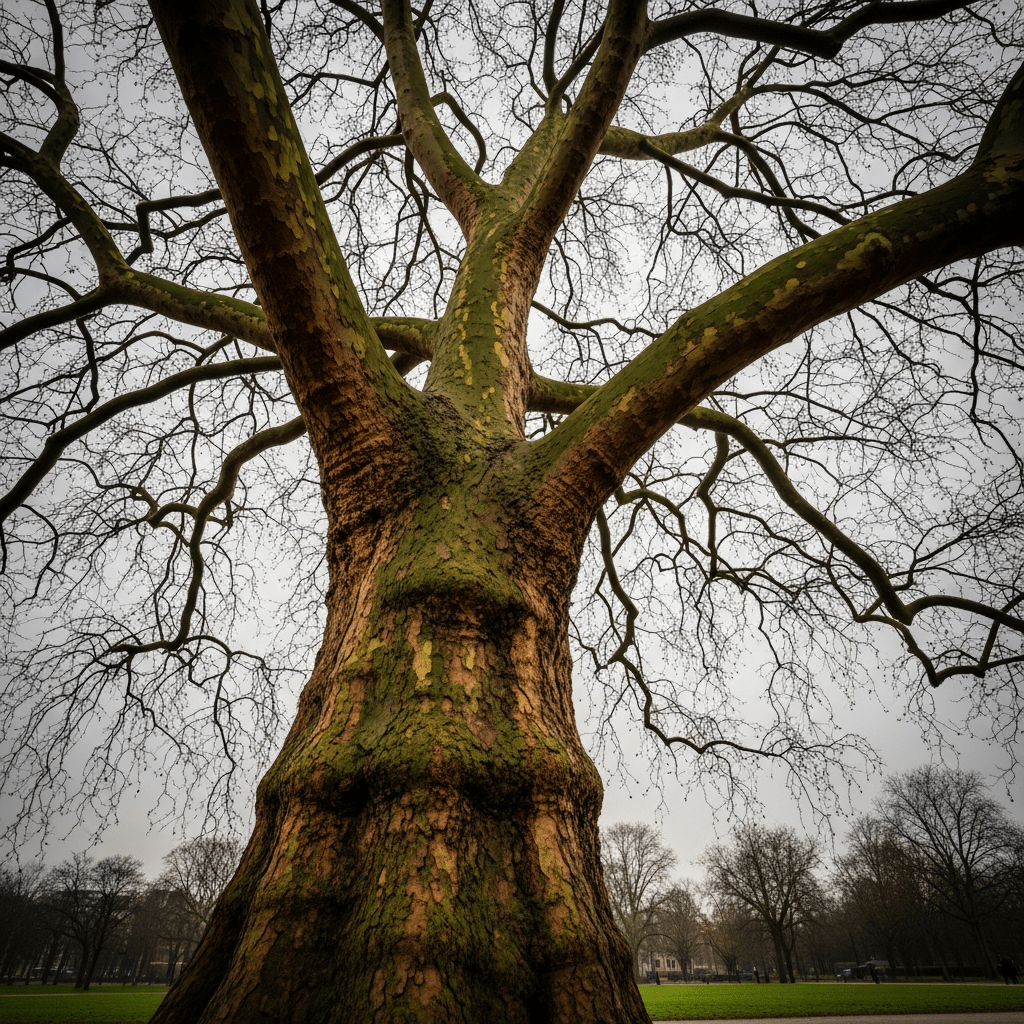
Sycamore trees are striking for their massive size, often reaching heights of 30–40 meters (100–130 feet) and trunk diameters exceeding 1.5 meters (5 feet). Their bark peels away in irregular patches, revealing a mottled mosaic of white, gray, and green. The large, palmately lobed leaves resemble those of maples and can span up to 25 cm (10 inches) across. In spring, inconspicuous flowers appear, followed by spherical clusters of achenes that persist into winter, adding texture to bare branches.
Sycamores are widely planted in cities and parks for their robust shade and ornamental value. Their tolerance for urban pollution, compacted soils, and periodic flooding makes them ideal for challenging environments. The trees are also used for erosion control along riverbanks and in riparian restoration projects. Their wood, known as "lacewood," finds use in furniture, veneer, and specialty woodwork, though it is less favored for structural purposes due to its tendency to warp.
Bring this kind into your world � illustrated posters, mugs, and shirts.

Archival print, museum-grade paper
Buy Poster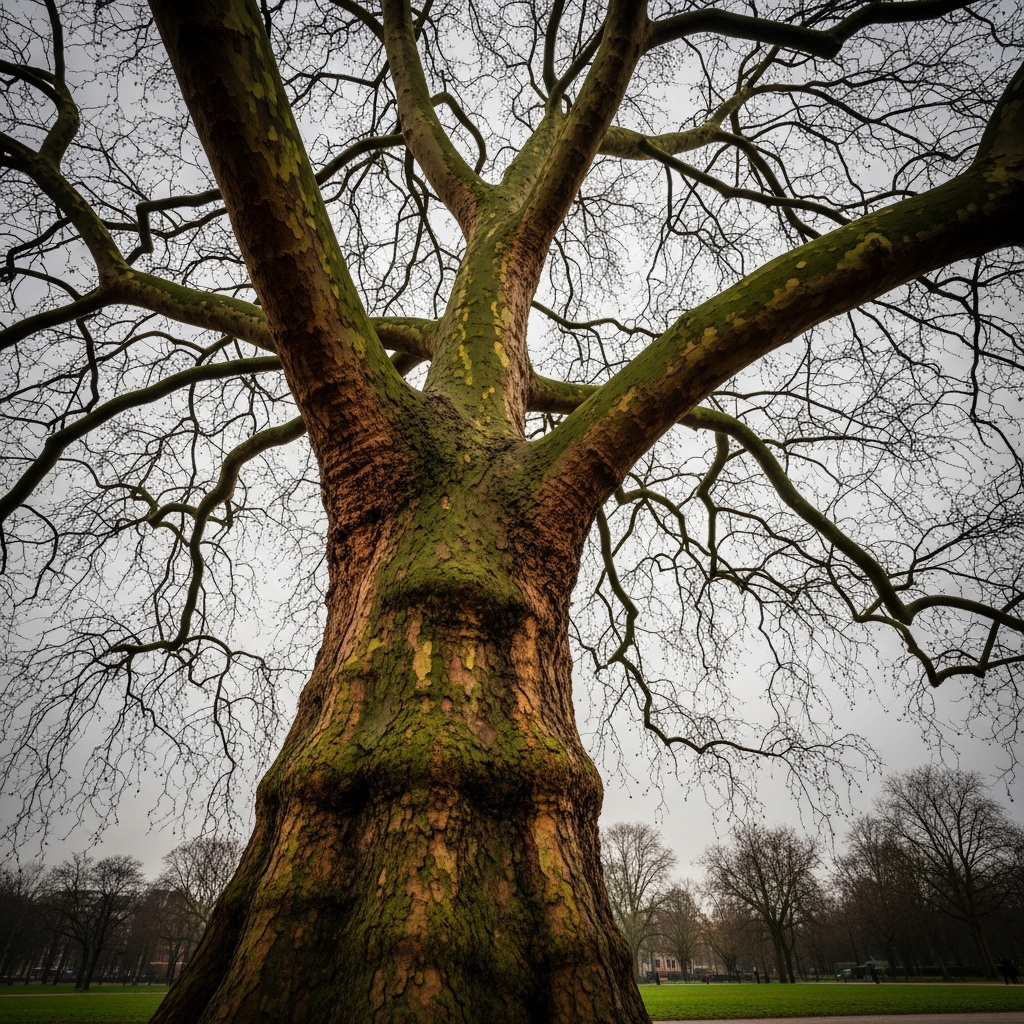
Stoneware mug, dishwasher safe
Buy Mug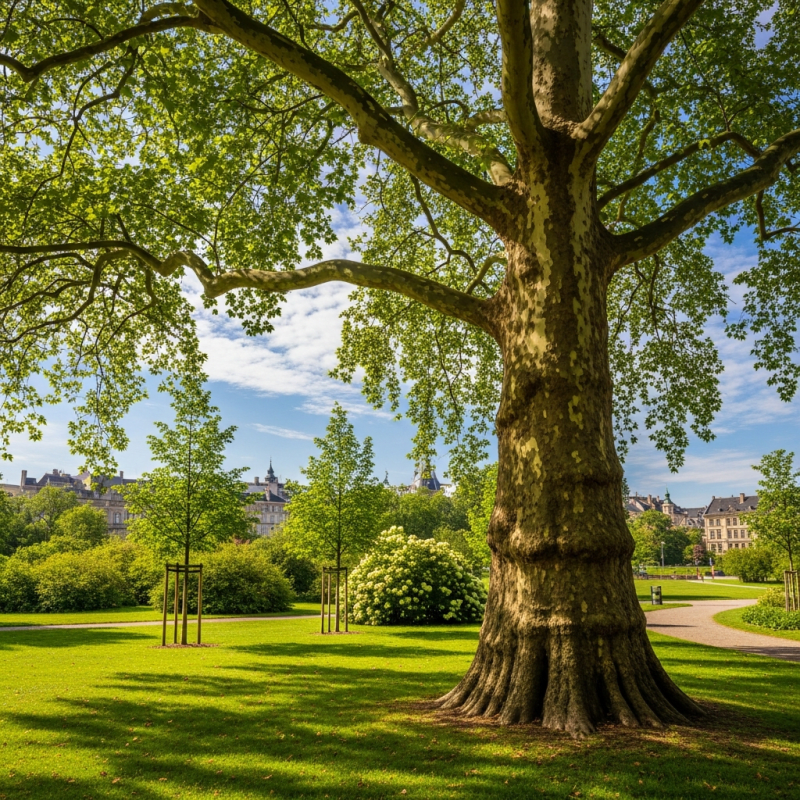
Soft cotton tee, unisex sizes
Buy ShirtSycamores have long served as iconic landmarks in towns and cities, often lining boulevards and framing public squares. Their impressive presence and longevity make them symbols of endurance and stability. In literature and art, sycamores are frequently depicted as sheltering trees, and their distinctive bark and leaves have inspired countless artists and naturalists. The London plane, in particular, has become synonymous with urban greenery in Europe and beyond.
Sycamores play a vital role in riparian and urban ecosystems. Their extensive root systems stabilize soil and prevent erosion along waterways. The trees provide shelter and nesting sites for birds and small mammals, while their persistent fruit clusters offer winter food for wildlife. In cities, sycamores help filter air, reduce heat, and support biodiversity amidst built environments.
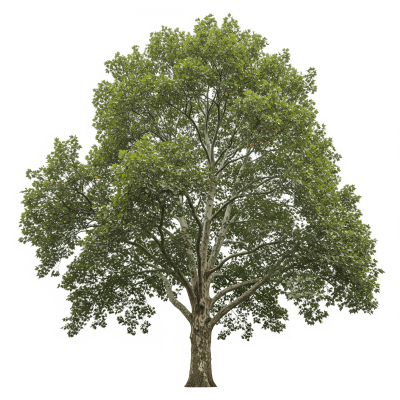
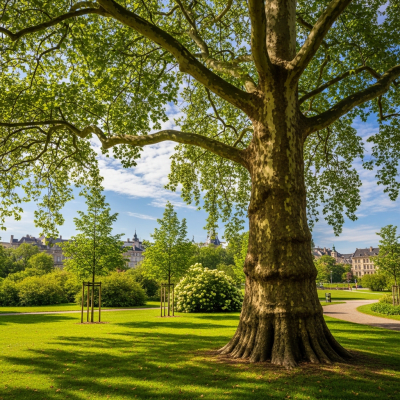
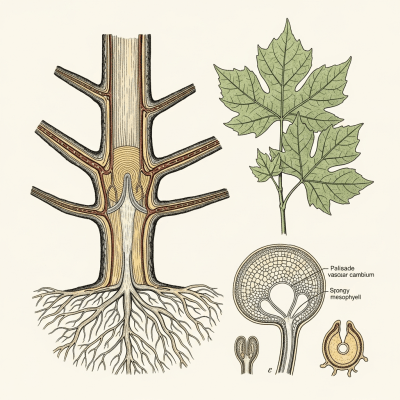
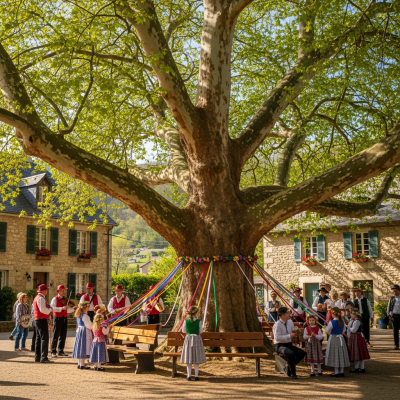
Sycamore trees are found across temperate regions of the Northern Hemisphere. American sycamore thrives along rivers and floodplains in eastern North America, while Oriental plane is native to southeastern Europe and western Asia. London plane, the hybrid, is cultivated globally, especially in urban landscapes. Sycamores prefer moist, well-drained soils but are adaptable to a range of conditions, including city streets and parks.
Sycamores are best planted in spacious sites with full sun and access to deep, fertile soil. They tolerate urban stressors such as pollution and compacted ground, but regular watering during establishment ensures healthy growth. Prune young trees to encourage strong branching and remove diseased wood as needed. Watch for anthracnose disease in wet springs, which can cause leaf drop; selecting resistant cultivars and maintaining good air circulation helps minimize risk.
Major threats to sycamores include anthracnose disease, which can defoliate trees during wet, cool springs, and various insect pests. Urban stress and habitat loss also pose challenges. While sycamores are not currently endangered, ongoing monitoring and planting disease-resistant varieties support their continued health in both wild and urban environments.
Sycamore wood, known as "lacewood," is prized for its decorative flecked grain, making it popular in furniture, veneer, and specialty woodwork. The trees themselves are valued for shade, ornamental beauty, and as urban landscape staples. Sycamores also contribute to erosion control along waterways and are used in ecological restoration projects. Unlike some trees, sycamores are not cultivated for food, as their seeds are not edible.
Sycamores often symbolize strength, protection, and longevity, owing to their massive size and centuries-old lifespans. In many cultures, they are seen as sheltering trees, providing shade and refuge. The London plane, in particular, is emblematic of urban resilience, thriving in city environments where few other trees endure. Stories and art frequently celebrate the sycamore’s distinctive bark and stately presence.