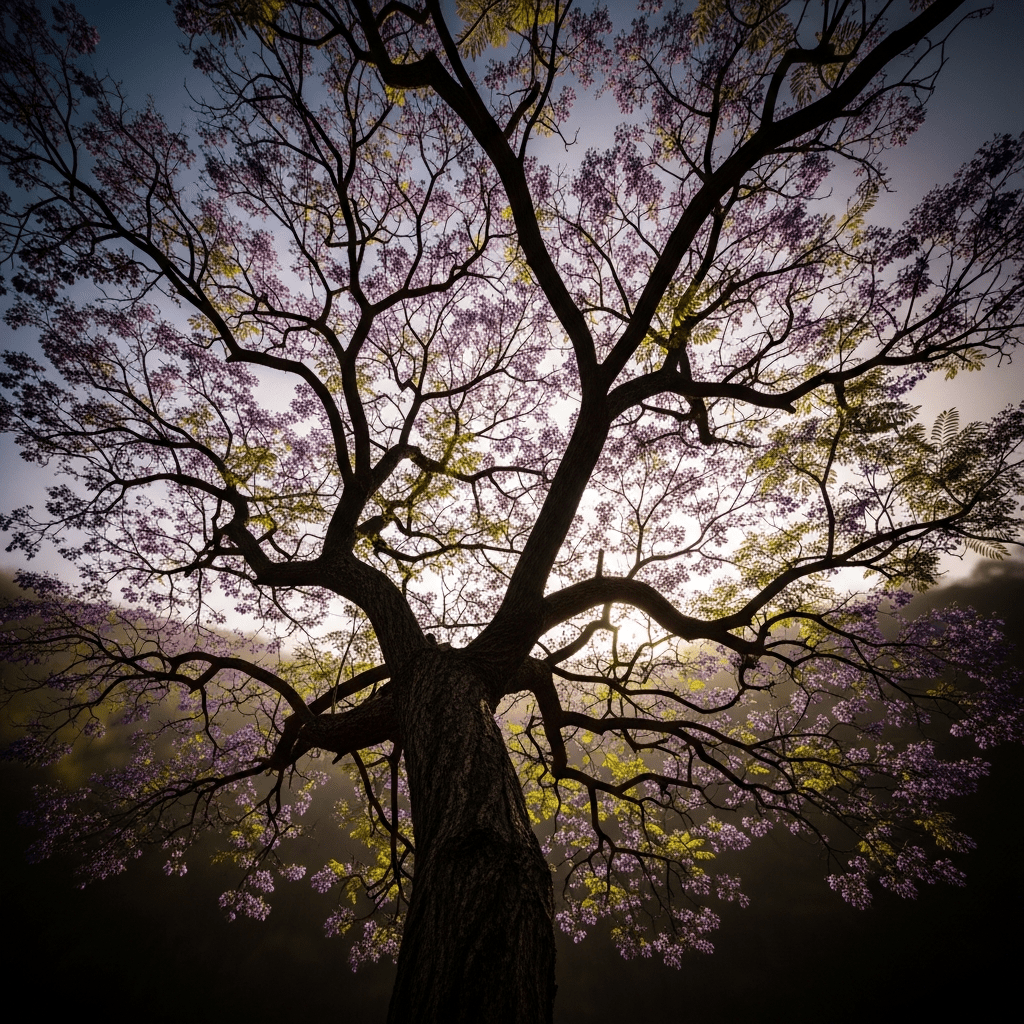
Jacaranda mimosifolia
Jacaranda mimosifolia is a visually stunning tree celebrated for its vibrant violet-blue blossoms and graceful, fern-like foliage, making it a beloved ornamental species in warm climates worldwide.
Jacaranda mimosifolia is a visually stunning tree celebrated for its vibrant violet-blue blossoms and graceful, fern-like foliage, making it a beloved ornamental species in warm climates worldwide.
Native to southern Bolivia and northwestern Argentina, Jacaranda mimosifolia was first described in 1822 by botanist David Don. Its journey from wild South American forests to global fame began with horticultural introductions, as gardeners and botanical institutions recognized its spectacular flowering and adapted it for urban landscapes across subtropical and tropical regions. Unlike cultivars or hybrids, Jacaranda mimosifolia is a naturally occurring species, with no single breeder or institution credited for its spread.
Jacaranda mimosifolia belongs to the family Bignoniaceae, a group known for showy, trumpet-shaped flowers. Within botanical taxonomy, it is classified as follows: Kingdom: Plantae; Division: Magnoliophyta; Class: Magnoliopsida; Order: Lamiales; Genus: Jacaranda; Species: Jacaranda mimosifolia. Its relatives include other ornamental and flowering trees, but Jacaranda stands out for its unique floral displays and widespread popularity.
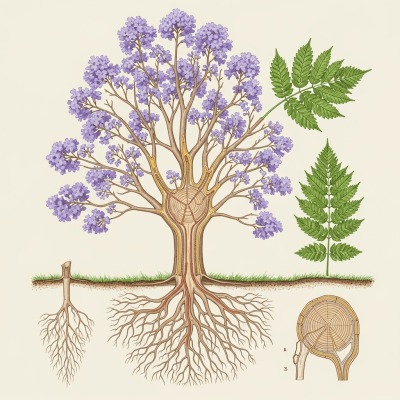
Jacaranda mimosifolia is a medium to large tree, reaching 10–20 meters in height, with a broad, spreading canopy that casts dappled shade. Its trunk is singular and sturdy, covered in thin, gray-brown bark that becomes scaly with age. The leaves are bipinnately compound, bright green, and delicate—resembling ferns and adding a soft texture to the tree's silhouette. In late spring to early summer, the tree erupts in masses of violet-blue, trumpet-shaped flowers clustered in large panicles, creating a breathtaking "purple rain" effect. After flowering, it produces dry, woody capsules filled with winged seeds.
Jacaranda mimosifolia thrives in full sun and well-drained soils, showing moderate drought tolerance once established. It sheds leaves in response to drought or cold, adapting to seasonal changes. The tree is primarily planted for ornamental purposes, gracing streets, parks, and gardens with its vivid blooms and providing shade in urban environments. Its wood is light and not commercially valuable, and it plays a minimal role in timber production. In some regions, the flowers are used in traditional medicine, though such uses are rare and not widely documented.
Bring this kind into your world � illustrated posters, mugs, and shirts.

Archival print, museum-grade paper
Buy Poster
Stoneware mug, dishwasher safe
Buy Mug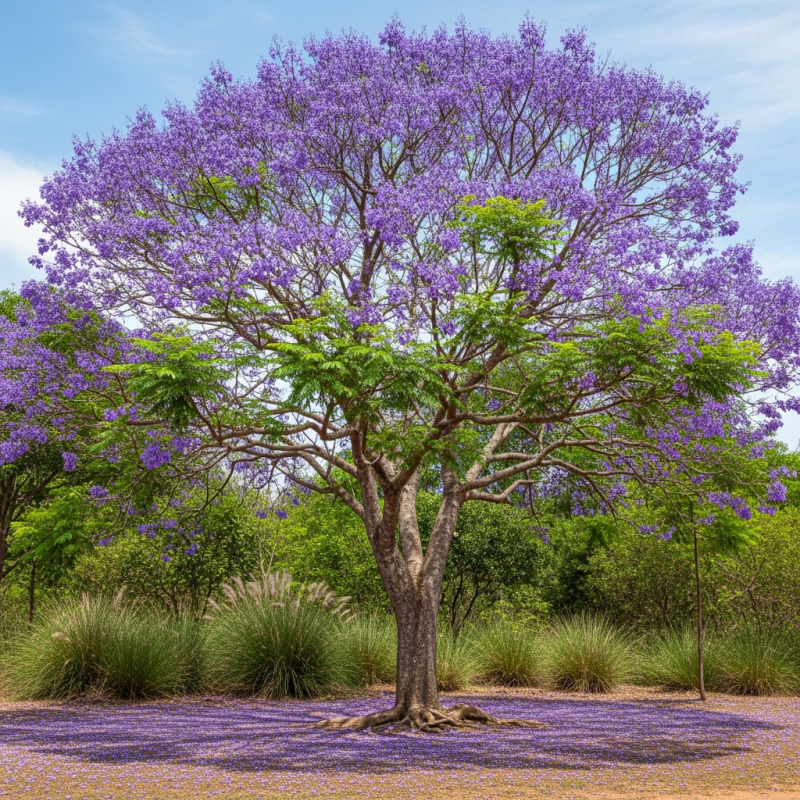
Soft cotton tee, unisex sizes
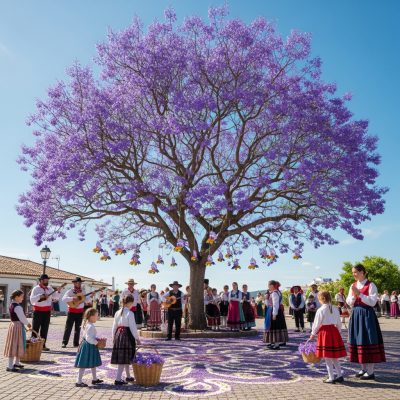
Buy ShirtJacaranda mimosifolia holds iconic status in cities like Pretoria, South Africa, and Los Angeles, USA, where mass plantings transform urban landscapes into seas of purple each spring. These seasonal displays have inspired local traditions, festivals, and artistic representations, with the "purple rain" phenomenon marking the arrival of exams or seasonal change in some cultures. The tree's beauty has made it a symbol of renewal and aesthetic pleasure in public spaces around the world.
In its native range, Jacaranda mimosifolia contributes to local biodiversity by providing nectar for pollinators such as bees and butterflies. Its broad canopy offers shelter and shade for understory plants and urban wildlife. The tree's leaf litter and woody capsules enrich the soil, supporting nutrient cycling. While not a keystone species, its presence in urban landscapes enhances green cover and mitigates heat, benefiting both people and local ecosystems.
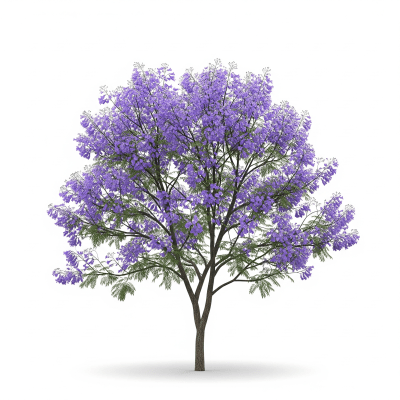

Jacaranda mimosifolia is native to southern Bolivia and northwestern Argentina, thriving in subtropical forests and open woodlands. Through horticultural introductions, it now flourishes in warm regions across the globe, including parts of Africa, Australia, North America, and southern Europe. The tree prefers sunny locations with well-drained soils and is commonly found lining city streets, parks, and gardens in climates free from severe frost.
For successful cultivation, plant Jacaranda mimosifolia in full sun and well-drained soil. Young trees require regular watering until established, after which they tolerate moderate drought. Avoid waterlogged conditions, as the tree is prone to root rot. Protect from frost, especially in cooler climates. Prune lightly to shape and remove dead branches, but avoid heavy pruning, which can reduce flowering. Propagation is typically by seed or softwood cuttings.
Jacaranda mimosifolia faces few major threats in cultivation, though it is susceptible to root rot in poorly drained soils and frost damage in colder climates. In its native habitat, habitat loss and environmental changes may pose risks, but the species is not currently listed as threatened. Conservation efforts focus on maintaining genetic diversity and preventing mislabeling in horticultural trade.
Jacaranda mimosifolia is prized for its ornamental qualities, beautifying urban landscapes and providing shade. Its wood is light and not commercially significant, limiting its role in timber production. There are no notable culinary uses. In some regions, the flowers are used in traditional medicine, though such practices are limited. The tree's greatest economic value lies in landscaping, tourism, and enhancing public spaces with its seasonal floral displays.
Jacaranda mimosifolia is often associated with renewal, beauty, and the arrival of spring. In cities like Pretoria, the blooming jacarandas signal exam season for students, spawning local legends about academic luck. The "purple rain" created by falling petals is celebrated in art and music, symbolizing ephemeral beauty and the changing of seasons. The tree's striking appearance has made it a subject of admiration and inspiration in folklore and popular culture.