
Hickory
Hickory is a group of deciduous hardwood trees in the genus Carya, renowned for their exceptionally strong wood and edible nuts, native to North America and parts of Asia.
Hickory is a group of deciduous hardwood trees in the genus Carya, renowned for their exceptionally strong wood and edible nuts, native to North America and parts of Asia.
The hickory lineage traces its roots primarily to eastern North America, with a few species extending into Mexico and Asia. First described by Linnaeus and Michaux in the late 18th century, the genus Carya encompasses about 17–19 species. Over centuries, hickories have become integral to temperate forests, with certain Asian species, such as Chinese hickory (Carya cathayensis), cultivated for their nuts.
Hickories belong to the family Juglandaceae, within the order Fagales. The genus Carya is classified under the class Magnoliopsida (dicotyledons), division Magnoliophyta (flowering plants), and kingdom Plantae. This places hickory among the true hardwoods, closely related to walnuts and other nut-bearing trees.
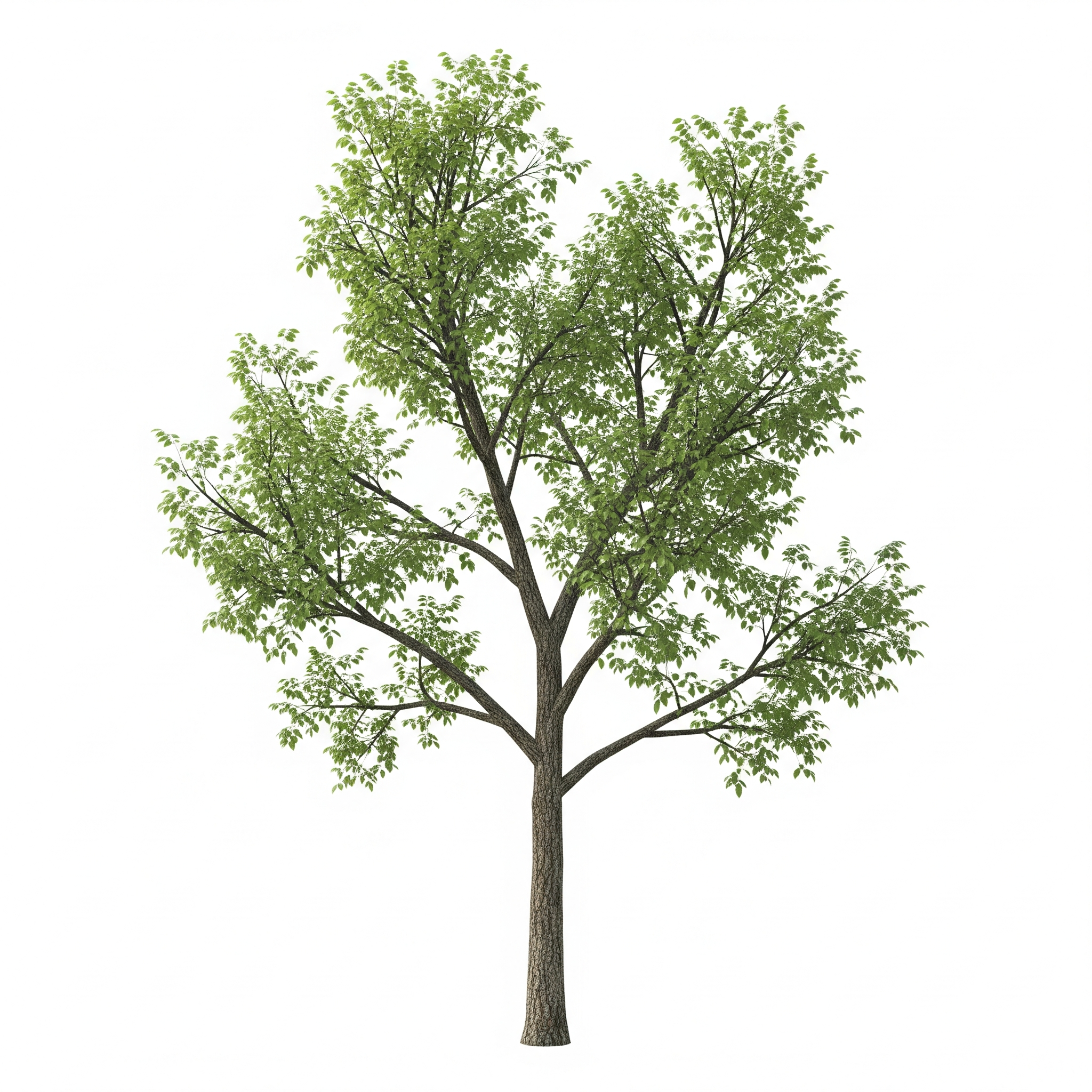
Hickory trees are medium to large, reaching heights of 20–40 meters (65–130 feet) with robust trunks up to 1 meter (3 feet) in diameter. Their leaves are pinnately compound, typically displaying 5–17 slender, pointed leaflets. Bark varies dramatically: shagbark hickory peels in long, loose strips, while other species show tight, ridged surfaces. In autumn, hickories produce hard-shelled nuts encased in four-segmented husks, and their flowers appear as dangling male catkins and upright female spikes.
Hickories play a vital role in forest ecosystems, providing food and habitat for wildlife. Their nuts feed birds, squirrels, and other mammals, while their sturdy wood supports a range of human uses—from tool handles and sporting goods to furniture and flooring. Hickory wood is also prized for imparting a distinctive smoky flavor to meats. Some species, such as pecan, are cultivated commercially for their nuts, while others are planted for shade or ornamental value.
Bring this kind into your world � illustrated posters, mugs, and shirts.
Archival print, museum-grade paper
Buy Poster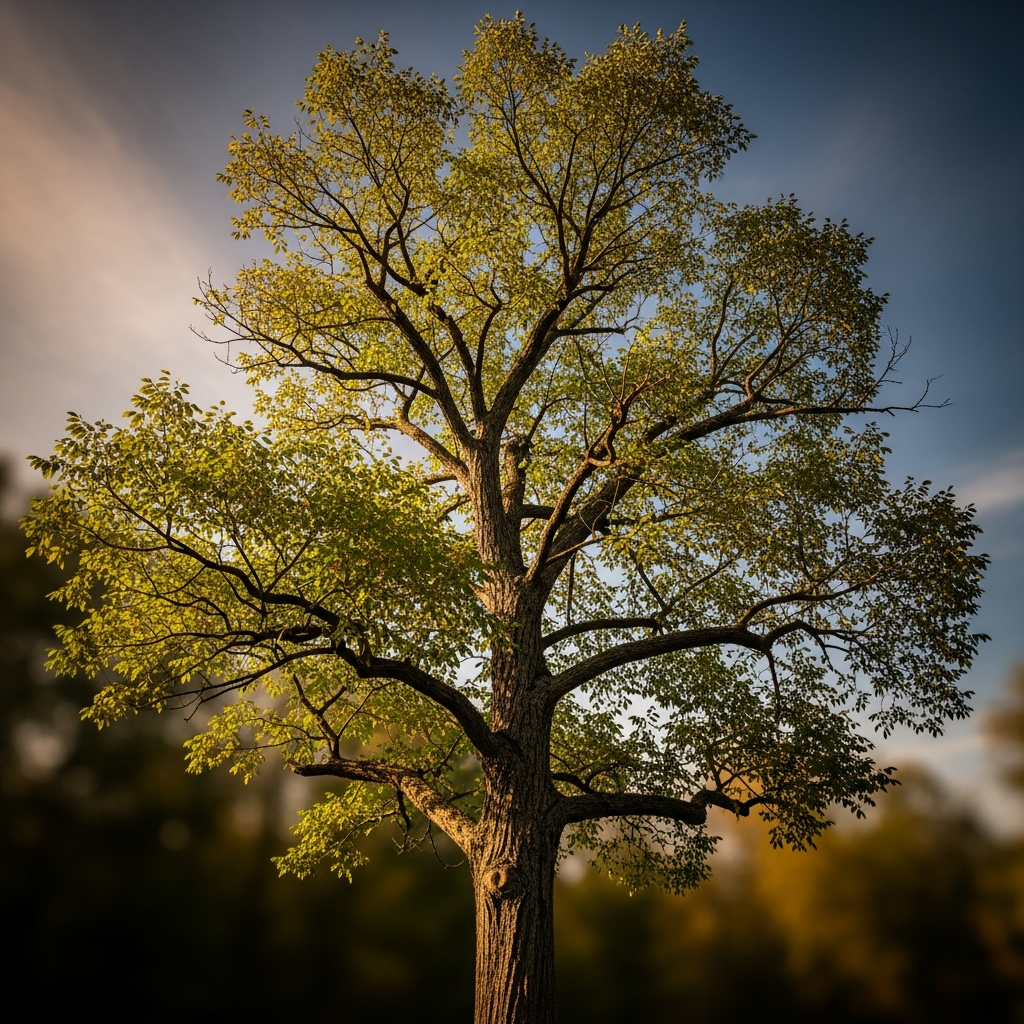
Stoneware mug, dishwasher safe
Buy Mug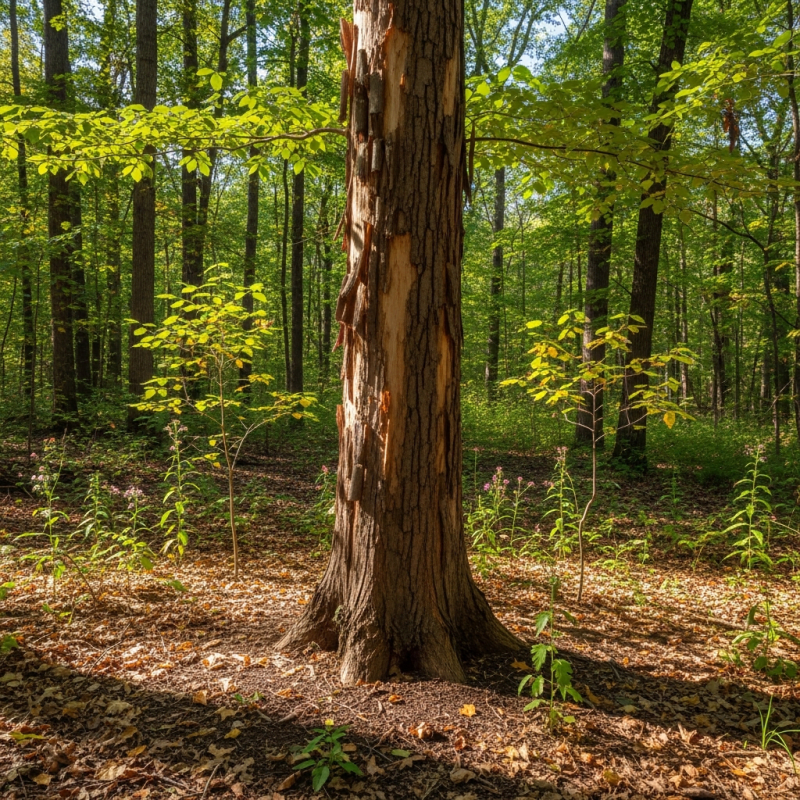
Soft cotton tee, unisex sizes
Buy ShirtHickory has long been celebrated in American folklore and tradition. Its wood, synonymous with toughness and resilience, is referenced in phrases like "hickory-tough" and was famously used in the nickname "Old Hickory" for President Andrew Jackson. Pecan pie, made from the nuts of Carya illinoinensis, is an iconic dish in Southern cuisine. The tree’s presence in rural landscapes and its use in traditional crafts underscore its enduring cultural resonance.
Hickory trees are keystone species in temperate forests, supporting diverse wildlife. Their nuts are a crucial food source for birds, squirrels, and other mammals. The trees provide nesting sites and shelter, while their deep roots help stabilize soil and maintain forest health. Hickories also contribute to nutrient cycling through leaf and nut drop, enriching forest soils.
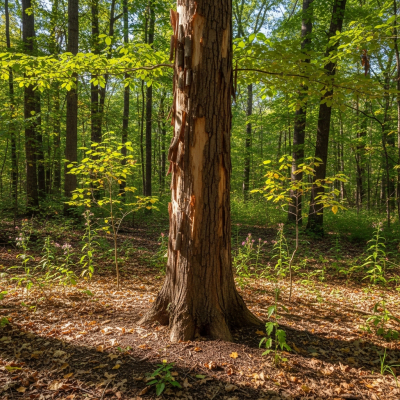


Hickories are predominantly found in eastern North America, from southern Canada through the United States and into Mexico. A few species, such as Chinese hickory, extend into Asia. They thrive in well-drained upland forests, floodplains, and mixed hardwood stands, preferring rich, fertile soils but showing tolerance for a range of conditions.
To cultivate hickory, select a site with well-drained soil and ample sunlight. Hickories are slow-growing and require patience, but reward with longevity and resilience. Young trees benefit from protection against pests like hickory bark beetle and diseases such as pecan scab. Regular mulching and minimal pruning help maintain healthy growth. Pecan trees, in particular, may need additional care for optimal nut production, including irrigation and disease management.
Major threats to hickory trees include insect pests such as the hickory bark beetle and diseases like pecan scab. Habitat loss and fragmentation also pose risks, especially for less common species. Conservation efforts focus on protecting native forests, monitoring pest populations, and preserving genetic diversity through seed banks and reforestation programs.
Hickory wood is highly valued for its hardness and shock resistance, making it ideal for tool handles, sporting equipment, furniture, and flooring. The nuts, especially pecans and shagbark hickory, are consumed fresh, used in baking, and processed into confections. Hickory wood is also favored for smoking meats, imparting a rich, aromatic flavor. Some species are grown ornamentally or for shade in parks and landscapes.
Hickory symbolizes strength and resilience in American folklore, with its tough wood inspiring the nickname "Old Hickory" for President Andrew Jackson. The tree is featured in regional stories, traditional crafts, and culinary heritage, most notably in Southern pecan pies. Its enduring presence in forests and homesteads makes it a symbol of steadfastness and natural abundance.