
Artocarpus altilis
Breadfruit (Artocarpus altilis) is a tropical tree celebrated for its large, starchy fruits, which are a vital staple food in Pacific and Caribbean cultures and a cornerstone of traditional agroforestry systems.
Breadfruit (Artocarpus altilis) is a tropical tree celebrated for its large, starchy fruits, which are a vital staple food in Pacific and Caribbean cultures and a cornerstone of traditional agroforestry systems.
Breadfruit originated in New Guinea, the Indo-Malay region, and the Philippines. Its domestication traces back thousands of years, when Austronesian voyagers spread the tree throughout Oceania, selecting for seedless fruit from its wild ancestor, breadnut (Artocarpus camansi). The species was first described scientifically in 1776, but its cultivation and importance predate written history, making breadfruit an ancient crop deeply entwined with the migrations and agricultural practices of Pacific peoples.
Breadfruit belongs to the genus Artocarpus within the family Moraceae, which also includes jackfruit and mulberry. It is classified as an angiosperm (flowering plant) in the order Rosales. Universally recognized as a tree by botanical authorities, breadfruit is distinguished from related species by its seedless, starchy fruit and broad, deeply lobed leaves.
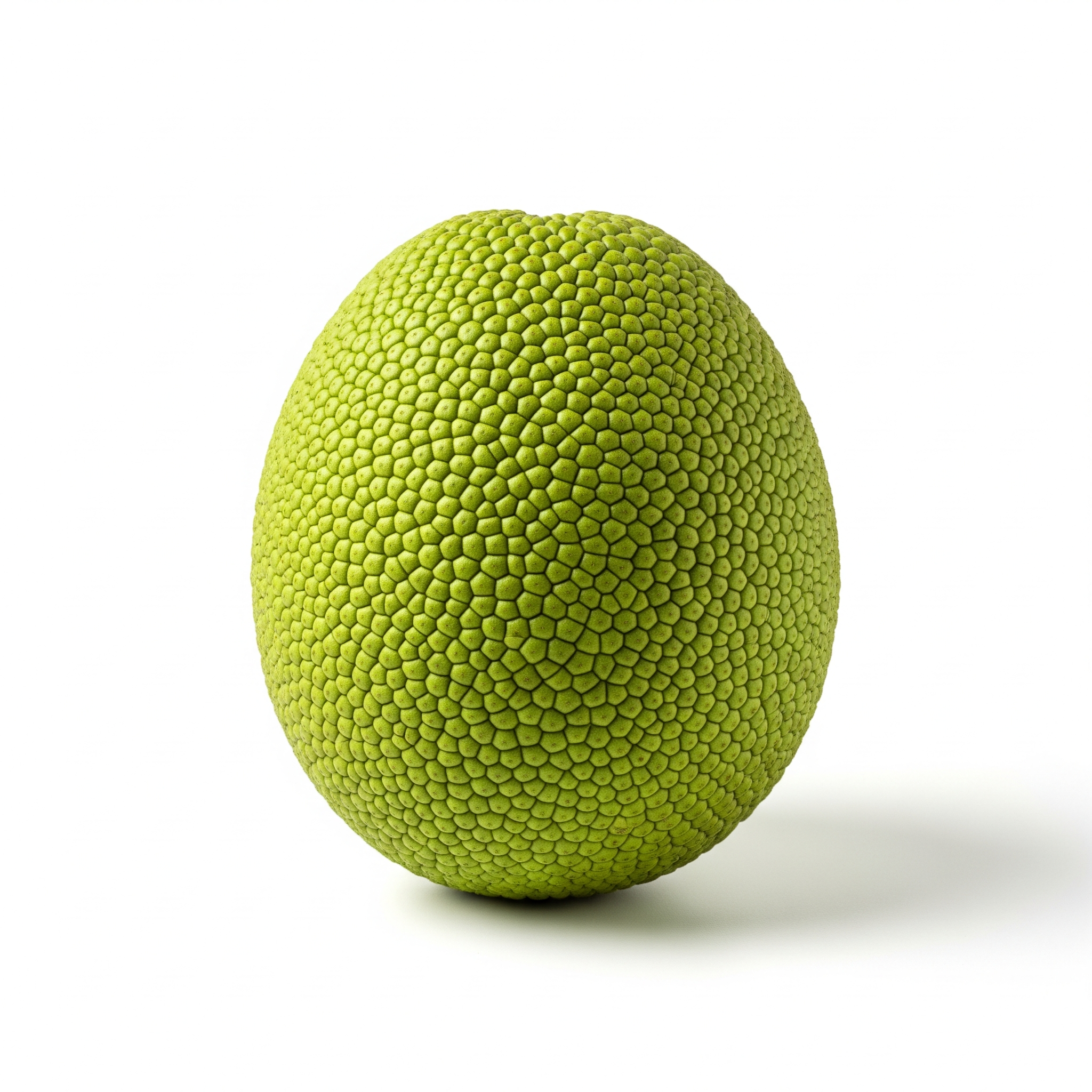
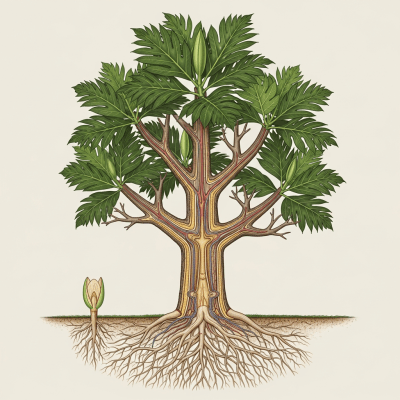
Breadfruit trees are imposing and graceful, typically reaching heights of 15–21 meters. Their straight trunks support a broad, rounded canopy of glossy, deeply pinnately lobed leaves up to 60 cm long. The fruit itself is compound, globular to oblong, weighing between 0.25 and 6 kg, with a green, spiny skin that turns yellowish when ripe. Most cultivated varieties are seedless, and the tree’s lush foliage and distinctive fruit make it a striking presence in tropical landscapes.
Breadfruit serves as a high-yielding food crop, producing 50–200 fruits per tree annually, and is central to food security in tropical regions. Its fruits are cooked in myriad ways—roasted, baked, boiled, fried, or milled into flour—and often substitute for potatoes or rice. Beyond food, breadfruit wood is valued for its lightness and termite resistance, used in canoe building and furniture. The latex is traditionally used as glue, and leaves are fed to livestock. The tree is also planted ornamentally and for shade.
Bring this kind into your world � illustrated posters, mugs, and shirts.
Archival print, museum-grade paper
Buy Poster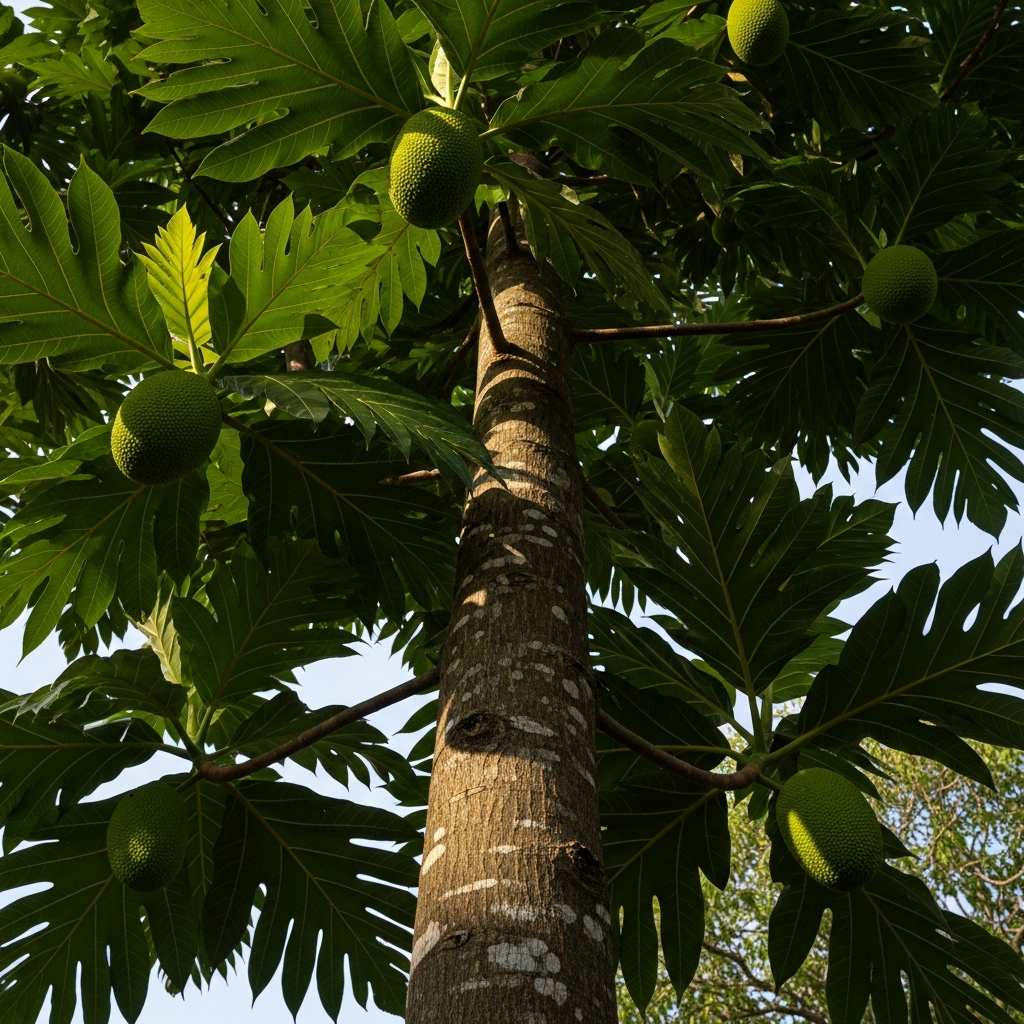
Stoneware mug, dishwasher safe
Buy Mug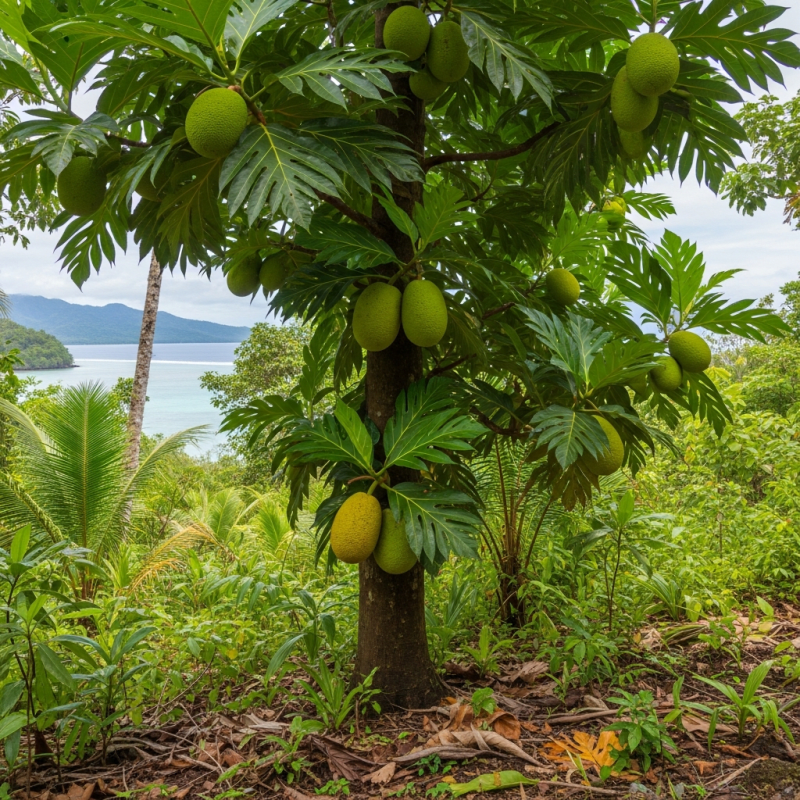
Soft cotton tee, unisex sizes
Buy ShirtBreadfruit is woven into the cultural fabric of Pacific Island societies, symbolizing abundance, sustenance, and hospitality. It features in legends, rituals, and art, notably in Hawaii, Tahiti, and Micronesia, where the tree is revered for its role in sustaining communities and shaping landscapes. Its spread by Austronesian navigators is a testament to its importance in human migration and the development of complex agroforestry traditions.
Breadfruit trees play a vital role in tropical agroforestry, providing shade, stabilizing soils, and supporting biodiversity. Their broad canopy offers habitat for birds and insects, while fallen leaves enrich the soil. As a perennial crop, breadfruit contributes to sustainable land use and resilience against food insecurity in vulnerable regions.
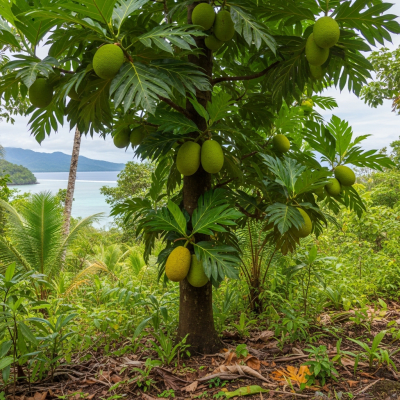

Breadfruit is native to New Guinea, the Indo-Malay region, and the Philippines, but has been widely dispersed throughout Oceania, the Pacific Islands, the Caribbean, and parts of Southeast Asia. It thrives in humid, lowland tropical environments with annual rainfall exceeding 1500 mm and prefers well-drained soils. Its cultivation is most successful in frost-free regions with consistent warmth and moisture.
To cultivate breadfruit, select a warm, humid location with well-drained soil. Propagation is best done by root cuttings, suckers, or grafting, as seeds are rare in most varieties. Young trees require regular watering and protection from pests such as fruit flies and scale insects. Once established, breadfruit is drought-tolerant and can produce abundant fruit for decades. Avoid waterlogged conditions to prevent root rot, and prune as needed to maintain canopy shape and health.
Breadfruit faces threats from root rot in poorly drained soils, as well as pests like fruit flies, scale insects, and fungal diseases. Conservation efforts focus on preserving genetic diversity and traditional varieties, especially as breadfruit is crucial for food security in tropical regions. Its status is stable in most areas, but ongoing research and community stewardship are important to safeguard its future.
Breadfruit’s economic value lies in its versatility: the fruit is a staple food, processed into flour and gluten-free products; the wood is lightweight and termite-resistant, ideal for construction and canoe building; latex serves as a natural adhesive; and leaves are used as livestock fodder. Breadfruit is also grown as an ornamental and shade tree, contributing to both local economies and sustainable agriculture.
Breadfruit is a symbol of prosperity and sustenance in many Pacific cultures, often featured in myths about creation and migration. In Hawaii, the tree is called ‘ulu and regarded as a gift from the gods, representing abundance and community. Folklore across Oceania celebrates breadfruit as a life-giving plant, with stories of its miraculous origins and its role in supporting generations of families.