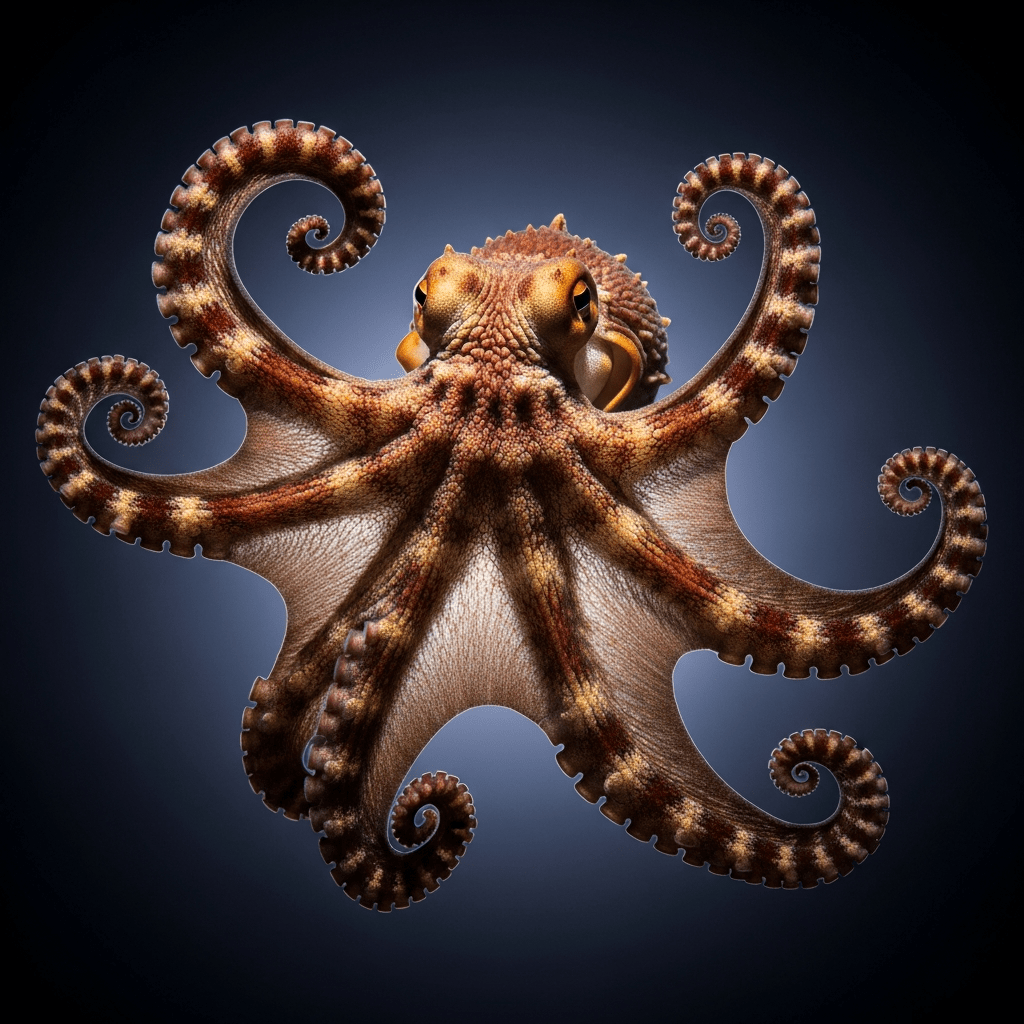
Webbed Octopus
The Webbed Octopus (Bathypolypus arcticus) is a small, deep-sea octopus species native to the cold waters of the North Atlantic, distinguished by its webbed arms and compact body adapted for life in dark, high-pressure environments.
The Webbed Octopus (Bathypolypus arcticus) is a small, deep-sea octopus species native to the cold waters of the North Atlantic, distinguished by its webbed arms and compact body adapted for life in dark, high-pressure environments.
Bathypolypus arcticus was first formally described by Prosch in 1847, based on specimens collected from Arctic waters. Since then, it has been recognized across various deep-sea habitats throughout the North Atlantic, including subarctic regions, reflecting its adaptation to cold, deep marine environments.
This species belongs to the order Octopoda, family Bathypolypodidae, and genus Bathypolypus. It is part of the broader group of octopuses—soft-bodied, eight-armed cephalopods—known for their intelligence and diverse marine habitats. Within this family, the Webbed Octopus is notable for its deep-sea specialization.
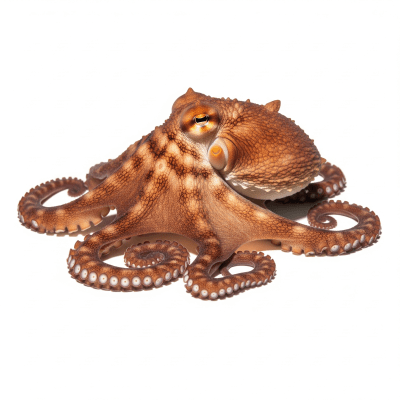
The Webbed Octopus is characterized by a small mantle measuring between 2 and 5 centimeters, with short arms connected at their bases by a distinctive webbing. Its coloration ranges from pale to reddish-brown, and unlike many shallow-water octopuses, it lacks an ink sac. This compact form suits its benthic lifestyle in cold, deep waters.
This octopus exhibits benthic behavior, residing primarily on or near the seafloor at depths from 40 to over 1,300 meters. Adapted to cold temperatures and high pressure, it thrives in low-light environments of the deep North Atlantic. Due to its deep habitat and small size, it has no known commercial or culinary use and is not targeted by fisheries.
Bring this kind into your world � illustrated posters, mugs, and shirts.
Archival print, museum-grade paper
Buy Poster
Stoneware mug, dishwasher safe
Buy Mug
Soft cotton tee, unisex sizes
Buy ShirtThe Webbed Octopus holds little documented cultural or symbolic significance, largely owing to its deep-sea habitat and rarity in human encounters. Unlike more accessible octopus species, it has not featured prominently in art, folklore, or cuisine.
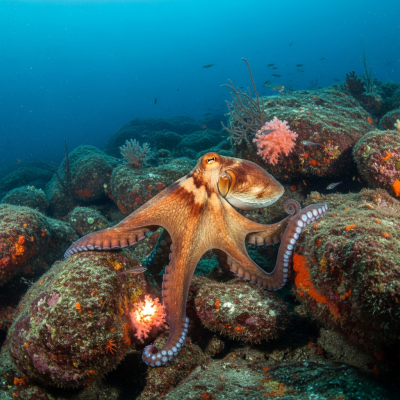
The Webbed Octopus inhabits cold, deep waters of the North Atlantic, including Arctic and subarctic regions. It is benthic, living on or near the seafloor at depths ranging from 40 to 1,300 meters. Its environment is characterized by low temperatures, high pressure, and minimal light, conditions to which it is well adapted.
While specific studies on the Webbed Octopus's intelligence are lacking, as a member of the octopus order, it likely shares the advanced problem-solving abilities and cognitive skills typical of octopods. However, its deep-sea habitat and small size may influence its behavioral complexity compared to shallow-water relatives.
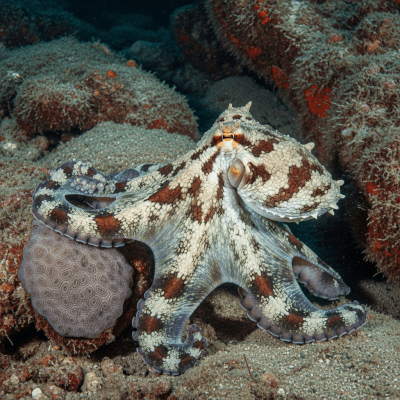
The Webbed Octopus lacks an ink sac, a common defense in many octopus species, reflecting its adaptation to deep-sea life where ink clouds are less effective. Its primary defenses likely include camouflage through its pale to reddish-brown coloration and retreat into crevices on the seafloor to avoid predators.
Details on the reproduction and lifecycle of the Webbed Octopus remain sparse. Like other octopuses, it is presumed to have a relatively short lifespan and reproduce by laying eggs on the seafloor, with females tending to their eggs until hatching. Specifics on mating behavior and development stages are not well documented.
The conservation status of the Webbed Octopus is currently unassessed, largely due to its deep-sea habitat and limited human interaction. It faces few direct threats from fisheries or habitat disturbance, but deep-sea environmental changes and pollution could impact its populations. Continued research is needed to monitor its status.