
Vampire Octopus
The Vampire Octopus (Vampyroteuthis infernalis) is a deep-sea cephalopod known for its dark, gelatinous body and unique adaptations to low-oxygen environments, making it a singular and enigmatic member of the octopus order.
The Vampire Octopus (Vampyroteuthis infernalis) is a deep-sea cephalopod known for its dark, gelatinous body and unique adaptations to low-oxygen environments, making it a singular and enigmatic member of the octopus order.
First described by Carl Chun in 1903 from specimens collected during the Valdivia deep-sea expedition, the Vampire Octopus originates from the eastern Atlantic Ocean. It represents an ancient, basal lineage within octopods, standing alone as the sole species in its family and genus.
The Vampire Octopus belongs to the order Octopoda, within its own unique family Vampyroteuthidae and genus Vampyroteuthis. Despite its squid-like common name, it is firmly classified among octopuses, occupying a distinct evolutionary branch without close living relatives.
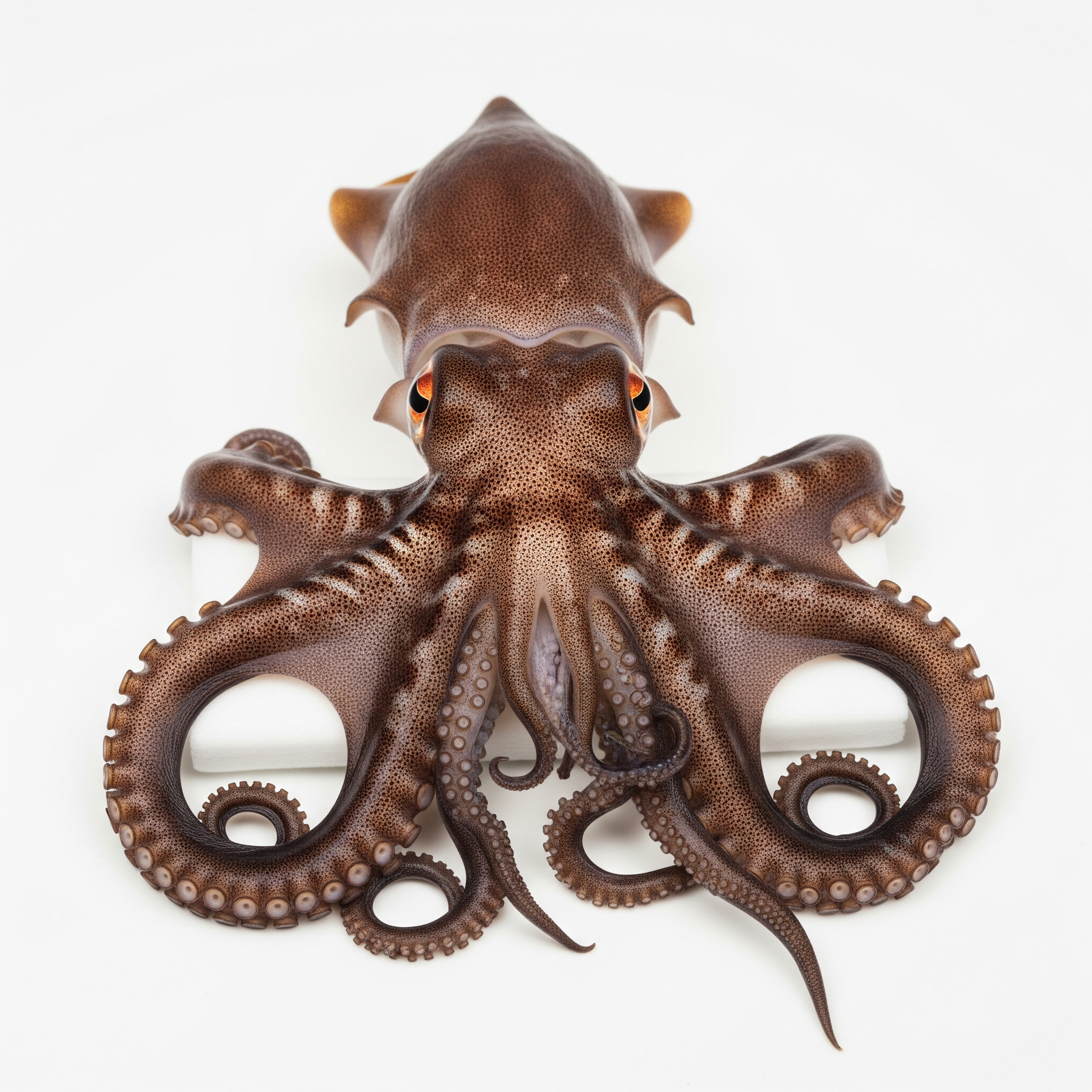
This species features a gelatinous, dark purplish-black body up to 30 cm long, with eight arms connected by webbing that creates a cloak-like silhouette. Unlike typical octopuses, its arms bear fleshy cirri instead of suckers. Its large, blue eyes—among the largest relative to body size in the animal kingdom—aid vision in deep, dim waters. It also has a pair of ear-like fins for gentle propulsion and notably lacks ink sacs.
The Vampire Octopus thrives in oxygen minimum zones at depths between 600 and 900 meters, exhibiting low metabolic rates and specialized blood proteins to survive in these challenging conditions. It is not known to be harvested, farmed, or used commercially, and its fragile deep-sea nature limits human interaction.
Bring this kind into your world � illustrated posters, mugs, and shirts.
Archival print, museum-grade paper
Buy Poster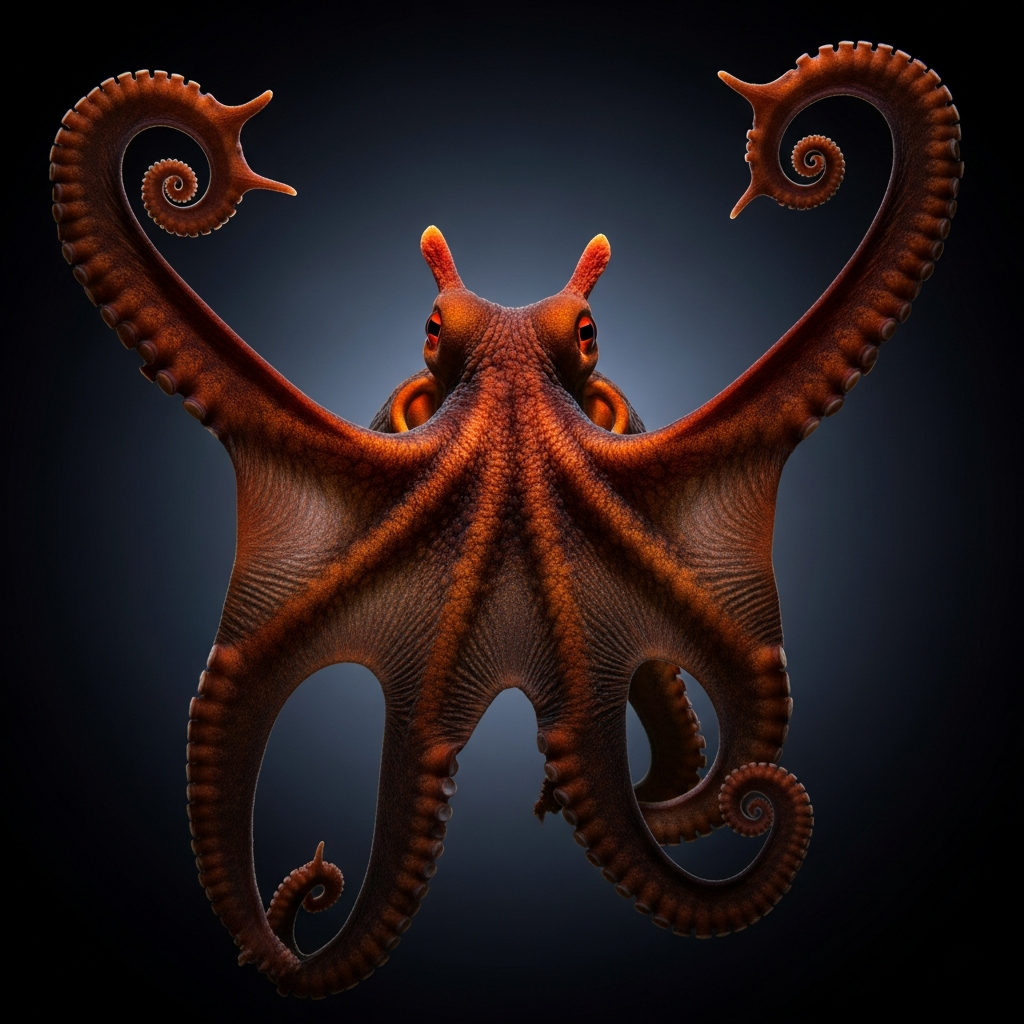
Stoneware mug, dishwasher safe
Buy Mug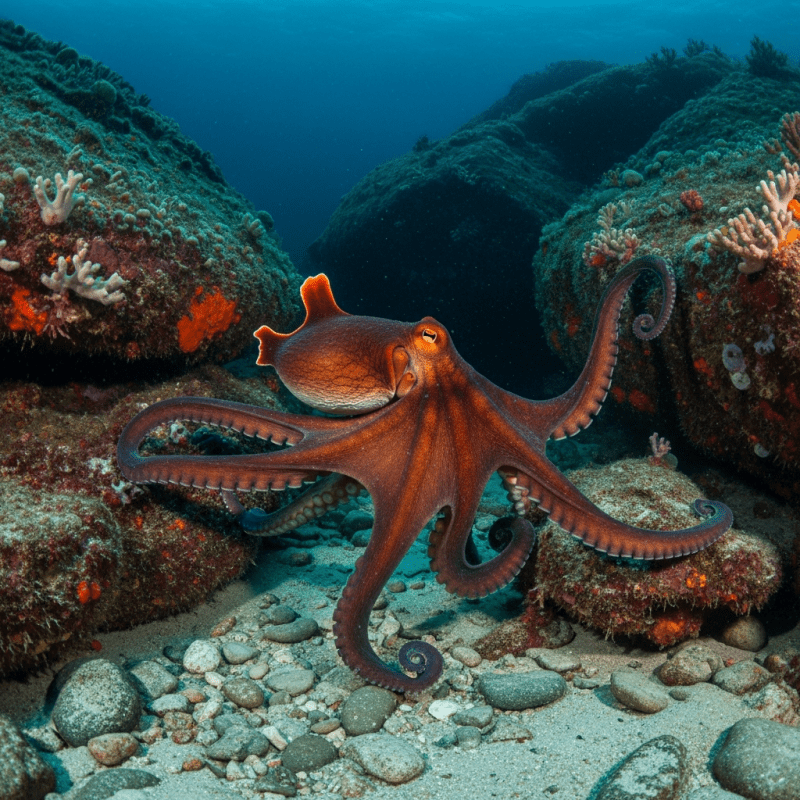
Soft cotton tee, unisex sizes
Buy ShirtWhile it holds no culinary or commercial value, the Vampire Octopus occasionally appears in popular culture and media, captivating audiences with its dramatic appearance and evocative name that conjures images of deep-sea mystery and intrigue.
The Vampire Octopus dwells in deep-sea oxygen minimum zones, primarily between 600 and 900 meters deep, where oxygen levels are extremely low. It is found in the eastern Atlantic Ocean and likely other deep oceanic regions with similar environmental conditions, inhabiting a niche few other cephalopods can tolerate.

While detailed studies on the Vampire Octopus's intelligence are limited due to its deep-sea habitat, it shares the octopus lineage known for problem-solving and adaptability. Its unique adaptations suggest specialized behaviors suited to survival in low-oxygen, deep environments.
Unlike many octopuses, the Vampire Octopus lacks an ink sac and instead relies on its dark coloration, cloak-like webbing, and ability to inhabit low-oxygen zones that deter many predators. Its gelatinous body and cirri may also aid in camouflage and subtle movement to avoid detection.
Specific details about the Vampire Octopus's reproductive habits and lifecycle remain scarce due to the challenges of studying deep-sea species. It is known to be a slow-moving, deep-dwelling cephalopod, likely with a lifecycle adapted to stable but resource-scarce environments.
The conservation status of the Vampire Octopus is currently unassessed, largely because of its remote deep-sea habitat and elusive nature. It faces minimal direct human threats due to its inaccessibility, but deep-sea environmental changes and oxygen minimum zone shifts could impact its survival in the future.