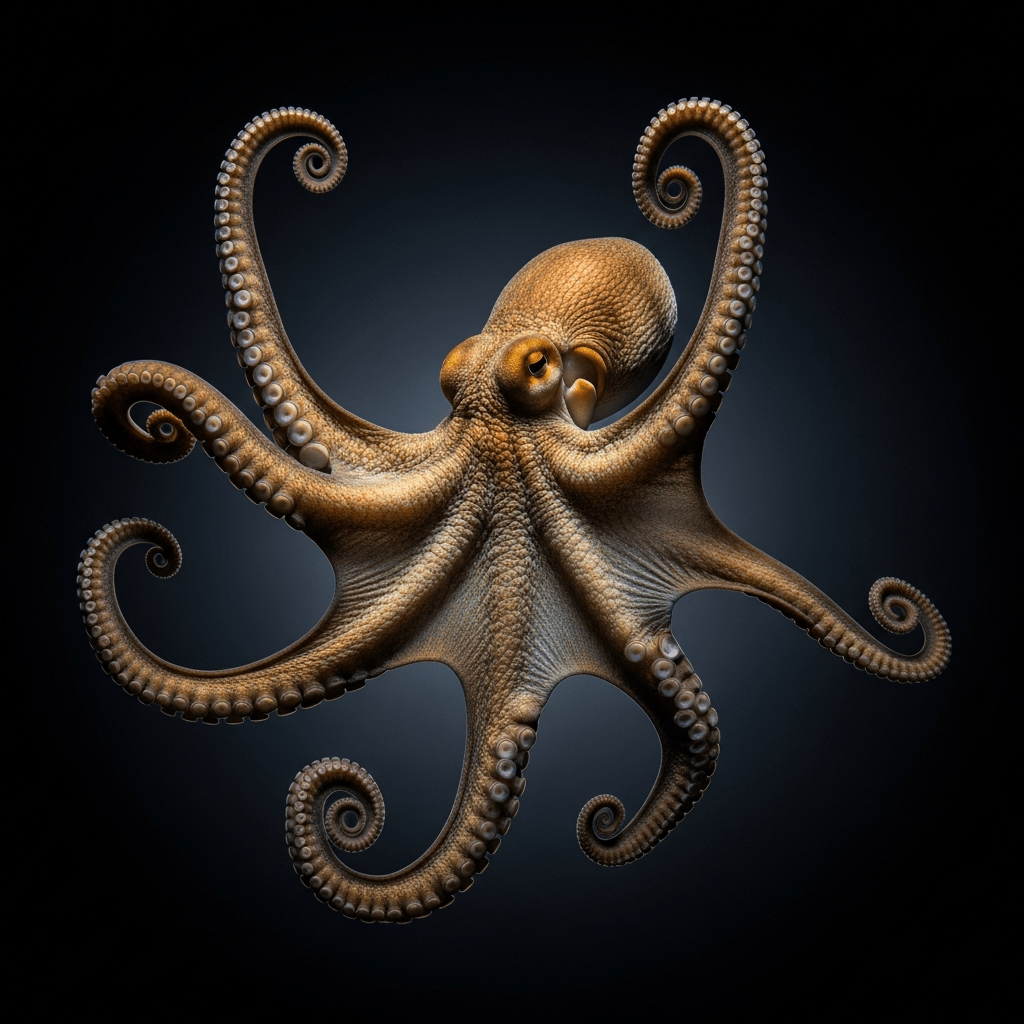
Seven-Arm Octopus
The Seven-Arm Octopus (Haliphron atlanticus) is a deep-sea species renowned as one of the largest octopuses, notable for males appearing to have only seven arms due to a concealed reproductive arm.
The Seven-Arm Octopus (Haliphron atlanticus) is a deep-sea species renowned as one of the largest octopuses, notable for males appearing to have only seven arms due to a concealed reproductive arm.
First described by Steenstrup in 1861 from a specimen collected in the Atlantic Ocean, the Seven-Arm Octopus represents the sole species of the genus Haliphron. Its discovery marked an important addition to deep-sea cephalopod knowledge, revealing unique morphological traits within the family Alloposidae.
The Seven-Arm Octopus belongs to the order Octopoda, family Alloposidae, and genus Haliphron. It is a distinct member within the octopus lineage, classified among deep-sea species with specialized adaptations, setting it apart from more common benthic octopuses.
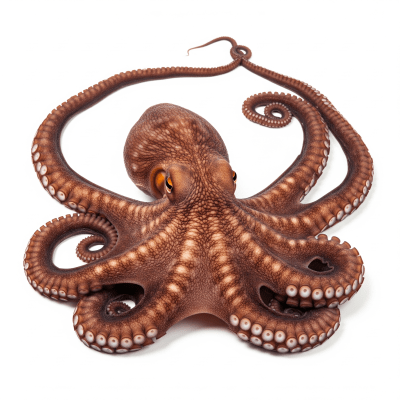
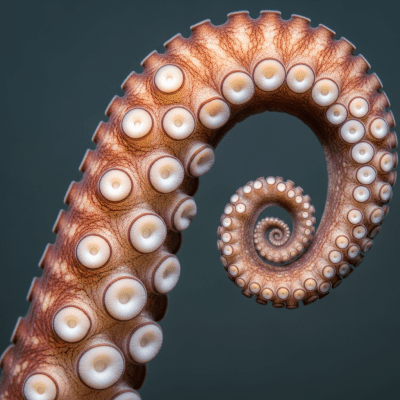
This species features a soft, gelatinous body with pale to bluish-white coloration and minimal patterning. Mature males appear to have seven arms because the eighth arm, the hectocotylus used for reproduction, is hidden within a sac. Its arms are relatively short and connected by extensive webbing, contributing to its unique silhouette. The Seven-Arm Octopus can reach an arm span of up to four meters and weigh as much as 75 kilograms, making it one of the largest octopuses by mass.
Living in deep-sea environments, the Seven-Arm Octopus is adapted to low-light, high-pressure conditions. While detailed behavioral studies are scarce, its concealed reproductive arm suggests specialized mating strategies. It is not commonly targeted by fisheries due to its habitat and gelatinous texture, and it has limited direct interaction with humans beyond occasional bycatch.
Bring this kind into your world � illustrated posters, mugs, and shirts.
Archival print, museum-grade paper
Buy Poster
Stoneware mug, dishwasher safe
Buy Mug
Soft cotton tee, unisex sizes
Buy ShirtThe Seven-Arm Octopus holds little documented cultural or symbolic significance, largely due to its deep-sea habitat and rarity in human encounters. Unlike more accessible octopus species, it has not prominently featured in art, myth, or culinary traditions.
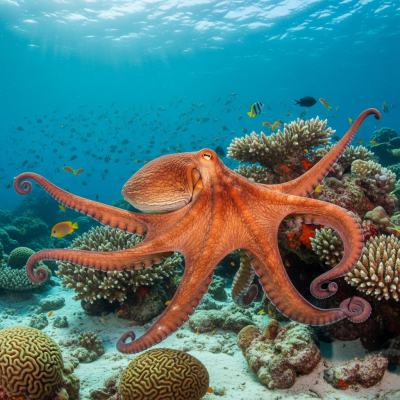
The Seven-Arm Octopus inhabits deep-sea environments across temperate and tropical oceans worldwide. Its range includes the Atlantic, Pacific, and Indian Oceans, with sightings near New Zealand, South Africa, North America, and Japan. It typically dwells at depths between 200 and 1000 meters, adapted to the high-pressure, low-light conditions of these habitats.
While specific studies on the Seven-Arm Octopus's intelligence are limited, as a member of the octopus order, it likely possesses notable problem-solving abilities and complex behaviors characteristic of cephalopods. However, its deep-sea lifestyle and rarity have restricted detailed observations.
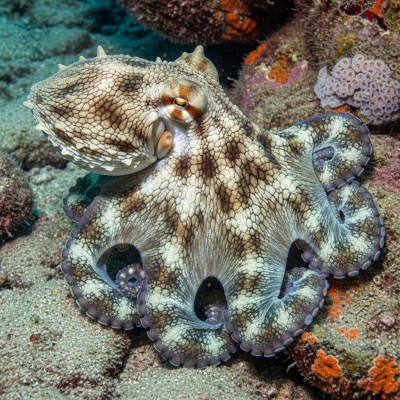
This species relies on its soft, gelatinous body and deep-sea habitat for protection. Its pale coloration and extensive webbing may aid in camouflage within dim environments. Like other octopuses, it likely uses rapid jet propulsion to evade predators, though specific defense behaviors remain underdocumented.
Reproduction involves males using a specialized arm called the hectocotylus, which is concealed in a sac, to transfer sperm to females. Details on mating behaviors, egg development, and lifespan remain largely unknown due to the species' deep-sea habitat and elusive nature.
The conservation status of the Seven-Arm Octopus is not well established. Its deep-sea habitat offers some protection, but it is suspected to be vulnerable to deep-sea fishing bycatch. Limited data on population trends and threats highlight the need for further research to assess its conservation needs.