
Sandbird Octopus
The Sandbird Octopus (Octopus aegina) is a medium-sized benthic cephalopod known for its sandy coloration and widespread presence throughout the Indo-Pacific coastal waters.
The Sandbird Octopus (Octopus aegina) is a medium-sized benthic cephalopod known for its sandy coloration and widespread presence throughout the Indo-Pacific coastal waters.
Octopus aegina was first described by Gray in 1849, based on a specimen collected from the Indian Ocean. Since then, it has been recognized as a valid species within the family Octopodidae, with a lineage tracing back to the genus Octopus in the order Octopoda.
This species belongs to the order Octopoda, encompassing all true octopuses, within the family Octopodidae. It is classified under the genus Octopus, which includes many benthic octopus species characterized by their eight arms and soft bodies.
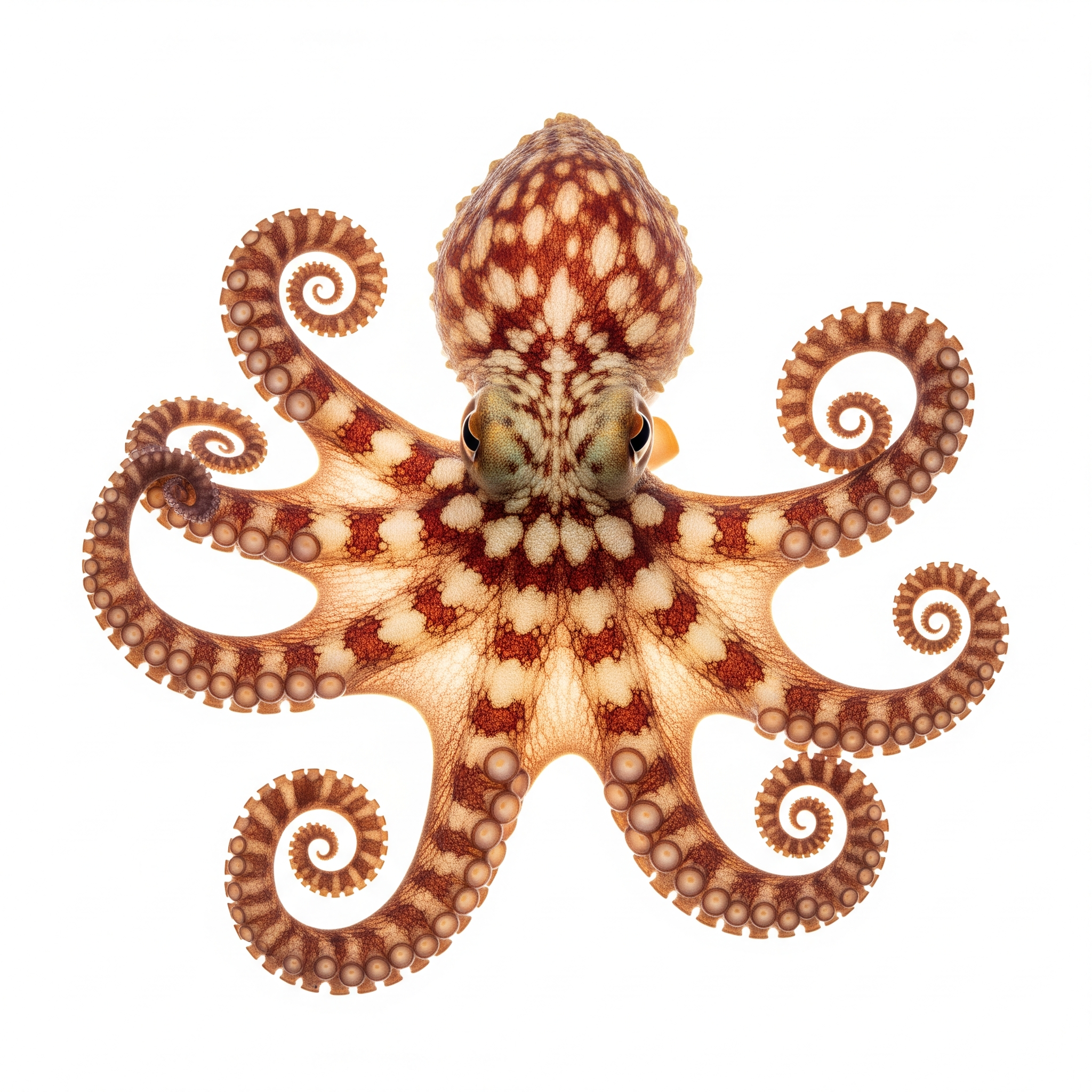
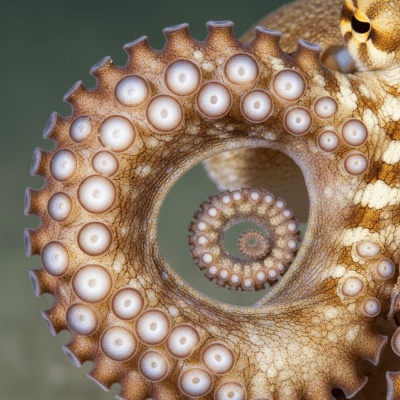
The Sandbird Octopus typically reaches a mantle length of up to 12 cm, with arms extending as far as 50 cm. Its body displays a sandy to pale brown coloration, often mottled, which provides effective camouflage against sandy or muddy substrates. Each arm bears two rows of suckers, and the species features a broad head, enhancing its distinctive benthic form.
This octopus adapts well to shallow coastal habitats where it often burrows or hides beneath debris. It exhibits tolerance to varying salinity and temperature, allowing it to thrive in disturbed or fluctuating environments. Females lay eggs in protected crevices, with growth rates and reproductive cycles that vary regionally. The species holds commercial value, being harvested extensively for food across the Indo-Pacific.
Bring this kind into your world � illustrated posters, mugs, and shirts.
Archival print, museum-grade paper
Buy Poster
Stoneware mug, dishwasher safe
Buy Mug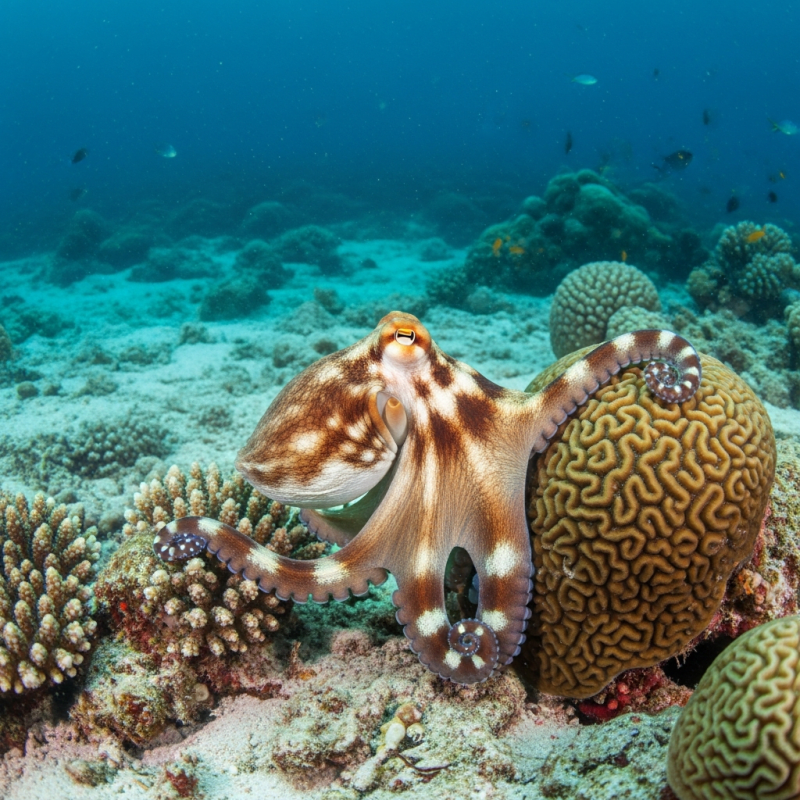
Soft cotton tee, unisex sizes
Buy ShirtWhile the Sandbird Octopus is primarily known for its role in regional fisheries and cuisine, there is limited information on its cultural or symbolic significance. Its presence in local markets underscores its importance as a seafood resource rather than a cultural icon.
The Sandbird Octopus thrives in the Indo-Pacific region, particularly along the coasts of India, Southeast Asia, and China. It favors shallow marine environments with sandy or muddy substrates, where it can easily camouflage and find shelter. Its adaptability to variable salinity and temperature enables it to occupy diverse coastal niches.

Although specific studies on Octopus aegina are limited, octopuses in general are renowned for their intelligence, problem-solving abilities, and complex behaviors. As a member of this group, the Sandbird Octopus likely exhibits notable cognitive skills typical of benthic octopuses, such as learning, memory, and environmental interaction.
The Sandbird Octopus relies on its mottled sandy coloration to blend into the substrate, effectively avoiding predators. Like other octopuses, it can also employ rapid color changes and ink expulsion as defensive tactics, although specific behaviors for this species have not been extensively documented.
Females of the Sandbird Octopus lay eggs in protected crevices, safeguarding the developing young from predators and environmental stress. Growth rates and reproductive cycles vary, reflecting adaptation to local conditions. Detailed information on lifespan is currently unavailable, but it likely follows the relatively short life expectancy common to many octopus species.
The conservation status of the Sandbird Octopus remains unassessed, though it faces pressures from regional fisheries due to its commercial value. Its tolerance to environmental variability provides some resilience, but habitat disturbance and overfishing could pose risks. Ongoing monitoring is essential to ensure sustainable populations.