
Pelagic Octopus
The pelagic octopus (Ocythoe tuberculata) is a unique open-ocean cephalopod distinguished by its gelatinous, semi-transparent body and life spent entirely in the pelagic zone of the Mediterranean Sea and Atlantic Ocean.
The pelagic octopus (Ocythoe tuberculata) is a unique open-ocean cephalopod distinguished by its gelatinous, semi-transparent body and life spent entirely in the pelagic zone of the Mediterranean Sea and Atlantic Ocean.
Ocythoe tuberculata was first described in 1814 by Constantine Samuel Rafinesque, based on specimens collected from the Mediterranean Sea. This species represents a rare lineage of octopuses adapted to a fully pelagic lifestyle, diverging from the predominantly benthic habits typical of most octopods.
Belonging to the order Octopoda, the pelagic octopus is classified within the family Ocythoidae and genus Ocythoe. It stands apart from common benthic octopuses by its open-water habitat and specialized morphological traits.
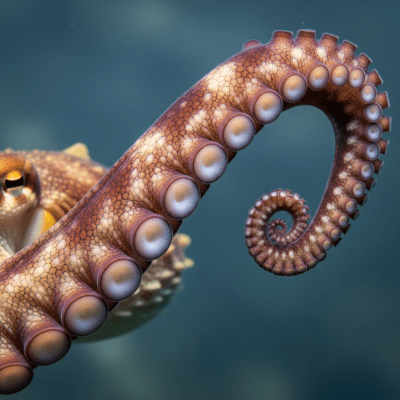
The pelagic octopus has a gelatinous, semi-transparent body with a mantle length reaching up to 20 cm in females, while males are dramatically smaller, often under 2 cm. Its long, slender arms and extreme sexual dimorphism—where males are dwarfed and equipped with a specialized hectocotylus for sperm transfer—are distinctive. A rare adaptation among cephalopods is its ability to regulate buoyancy using a gas-filled chamber within the mantle.
Unlike most octopuses that dwell on or near the seafloor, Ocythoe tuberculata spends its entire life suspended in the open ocean. Its gelatinous body and buoyancy control enable it to navigate the pelagic zone efficiently. It is not known to be targeted by fisheries or used in aquaculture, reflecting its elusive nature and specialized habitat.
Bring this kind into your world � illustrated posters, mugs, and shirts.
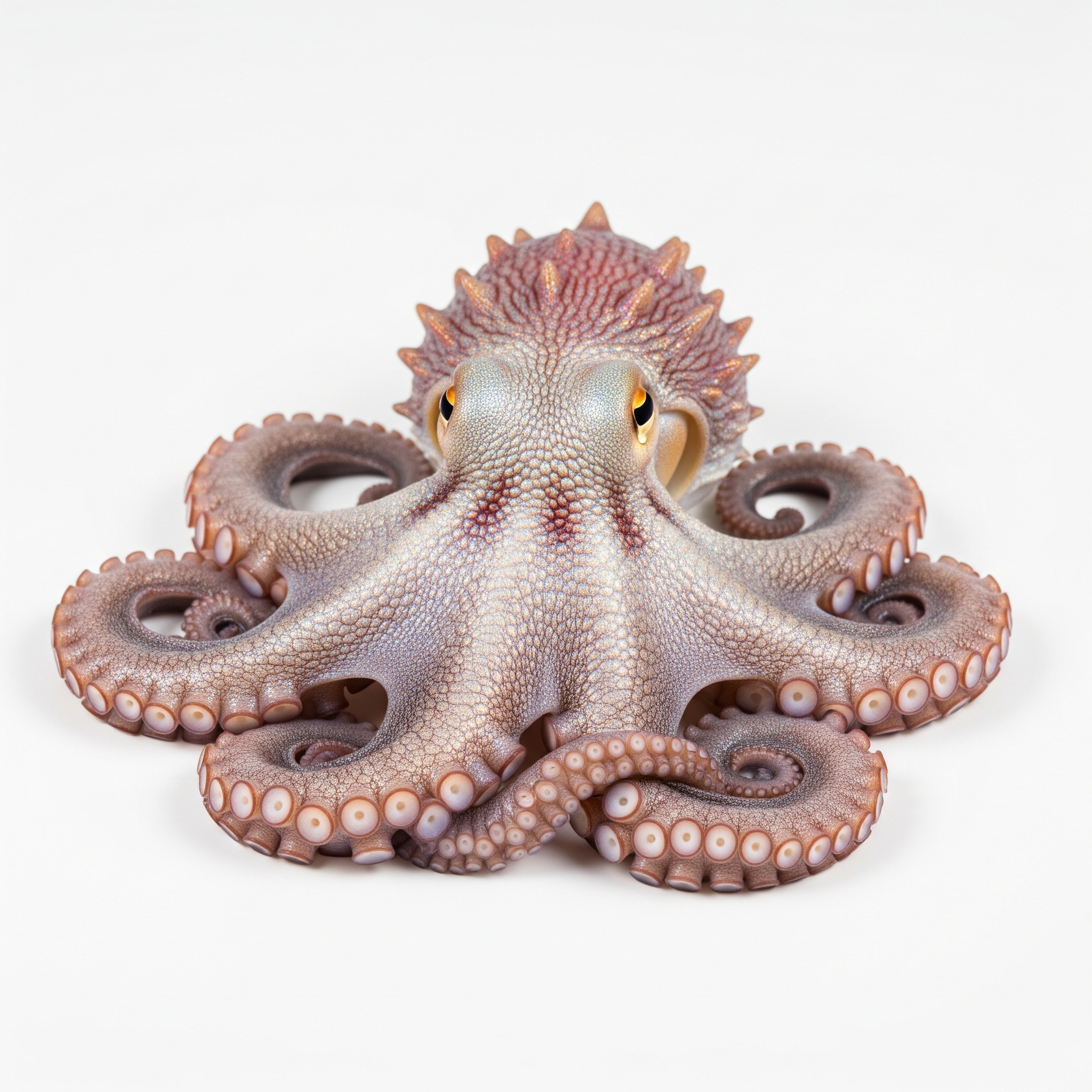
Archival print, museum-grade paper
Buy Poster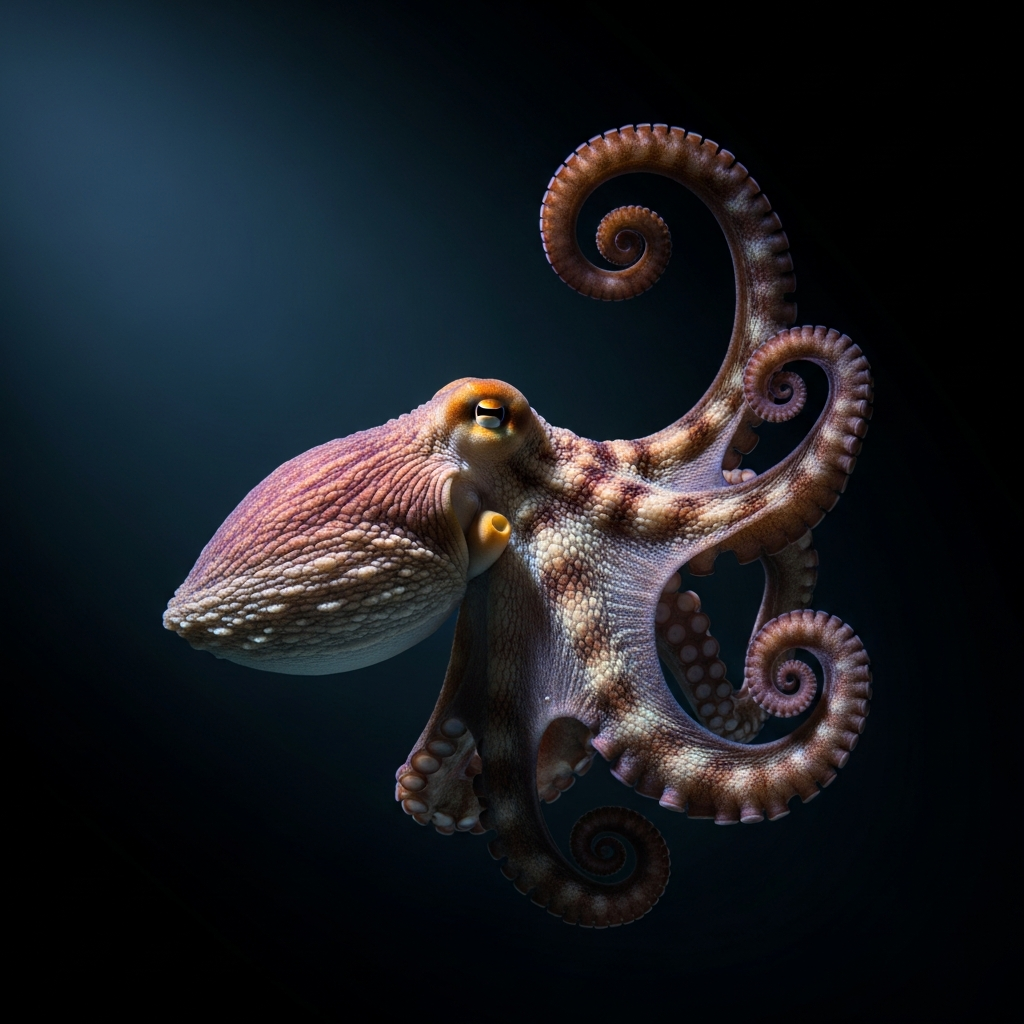
Stoneware mug, dishwasher safe
Buy Mug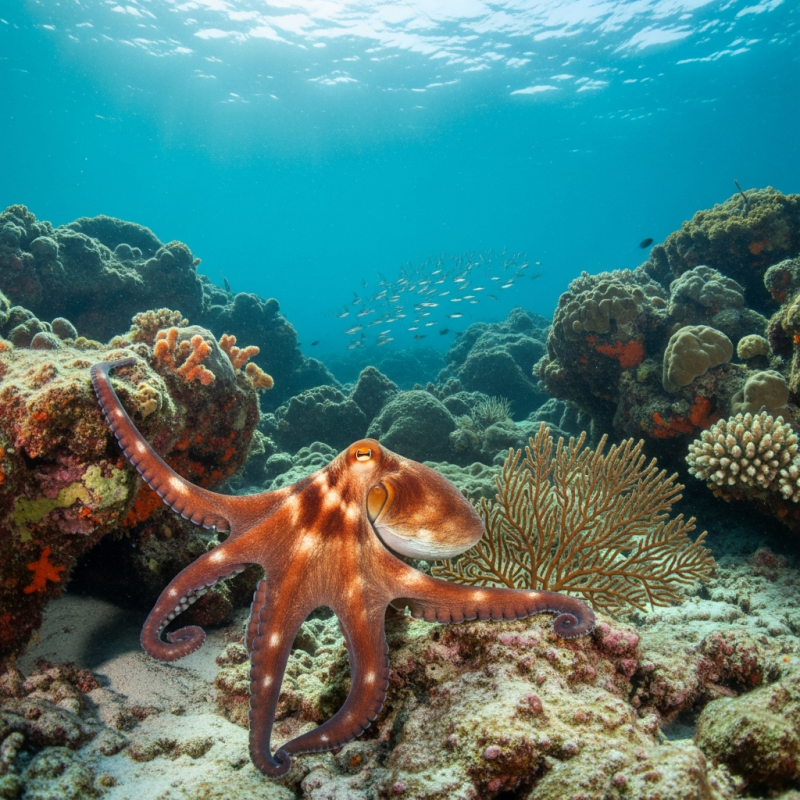
Soft cotton tee, unisex sizes
Buy ShirtThe pelagic octopus holds little documented cultural or culinary significance due to its rarity and pelagic lifestyle. It is seldom encountered by humans and does not feature prominently in traditional cuisine or folklore.
The pelagic octopus inhabits the pelagic zone of the Mediterranean Sea and Atlantic Ocean, floating freely in open water rather than residing on the seafloor. This habitat choice sets it apart ecologically, as it occupies a niche in the midwater column where it adapts to variable oceanic conditions.


While specific studies on the intelligence of Ocythoe tuberculata are limited, octopuses in general are known for their problem-solving abilities and complex behaviors. However, the pelagic octopus’s open-ocean lifestyle and gelatinous form suggest behavioral adaptations distinct from benthic relatives.
The pelagic octopus relies primarily on its gelatinous, semi-transparent body to blend into the open ocean environment, reducing visibility to predators. However, this delicate form also makes it vulnerable, lacking the robust physical defenses of benthic octopuses.
Ocythoe tuberculata exhibits extreme sexual dimorphism, with tiny males possessing a specialized hectocotylus arm used to transfer sperm to females. This adaptation facilitates reproduction in the vast pelagic environment. Details on its full lifecycle remain sparse due to its elusive nature.
The conservation status of the pelagic octopus is currently unassessed, and it faces few direct threats due to its deep pelagic habitat. However, its gelatinous body makes it susceptible to predation, and changes in oceanic conditions could impact its populations.