
Mimic Octopus
The Mimic Octopus (Thaumoctopus mimicus) is a medium-sized cephalopod famed for its extraordinary ability to impersonate a variety of marine animals through adaptive coloration and flexible body postures.
The Mimic Octopus (Thaumoctopus mimicus) is a medium-sized cephalopod famed for its extraordinary ability to impersonate a variety of marine animals through adaptive coloration and flexible body postures.
Discovered and formally described in 1998 by Norman and Hochberg, the Mimic Octopus was first identified from specimens collected near Sulawesi, Indonesia. This species represents a unique lineage within the family Octopodidae and is the sole member of its genus, Thaumoctopus.
The Mimic Octopus belongs to the order Octopoda, family Octopodidae, and genus Thaumoctopus. It is classified among true octopuses, a group of soft-bodied, eight-armed mollusks known for their intelligence and adaptability.
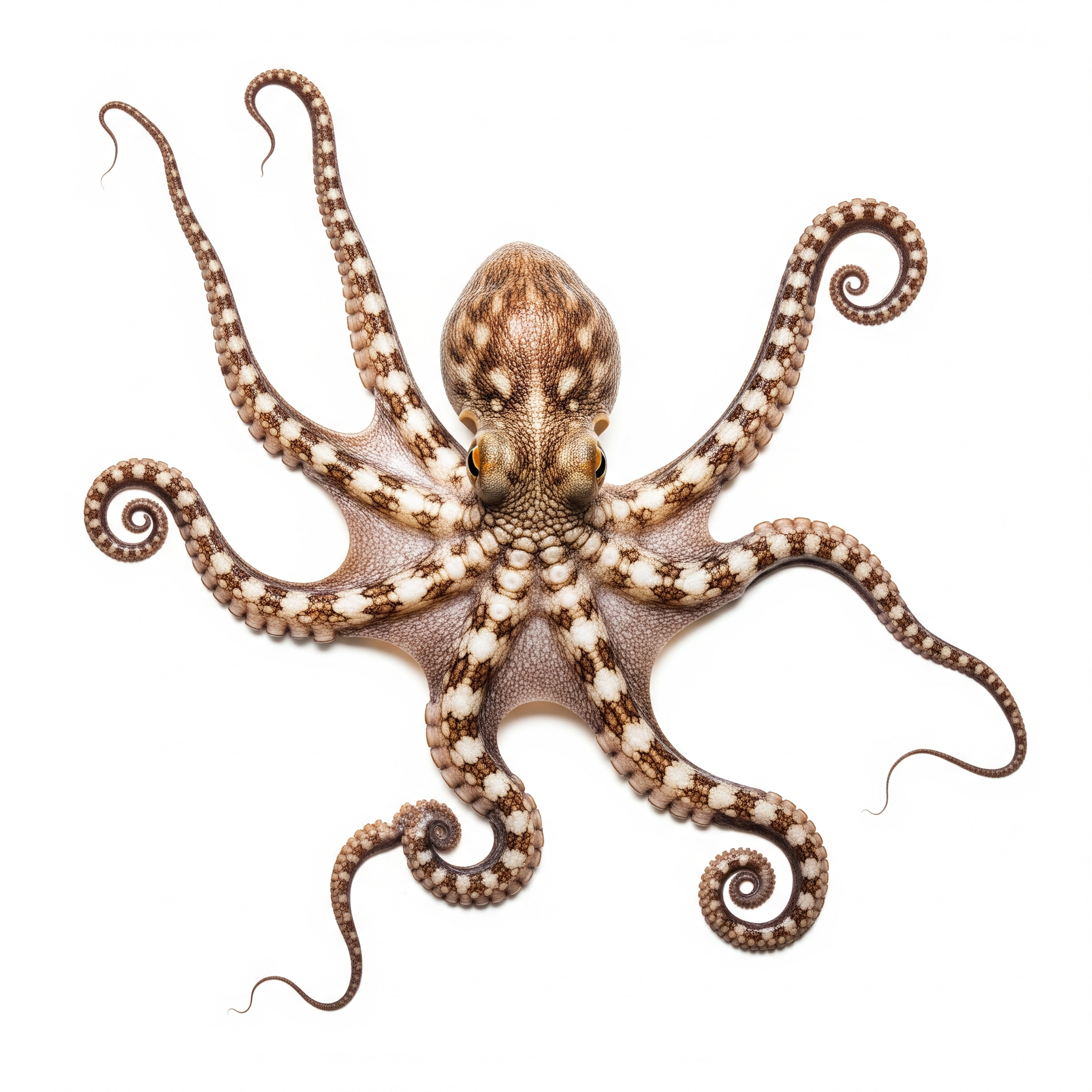
This octopus features a slender body with long, thin, and highly flexible arms that can span up to 60 centimeters. Its skin displays variable brown and white banding patterns that it can rapidly alter to mimic other marine creatures. These distinctive traits enable it to change its appearance dramatically, enhancing its deceptive abilities.
The Mimic Octopus is a diurnal, benthic species that actively moves across muddy and estuarine substrates. It is renowned for its behavioral mimicry, impersonating animals such as lionfish, flatfish, and sea snakes to avoid predators. This remarkable adaptation serves as a sophisticated form of defense and interaction within its ecosystem.
Bring this kind into your world � illustrated posters, mugs, and shirts.
Archival print, museum-grade paper
Buy Poster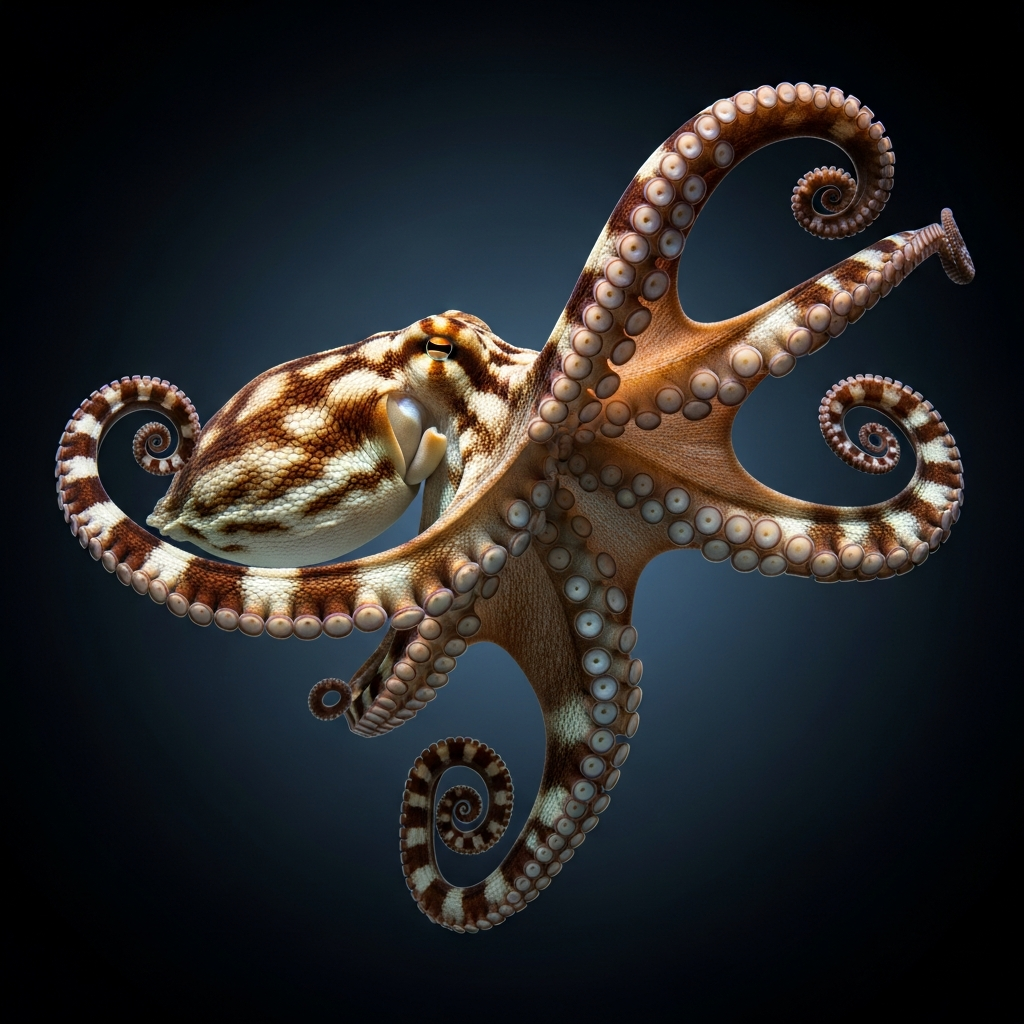
Stoneware mug, dishwasher safe
Buy Mug
Soft cotton tee, unisex sizes
Buy ShirtWhile not targeted commercially, the Mimic Octopus holds cultural significance as a subject of ecotourism, marine wildlife photography, and popular media. Its unique mimicry has captivated scientific communities and the public alike, featuring prominently in documentaries and educational outreach.
The Mimic Octopus dwells primarily in the shallow, muddy estuarine and coastal waters of the Indo-West Pacific region, with a particular concentration near Indonesia. It inhabits depths ranging from 3 to 37 meters, favoring soft substrates where it can blend and perform its mimicry effectively.


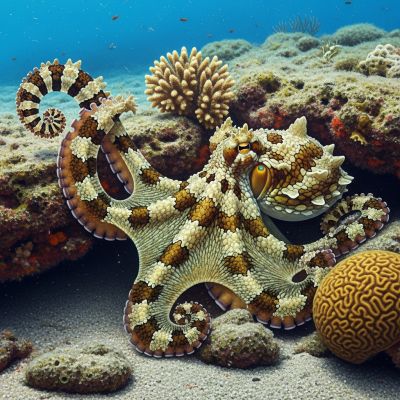
Like other octopuses, the Mimic Octopus exhibits notable intelligence, demonstrated by its complex mimicry behaviors. Its ability to select and imitate multiple species suggests advanced cognitive processing and environmental awareness, making it a remarkable example of animal problem-solving and adaptation.
Its primary defense mechanism is behavioral mimicry, where it alters its coloration and body posture to resemble venomous or unpalatable marine animals such as lionfish, flatfish, and sea snakes. This deception reduces predation risk by exploiting predators’ avoidance of dangerous species.
Details on the Mimic Octopus’s reproductive habits and lifecycle remain largely undocumented. Like many octopuses, it is presumed to have a relatively short lifespan and to reproduce through typical cephalopod mating behaviors, but specific data are currently unavailable.
The conservation status of the Mimic Octopus has not been formally assessed, and no major threats have been documented. Its specialized habitat and rarity, however, suggest potential vulnerability to coastal habitat degradation and environmental changes, underscoring the need for further study and monitoring.