Origin Story

Octopus maorum was first scientifically described in 1880 by Hutton, based on specimens collected in New Zealand. It has since been established as a prominent species within Australasian marine ecosystems, particularly in rocky reef and soft-bottom habitats.

Classification

This species belongs to the order Octopoda, family Octopodidae, and genus Octopus. It is part of the broader cephalopod class, which includes squids and cuttlefish, but is distinguished by its eight arms and benthic lifestyle.

Appearance or Form

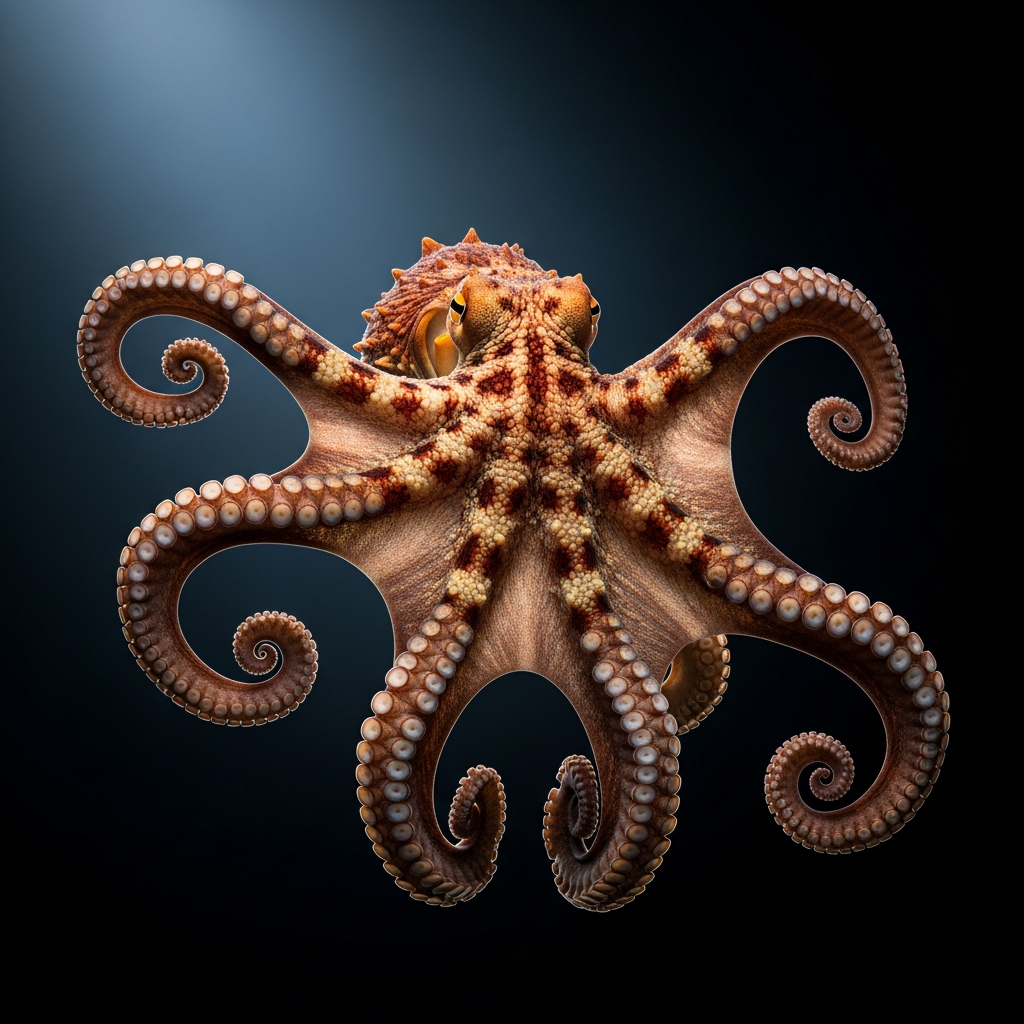
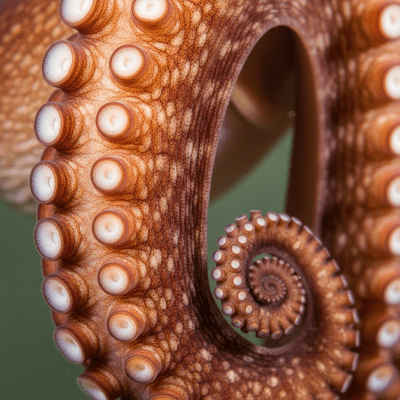
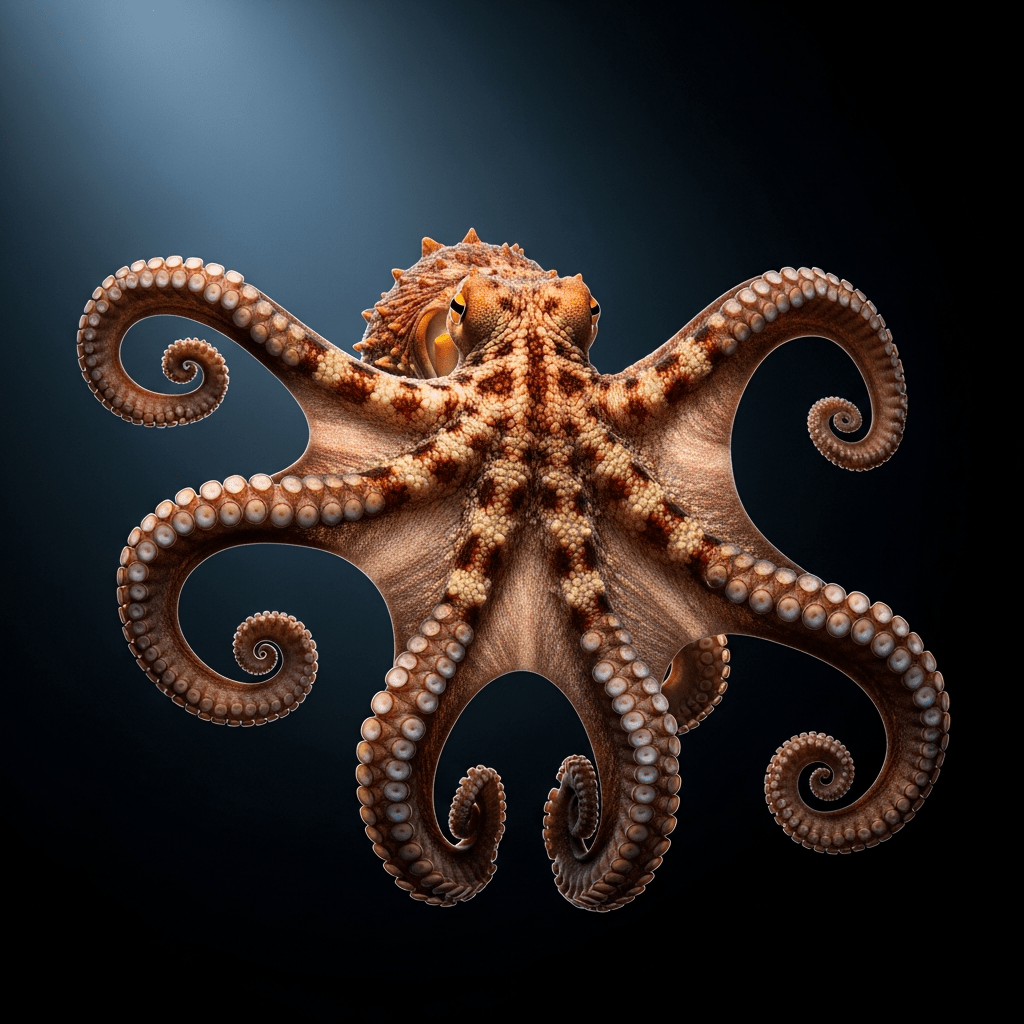
The Maori octopus features a robust, muscular body with a mantle length up to 40 cm and arms that can span over 2 meters. Its skin is typically reddish-brown with prominent white spots, and it can rapidly change color and texture for camouflage or communication. Each arm is lined with two rows of suckers, enhancing its grip and dexterity.

Behavior or Usage

This species is solitary and benthic, dwelling mainly on rocky reefs, kelp forests, and sandy or muddy substrates. It is an active predator, feeding on crustaceans, mollusks, fish, and occasionally other cephalopods. Known for its intelligence, the Maori octopus exhibits notable problem-solving skills and adaptability in its environment.

Merchandise & Prints

Bring this kind into your world � illustrated posters, mugs, and shirts.

Maori Octopus Maori Octopus Poster

Maori Octopus Poster

Archival print, museum-grade paper

Maori Octopus Maori Octopus Mug

Maori Octopus Mug

Stoneware mug, dishwasher safe

Maori Octopus Maori Octopus Shirt

Maori Octopus Shirt

Soft cotton tee, unisex sizes

Attributes & Insights

Taxon-Specific Insights

🌍Cultural Significance

Locally known as "wheke" in the Māori language, the Maori octopus holds cultural importance in New Zealand and southern Australia. While not a major commercial species, it features in regional traditions and is occasionally used as bait in rock lobster fisheries.

📌Notable Facts

  • One of the largest octopus species in the Southern Hemisphere, weighing up to 12 kg.
  • Capable of rapid color and texture changes for camouflage and signaling.
  • Arms can span more than two meters, providing remarkable reach and strength.
  • Lives in diverse habitats from intertidal zones down to 200 meters deep.
  • Despite its size and presence, it is not targeted by commercial fisheries but sometimes caught as bycatch.

🌊Habitat And Distribution

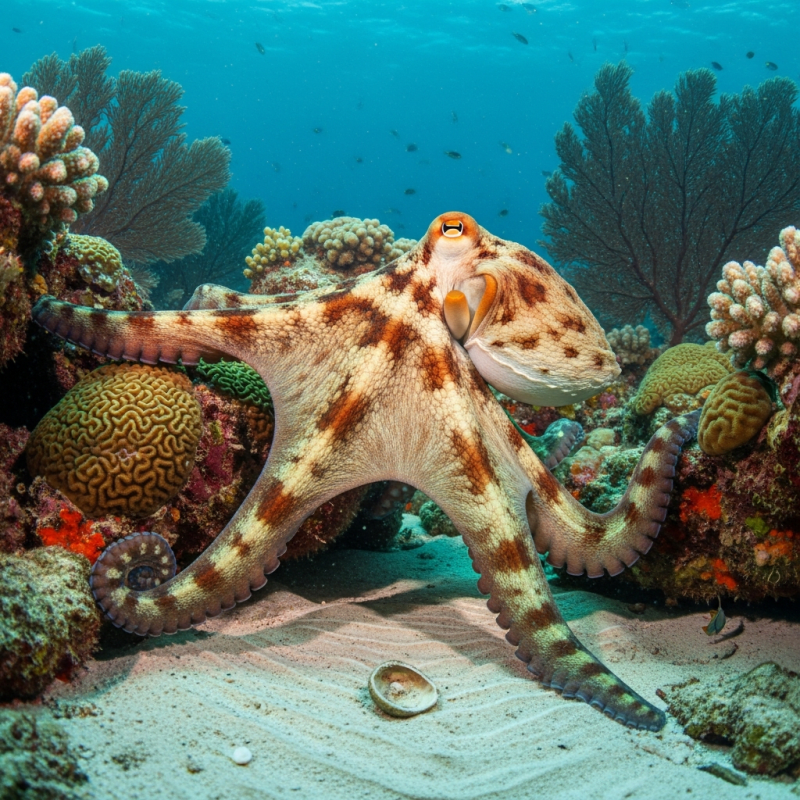
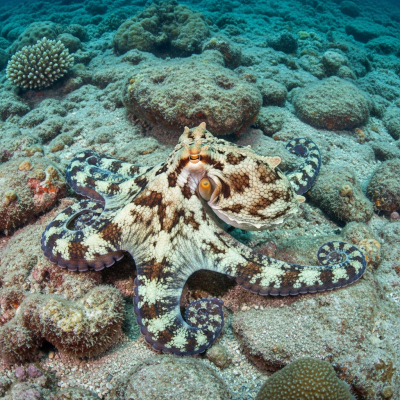
The Maori octopus is native to the coastal waters of New Zealand and southern Australia. It occupies a range of habitats including rocky reefs, kelp forests, and sandy or muddy sea floors. This species is found from shallow intertidal zones down to depths of around 200 meters, adapting well to diverse benthic environments.

Visual Variations

High quality studio photograph of a single Maori Octopus
A realistic underwater scene featuring a Maori Octopus of the taxonomy octopuses in its natural marine environment
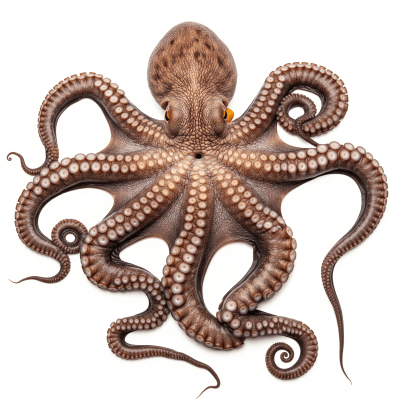
Naturalistic close-up photograph of a single arm of a Maori Octopus, focusing on the suckers, skin texture, and coloration details
Illustration of a Maori Octopus displaying camouflage behavior within its environment, blending into rocks, sand, or coral

Composition & Context

Taxon-Specific Insights

🧠Intelligence And Cognition

Renowned for its intelligence, the Maori octopus demonstrates advanced problem-solving abilities and behavioral flexibility. Like other octopuses, it uses its keen senses and dexterous arms to explore, hunt, and interact with its environment, showcasing complex cognition uncommon among invertebrates.

🛡️Defense Mechanisms

To evade predators, the Maori octopus employs rapid color and texture changes that allow it to blend seamlessly into its surroundings. It can also expel ink to create a smokescreen, enabling quick escapes. Its strong arms and agility further aid in defense and retreat.

🔄Reproduction And Lifecycle

The Maori octopus has a relatively short lifespan of 2 to 3 years. It is solitary and reproduces through a single mating event, after which females lay eggs and tend them until hatching. The young emerge as miniature adults, beginning their benthic life soon after.

⚠️Conservation And Threats

Currently, the Maori octopus has no formal conservation status and is not assessed by the IUCN. While not heavily targeted by fisheries, it faces potential threats from habitat disturbance and bycatch. Its populations appear stable, but ongoing monitoring is advisable given its ecological role and regional significance.

Faq

Q: Where is the Maori octopus found?
The Maori octopus inhabits coastal waters around New Zealand and southern Australia, favoring rocky reefs and soft substrates.

Q: How large can the Maori octopus grow?
It can reach a mantle length of up to 40 cm and an arm span exceeding 2 meters, weighing as much as 12 kg.

Q: Is the Maori octopus commercially fished?
It is not a primary target of fisheries but is occasionally caught as bycatch and sometimes used as bait in lobster traps.