Dumbo Octopus
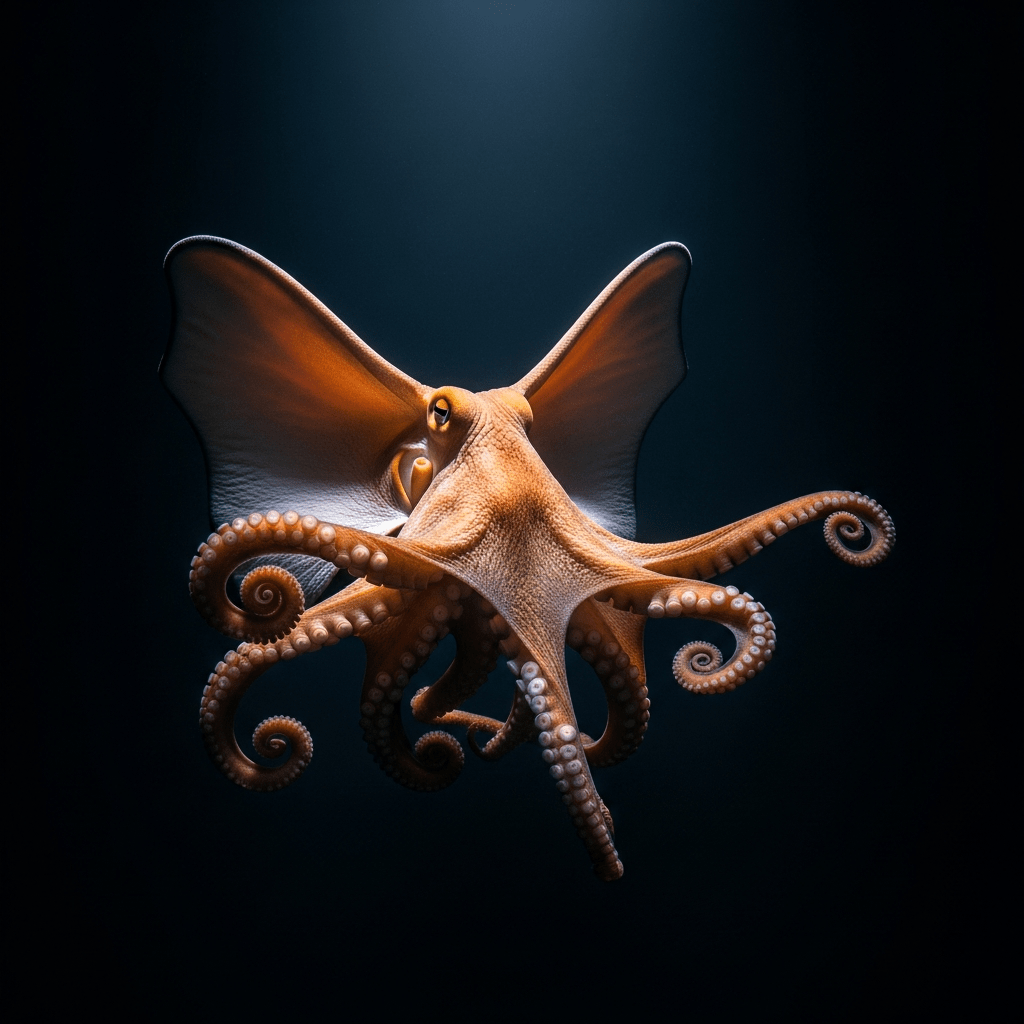
The Dumbo octopus is a deep-sea cephalopod of the genus Grimpoteuthis, distinguished by its ear-like fins that resemble the Disney character Dumbo's ears.
The Dumbo octopus is a deep-sea cephalopod of the genus Grimpoteuthis, distinguished by its ear-like fins that resemble the Disney character Dumbo's ears.
The genus Grimpoteuthis was first described in 1883 by Addison Emery Verrill, based on specimens collected during deep-sea expeditions. These enigmatic octopuses have since been discovered across various abyssal and hadal zones, revealing a lineage adapted to some of the ocean’s most extreme depths.
Dumbo octopuses belong to the order Octopoda and the suborder Cirrina, which includes finned, deep-sea octopuses with internal shells. The genus Grimpoteuthis groups several species characterized by their gelatinous bodies and distinctive paired fins, setting them apart from the more familiar benthic octopuses.
Dumbo octopuses have medium-sized, gelatinous bodies typically 20 to 30 centimeters in mantle length. Their most notable feature is a pair of prominent, fin-like appendages above the eyes that resemble ears and are used for swimming and steering. Their semi-transparent bodies range in color from pale pink to deep red or brown, with arms connected by webbing that enhances their umbrella-like shape.
These octopuses navigate the deep ocean by flapping their ear-like fins, a unique swimming style among octopods. Due to their remote habitat, little is known about their behavior or interactions with humans, and they have no known commercial or culinary uses.
Bring this kind into your world � illustrated posters, mugs, and shirts.

Archival print, museum-grade paper
Buy Poster
Stoneware mug, dishwasher safe
Buy Mug
Soft cotton tee, unisex sizes
Buy ShirtWhile not widely known in traditional culture, Dumbo octopuses have captured public imagination as symbols of deep-sea mystery and biodiversity, often featured in documentaries and popular media that highlight the wonders of ocean life.
Dumbo octopuses inhabit the abyssal and hadal zones of the ocean, dwelling at depths from 400 to nearly 5,000 meters. Their environment is characterized by high pressure, low temperatures, and minimal light. They are widely distributed across deep-sea regions but are rarely encountered due to the inaccessibility of their habitat.

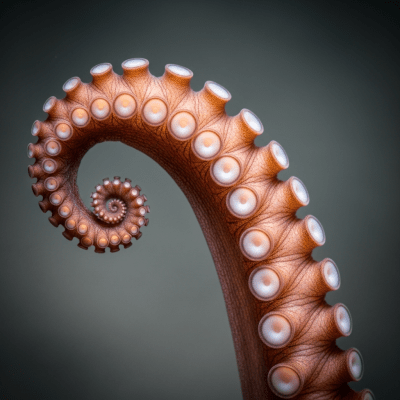
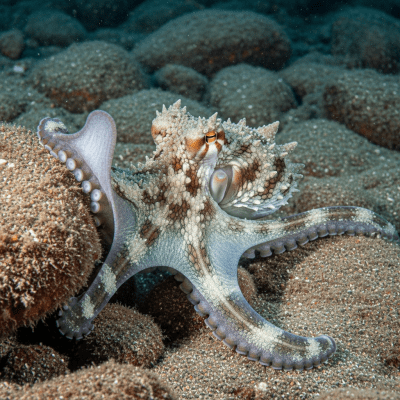
While specific studies on Dumbo octopus cognition are limited, as members of the octopus order, they are presumed to possess notable problem-solving abilities and adaptability. However, their deep-sea lifestyle and gelatinous form suggest behavioral adaptations distinct from shallow-water octopuses.
Dumbo octopuses rely on their gelatinous, semi-transparent bodies to blend into the dark ocean depths, minimizing visibility to predators. Their soft, flexible form and slow, fin-driven swimming help them evade threats in the deep sea, though they lack the ink defense common to shallow-water octopuses.
Reproductive behavior in Dumbo octopuses is not well understood, but they are believed to lay small clusters of eggs on hard substrates in the deep ocean. Their lifecycle likely involves slow development suited to the cold, high-pressure environment, though detailed observations remain scarce.
Due to their deep-sea habitat, Dumbo octopuses face limited direct human threats but are vulnerable to deep-sea trawling and habitat disturbance. Their conservation status is not well-assessed, reflecting the challenges of studying and protecting deep-ocean species.