
Common Octopus
The Common Octopus (Octopus vulgaris) is a widely distributed marine mollusk known for its intelligence, adaptability, and significance in global fisheries and research.
The Common Octopus (Octopus vulgaris) is a widely distributed marine mollusk known for its intelligence, adaptability, and significance in global fisheries and research.
First described by Jean-Baptiste Lamarck in 1798, the Common Octopus was originally identified from specimens collected in the Mediterranean Sea. Since then, it has been found across diverse oceanic regions, becoming a key species for marine biology and fisheries worldwide.
The Common Octopus belongs to the order Octopoda, family Octopodidae, and genus Octopus. It serves as the type species for its genus, anchoring the classification of many related octopus species.
This species features a soft, rounded mantle measuring between 15 and 25 centimeters, with arms that can span up to one meter. Its coloration is highly variable, often mottled in brown, reddish, or yellow tones, and it can rapidly alter its skin color and texture for camouflage. Each of its eight arms bears two rows of suckers, complemented by a prominent siphon and well-developed eyes.
The Common Octopus is renowned for its intelligence, displaying problem-solving skills and complex predatory behaviors. It interacts with its environment through rapid color changes and texture shifts, aiding in hunting and evasion. Its semelparous life cycle involves a single reproductive event, after which females brood thousands of eggs until they hatch. Humans utilize this species extensively in fisheries, culinary traditions, and scientific research.
Bring this kind into your world � illustrated posters, mugs, and shirts.
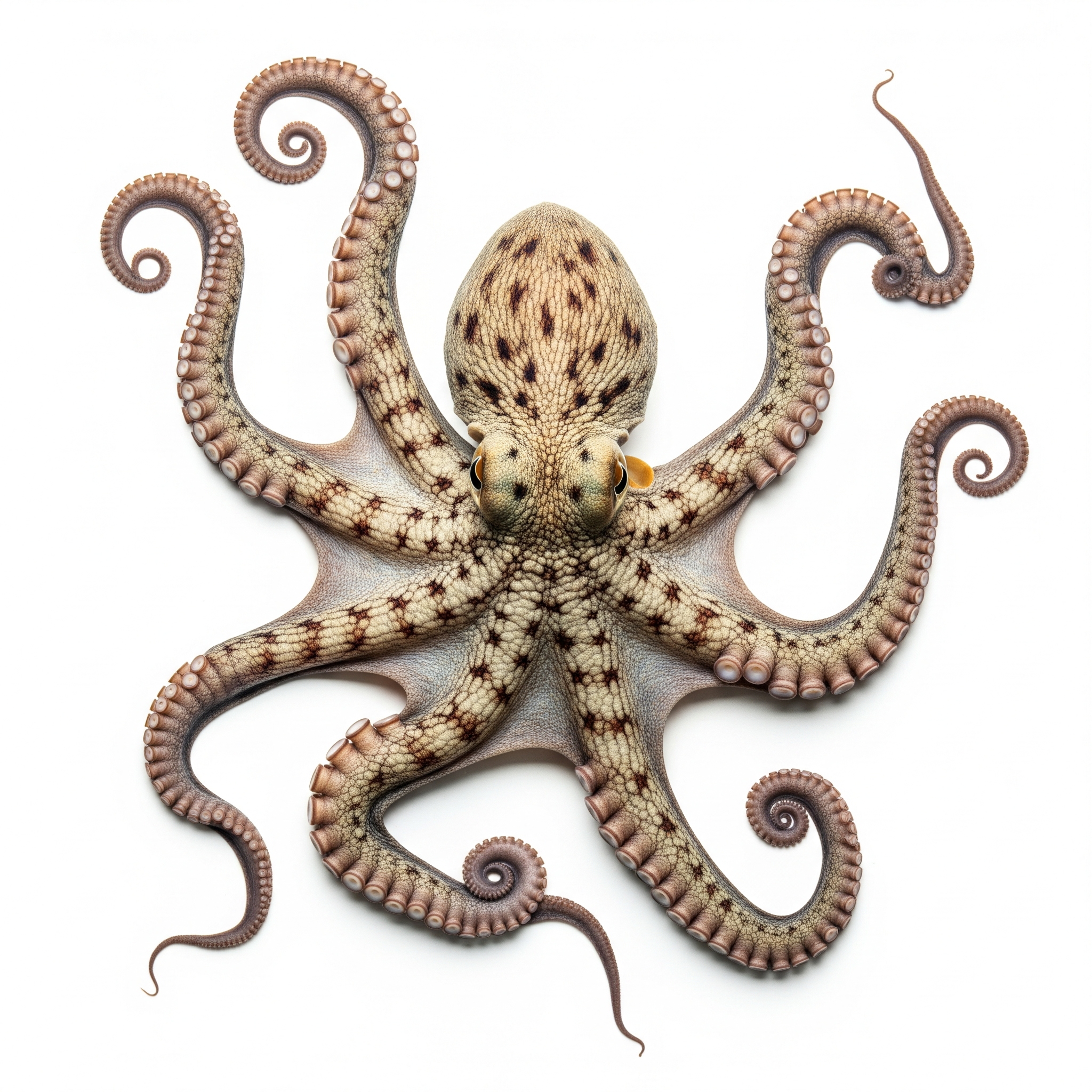
Archival print, museum-grade paper
Buy Poster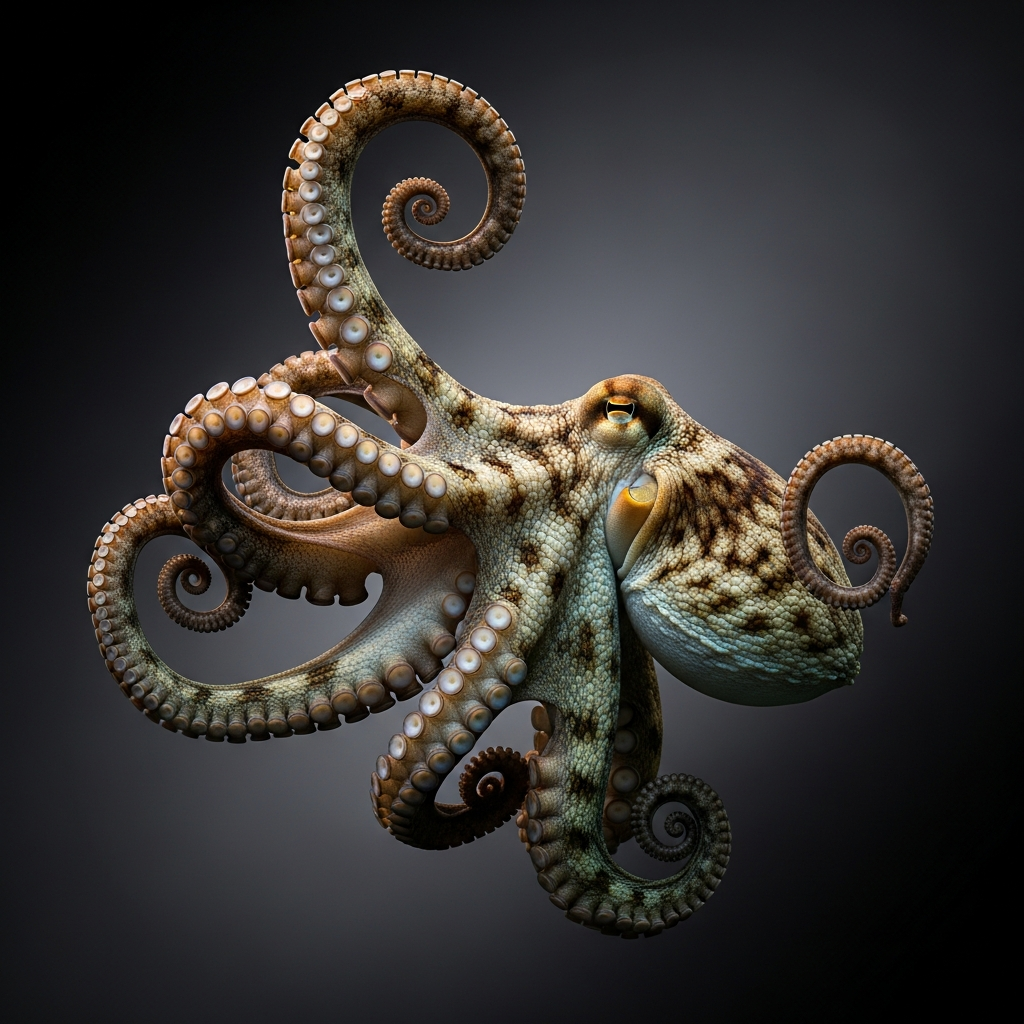
Stoneware mug, dishwasher safe
Buy Mug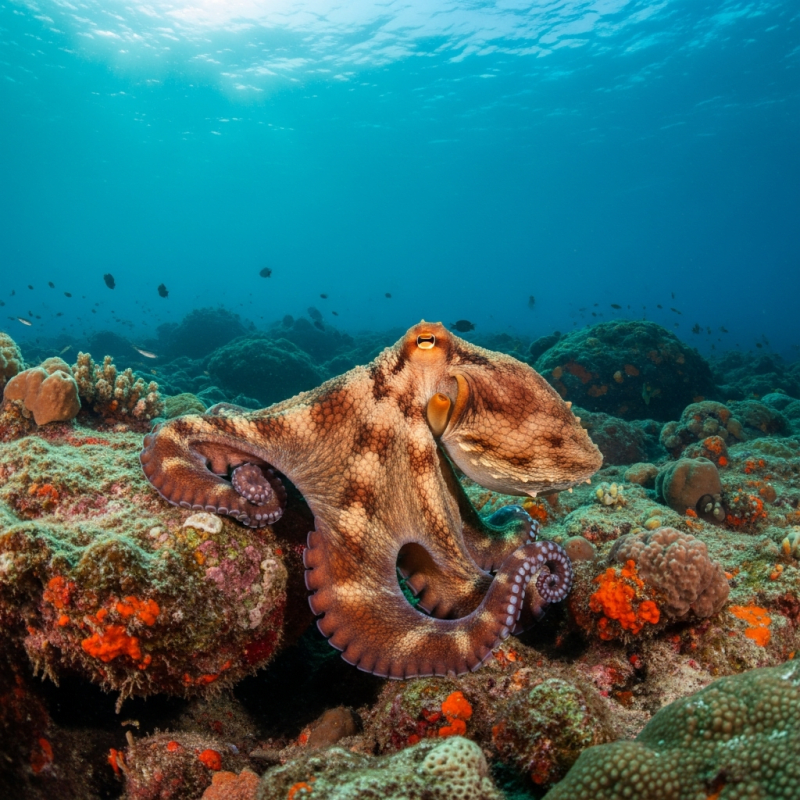
Soft cotton tee, unisex sizes
Buy ShirtEsteemed in many cultures, the Common Octopus features prominently in Mediterranean, Asian, and European cuisines, appearing in dishes like Spanish pulpo a la gallega and Japanese tako sushi. Its ink has artistic and culinary uses, while its presence in aquaria and research underscores its symbolic and educational value worldwide.
The Common Octopus is widespread across the Mediterranean Sea, Atlantic Ocean, and parts of Asia, occupying rocky substrates, seagrass beds, and sandy bottoms. It thrives from shallow intertidal zones down to depths of about 300 meters, demonstrating remarkable adaptability to varying marine environments.
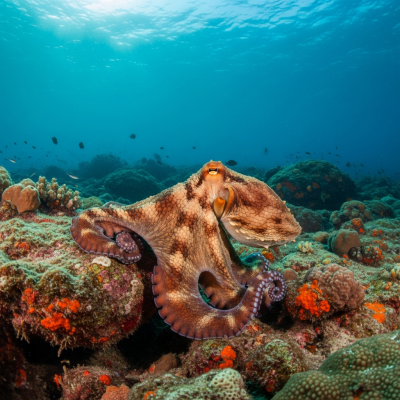


Known for exceptional intelligence among invertebrates, the Common Octopus exhibits advanced problem-solving abilities, learning capacity, and complex hunting strategies. Its cognitive skills enable it to navigate mazes, open containers, and use tools, making it a model organism in neurological and behavioral studies.
To evade predators, the Common Octopus employs rapid color and texture changes for camouflage, ejects ink clouds to obscure escape routes, and can contort its flexible body to squeeze into tight crevices. These adaptive defenses enhance its survival in predator-rich environments.
The Common Octopus follows a semelparous reproductive strategy, reproducing once before death. Females lay thousands of eggs and dedicate themselves to brooding them until hatching, after which both adults typically die. This lifecycle supports rapid population turnover and growth within its habitats.
While not currently classified with a specific conservation status, the Common Octopus faces threats from overfishing and habitat degradation. Its widespread commercial harvest demands careful management to ensure sustainable populations amid environmental changes and fishing pressures.