
Blanket Octopus
The blanket octopus (Tremoctopus violaceus) is a striking pelagic octopus known for its extreme sexual dimorphism and large, colorful webbed membranes that resemble a flowing blanket.
The blanket octopus (Tremoctopus violaceus) is a striking pelagic octopus known for its extreme sexual dimorphism and large, colorful webbed membranes that resemble a flowing blanket.
The genus Tremoctopus was first described by Delle Chiaje in 1830, with type specimens collected from tropical and subtropical oceanic regions. These open-ocean octopuses have since been recognized across the Atlantic, Pacific, and Indian Oceans, inhabiting pelagic waters worldwide.
The blanket octopus belongs to the order Octopoda, family Tremoctopodidae, and genus Tremoctopus. It is closely related to other pelagic octopuses within this family, which are distinguished by their unique morphology and open-water lifestyle.
Females of the blanket octopus can reach up to two meters in arm span, featuring expansive, iridescent webs of skin connecting their dorsal arms that create a dramatic "blanket" effect. Their coloration includes shimmering blues, purples, and silvers. Males are dramatically smaller, rarely exceeding 2.4 centimeters, and lack the webbed membranes, highlighting one of the most extreme examples of sexual dimorphism in the animal kingdom.
Blanket octopus females use their large webbed membranes to intimidate predators and communicate, unfurling their "blanket" as a defensive display. Males, much smaller and more vulnerable, carry stinging tentacles from the Portuguese man o' war as a living weapon for protection. This unique behavior showcases their adaptation to pelagic life and predator avoidance.
Bring this kind into your world � illustrated posters, mugs, and shirts.

Archival print, museum-grade paper
Buy Poster
Stoneware mug, dishwasher safe
Buy Mug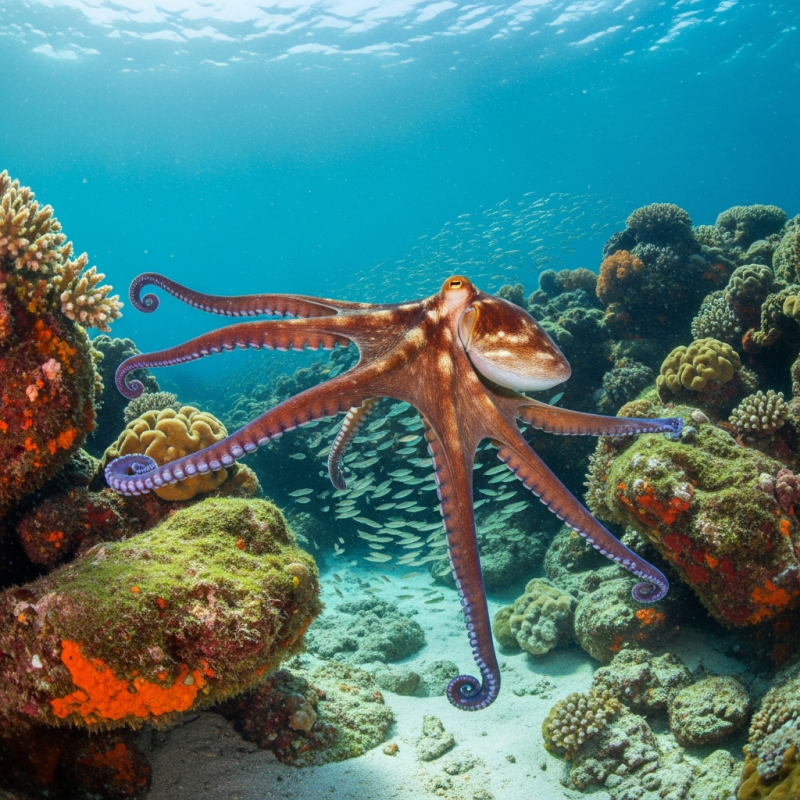
Soft cotton tee, unisex sizes
Buy ShirtWhile not a target of fisheries or culinary markets, the blanket octopus occasionally appears in ecotourism and educational programs due to its remarkable appearance and behaviors. Its dramatic form has inspired fascination but holds no significant role in traditional cultures or commercial use.
The blanket octopus inhabits pelagic waters of tropical and subtropical regions across the Atlantic, Pacific, and Indian Oceans. They are found from the surface down to depths of around 300 meters, drifting in open ocean environments far from the sea floor.


Like other octopuses, blanket octopuses display notable intelligence, including problem-solving and complex behaviors. Their unique use of Portuguese man o' war tentacles as defensive tools suggests advanced cognitive abilities to exploit environmental resources for survival.
Defense strategies include the female's ability to unfurl her expansive webbed "blanket" to appear larger and deter predators. Males employ an extraordinary tactic by wielding venomous tentacles from Portuguese man o' war jellyfish, to which they are immune, effectively using these as living weapons against threats.
Males mature quickly and die shortly after mating, while females grow rapidly to much larger sizes. This marked sexual dimorphism reflects their distinct reproductive roles. Females likely invest heavily in producing and guarding eggs, though detailed lifecycle studies remain limited due to their pelagic nature.
The blanket octopus is not currently assessed by the IUCN Red List and faces no known targeted fishing pressures. However, as a pelagic species, it is vulnerable to predation by large open-ocean predators and potential impacts from ocean pollution and climate change. Its rarity and elusive lifestyle make population assessments challenging.