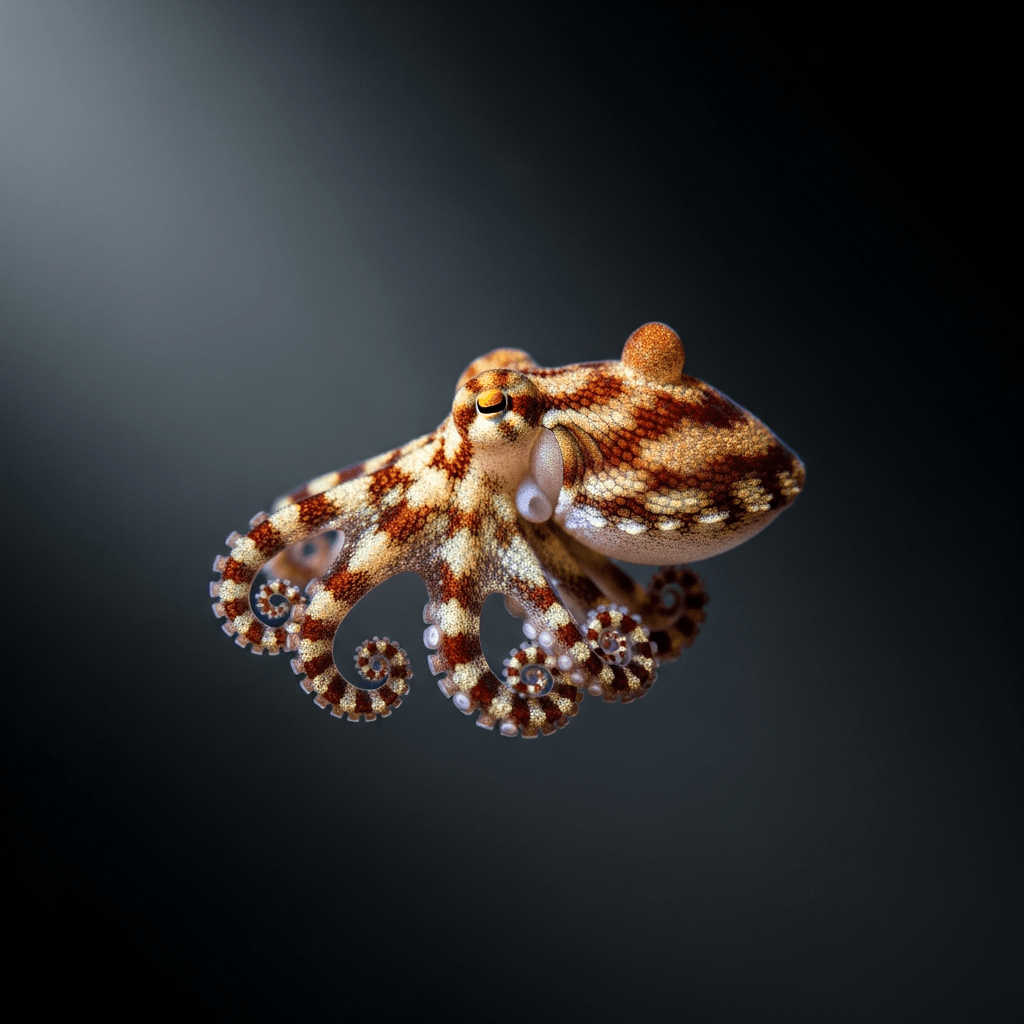
Atlantic Pygmy Octopus
The Atlantic Pygmy Octopus (Octopus joubini) is a small, adaptable cephalopod native to shallow coastal waters of the western Atlantic, known for its rapid color changes and cryptic behavior.
The Atlantic Pygmy Octopus (Octopus joubini) is a small, adaptable cephalopod native to shallow coastal waters of the western Atlantic, known for its rapid color changes and cryptic behavior.
Octopus joubini was first described in 1929 by Robson, based on specimens collected from the western Atlantic. Its species name honors the French marine biologist Dr. Louis Joubin, reflecting its early scientific recognition in marine biology.
This species belongs to the order Octopoda, family Octopodidae, and genus Octopus. As a true octopus, it shares the characteristic eight arms and soft body typical of this group, placing it firmly within the benthic cephalopods.
The Atlantic Pygmy Octopus is notably small, with a mantle length between 1.5 and 4 centimeters and an arm span up to 12 centimeters. It features a smooth mantle and relatively short arms. Its coloration ranges from reddish-brown to yellowish hues, often blending seamlessly with its surroundings thanks to prominent chromatophores that enable rapid changes in color and texture for effective camouflage.
This octopus exhibits cryptic behavior, using its ability to swiftly alter color and texture to avoid predators and ambush prey. It inhabits shallow benthic environments, interacting with its ecosystem primarily as both predator and prey. While not a target of commercial fisheries, it may be incidentally caught and is occasionally consumed regionally, typically prepared whole by grilling or stewing.
Bring this kind into your world � illustrated posters, mugs, and shirts.

Archival print, museum-grade paper
Buy Poster
Stoneware mug, dishwasher safe
Buy Mug
Soft cotton tee, unisex sizes
Buy ShirtThough the Atlantic Pygmy Octopus itself holds minimal direct cultural significance, octopuses broadly symbolize intelligence and adaptability in many coastal communities. This species contributes to the rich marine biodiversity that inspires local folklore and appreciation of ocean life.
The Atlantic Pygmy Octopus is native to the western Atlantic Ocean, inhabiting shallow coastal waters from the surface down to about 20 meters. It favors benthic environments with sandy or muddy bottoms, seagrass beds, and coral rubble, where it can effectively hide and hunt.
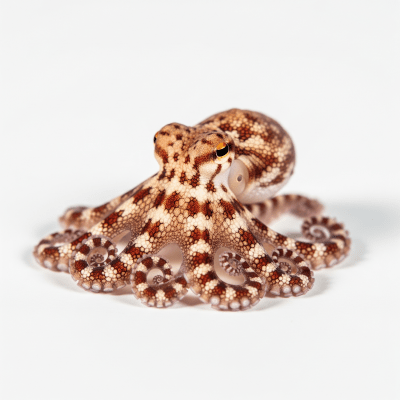



Like other octopuses, O. joubini demonstrates notable intelligence through its use of rapid color and texture changes for camouflage, a sophisticated behavior that aids in predator avoidance and hunting. Its cryptic nature reflects advanced neural control over chromatophores, underscoring its cognitive adaptability despite its small size.
This species relies primarily on camouflage, using its prominent chromatophores to quickly alter skin color and texture to blend into its environment. This rapid disguise helps it evade predators such as fish and larger invertebrates. Its small size and benthic lifestyle further aid in avoiding detection.
The Atlantic Pygmy Octopus has a brief lifespan of roughly six to twelve months. While specific reproductive behaviors are not well documented, it likely follows typical octopus patterns involving short-lived adults that reproduce once before dying. Rapid growth and early maturity suit its ephemeral lifecycle in dynamic coastal habitats.
Currently, the Atlantic Pygmy Octopus has not been formally assessed for conservation status. It faces natural threats from predation by fish and larger invertebrates. Its tolerance to variable salinity and temperature suggests some resilience to environmental changes, but habitat degradation in coastal areas could pose risks. It is not targeted by fisheries and has limited economic importance, reducing direct human pressures.