
Argonaut Octopus
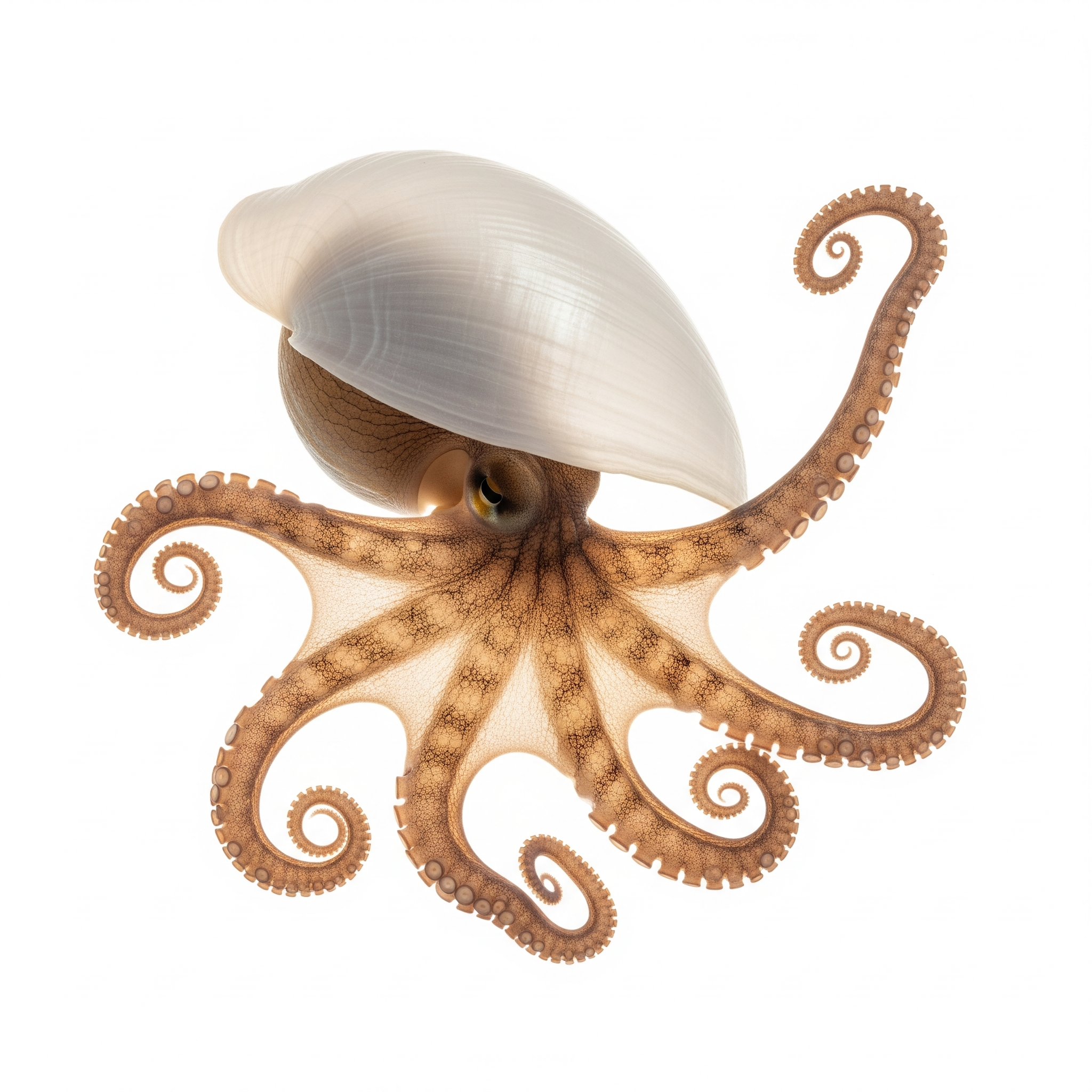
The Argonaut octopus is a pelagic cephalopod known for the female's unique ability to produce a delicate, paper-thin shell called an eggcase, which serves as a brood chamber and aids in buoyancy.
The Argonaut octopus is a pelagic cephalopod known for the female's unique ability to produce a delicate, paper-thin shell called an eggcase, which serves as a brood chamber and aids in buoyancy.
The genus Argonauta was first described by Jean-Baptiste Lamarck in 1801, with the type species Argonauta argo. These octopuses evolved within the family Argonautidae and have adapted to a life drifting near the ocean surface in temperate and tropical waters worldwide.
The Argonaut octopus belongs to the order Octopoda, family Argonautidae, and genus Argonauta. This group is distinct within octopuses for its pelagic lifestyle and the female's production of an eggcase, setting it apart from typical benthic octopods.
Females of the Argonaut octopus can reach mantle lengths up to 10 cm and produce a fragile, calcareous eggcase up to 30 cm in diameter, which resembles a paper-thin shell. Their coloration is generally pale with brown or blue patterns. Males are much smaller, typically under 2 cm, and lack the eggcase. This pronounced sexual dimorphism is a hallmark of the species.
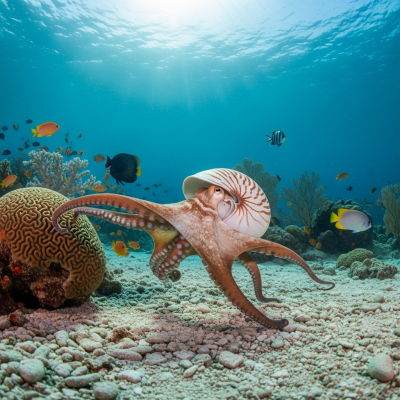
Argonaut octopuses lead a pelagic, drifting existence near the ocean surface. Females use their eggcase not only to protect their eggs but also to trap air, allowing them to control buoyancy. They are agile swimmers capable of rapid escape responses and employ camouflage to avoid predators. Their unique reproductive strategy and floating lifestyle distinguish them within the octopus order.
Bring this kind into your world � illustrated posters, mugs, and shirts.
Archival print, museum-grade paper
Buy Poster
Stoneware mug, dishwasher safe
Buy Mug
Soft cotton tee, unisex sizes
Buy ShirtThe Argonaut's eggcase has historically been mistaken for a nautilus shell and features prominently in art and mythology as a symbol of femininity and the sea. These delicate shells are often collected as curiosities or decorative items, reflecting their cultural allure beyond biological interest.
Argonaut octopuses inhabit temperate and tropical oceans worldwide, with the highest concentrations in the Indo-Pacific and Mediterranean regions. They live pelagically near the ocean surface, drifting freely rather than dwelling on the seafloor.
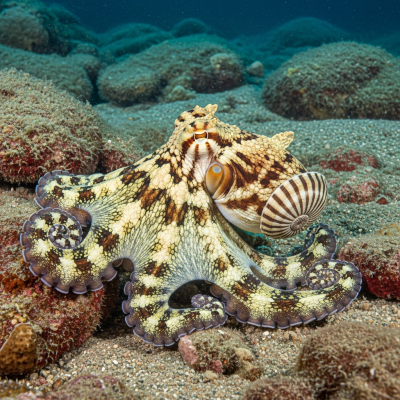
While specific studies on Argonaut octopus cognition are limited, like other octopuses, they exhibit agile swimming and rapid escape behaviors suggesting advanced motor control and environmental awareness. Their ability to manipulate buoyancy via the eggcase reflects a unique adaptation requiring precise physiological control.
Argonaut octopuses rely on rapid escape responses and effective camouflage to evade predators. Their pelagic lifestyle exposes them to threats, but their delicate eggcase also provides some protection for eggs and aids in buoyancy control, indirectly supporting survival.
Reproduction in Argonaut octopuses is marked by strong sexual dimorphism. Females produce a calcareous eggcase that serves as a brood chamber for eggs and helps maintain buoyancy. Males are significantly smaller and do not produce an eggcase. Lifespan is estimated to be less than one year, with growth and development occurring rapidly in the open ocean.
There is currently no formal conservation assessment for Argonaut octopuses, and they are not targeted by fisheries or aquaculture. Their pelagic nature and rarity reduce direct human pressures, but like many marine species, they may be vulnerable to ocean changes such as pollution and climate shifts.