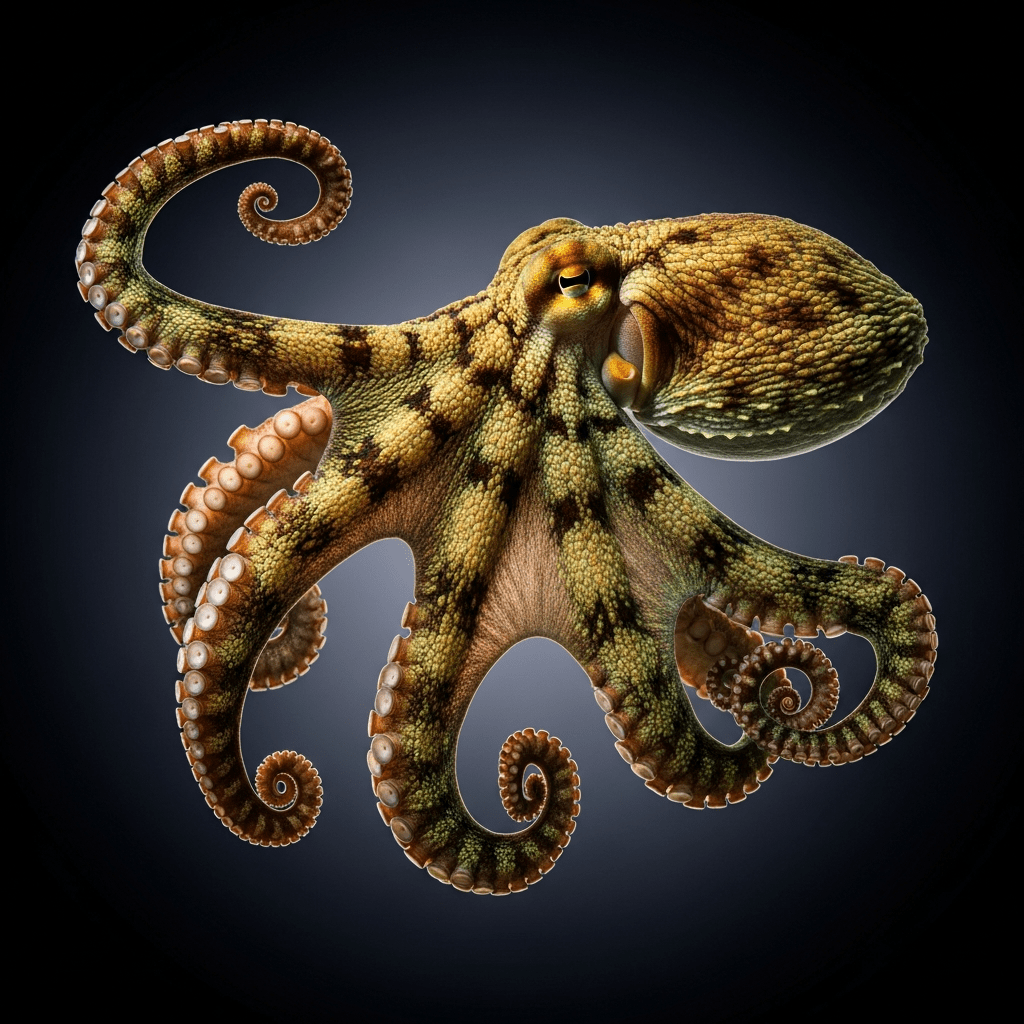
Algae Octopus
The Algae Octopus (Abdopus aculeatus) is a small, highly adaptable octopus species known for its unique ability to "walk" on land between tide pools and its exceptional camouflage among algae and seagrass.
The Algae Octopus (Abdopus aculeatus) is a small, highly adaptable octopus species known for its unique ability to "walk" on land between tide pools and its exceptional camouflage among algae and seagrass.
Abdopus aculeatus was first described by W. J. Berry in 1911, based on specimens collected from the Indo-Pacific region. Initially classified under the genus Octopus, it was later reassigned to Abdopus following detailed morphological and genetic studies.
This species belongs to the order Octopoda, family Octopodidae, genus Abdopus. It is a true octopus, part of a diverse group of soft-bodied, eight-armed mollusks that inhabit marine environments worldwide.
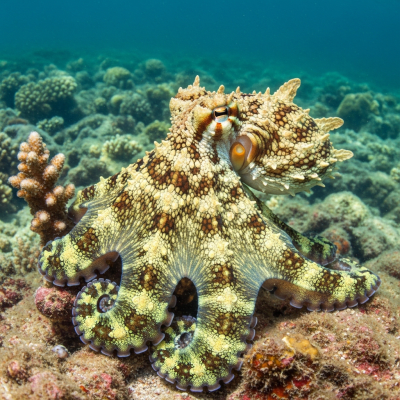
The Algae Octopus is small, with a mantle length between 3 and 6 centimeters and an arm span reaching up to 20 centimeters. Its coloration varies widely, featuring mottled browns, greens, and pale hues that blend seamlessly with algae, seagrass, and coral rubble. Distinctive spiky papillae on its skin enhance its cryptic appearance, making it nearly invisible in its natural habitat.
Remarkably, this octopus exhibits bipedal locomotion, using two arms to "walk" across exposed intertidal flats during low tide, a rare behavior among octopuses. It demonstrates complex behaviors and terrestrial mobility, moving between tide pools in search of food and shelter. Its reproductive strategy is semelparous, meaning it reproduces once before dying.
Bring this kind into your world � illustrated posters, mugs, and shirts.
Archival print, museum-grade paper
Buy Poster
Stoneware mug, dishwasher safe
Buy Mug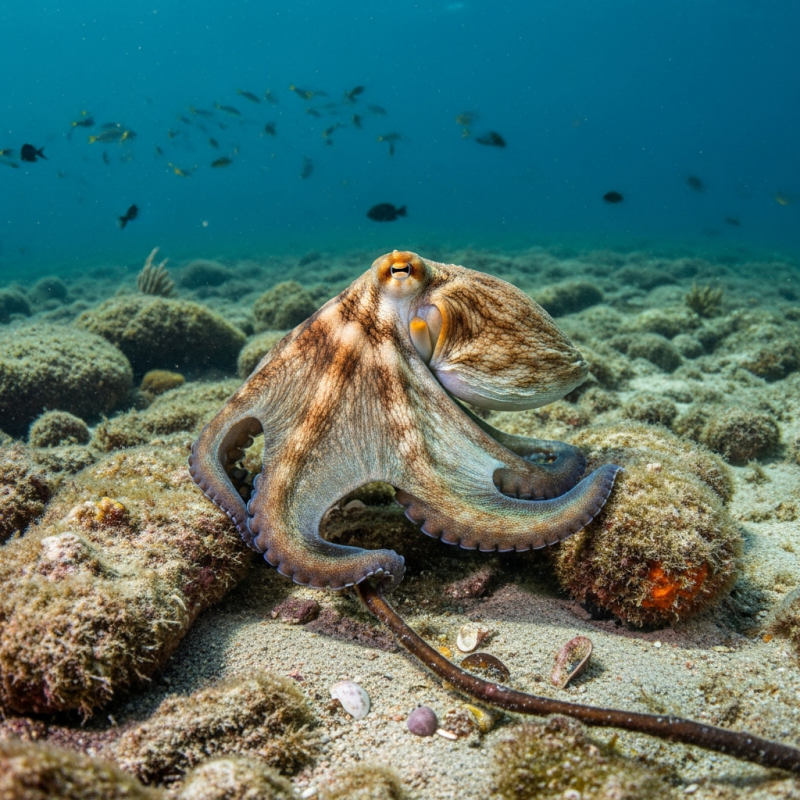
Soft cotton tee, unisex sizes
Buy ShirtWhile the Algae Octopus holds little commercial or culinary significance due to its small size and elusive nature, it is valued scientifically as a model organism for studying cephalopod intelligence and intertidal adaptation. It occasionally appears in local vernaculars as the "walking octopus" in parts of the Indo-Pacific.
The Algae Octopus is native to the Indo-Pacific region, where it occupies intertidal zones rich in algae, seagrass, and coral rubble. It thrives in shallow waters and is often seen moving across exposed substrates during low tide, exploiting the unique ecological niche between land and sea.

This species is notable for its complex behaviors and problem-solving abilities, including its rare terrestrial locomotion. Its adaptability to intertidal environments highlights advanced cognitive skills uncommon among marine invertebrates.
The Algae Octopus relies heavily on its exceptional camouflage, using variable coloration and skin textures to blend into its surroundings. Its cryptic appearance, enhanced by spiky papillae, helps it avoid predators, especially in the visually complex intertidal habitat.
This octopus follows a semelparous lifecycle, reproducing once before death. Its lifespan ranges from approximately 12 to 18 months. Details on its mating behaviors are limited, but like many octopuses, it likely invests significant care in its eggs before dying shortly after reproduction.
Currently, there is no specific conservation status assigned to the Algae Octopus. Its small size and cryptic nature limit its exposure to fisheries, but habitat degradation in intertidal zones could pose future risks. Continued study is important to monitor potential environmental threats.