Collared Lizard
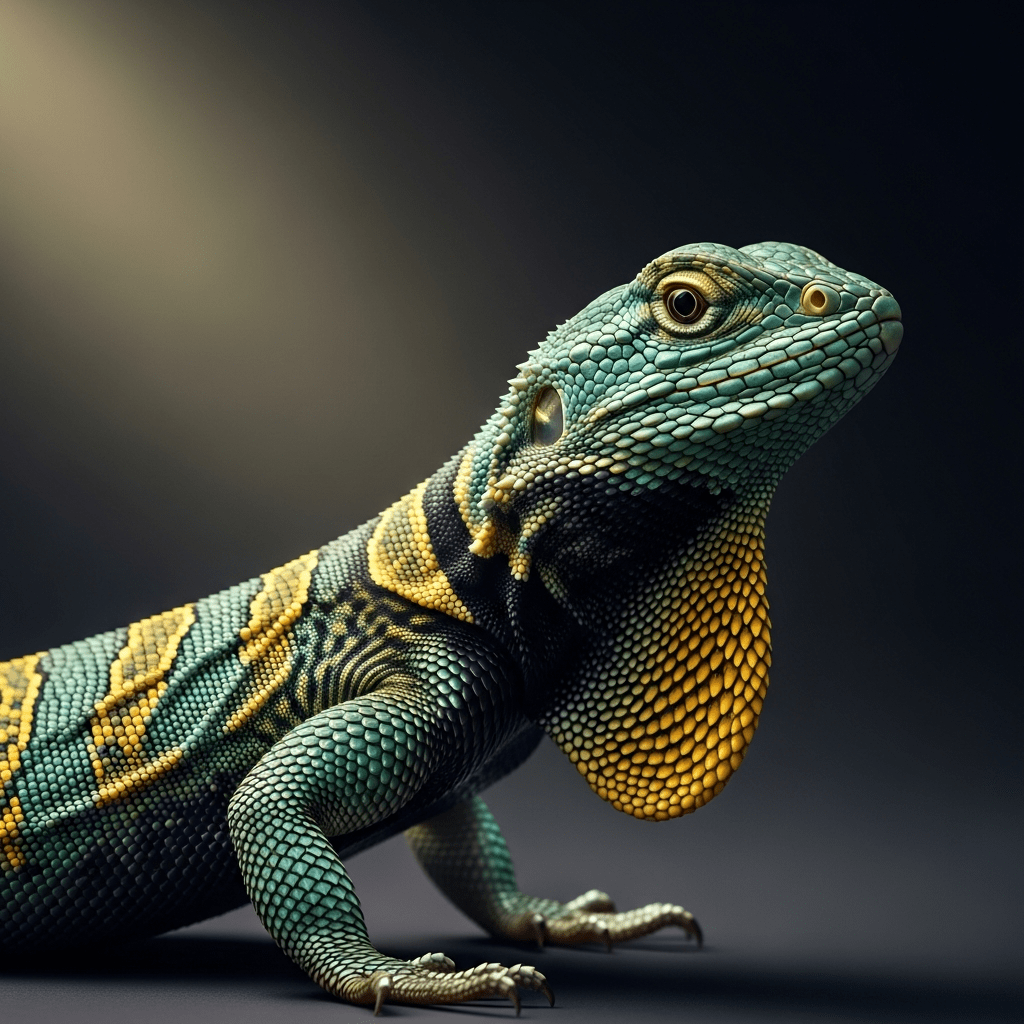
The Collared Lizard (Crotaphytus collaris) is a striking reptile native to the central and southwestern United States, famed for its vivid coloration and distinctive black bands encircling its neck.
The Collared Lizard (Crotaphytus collaris) is a striking reptile native to the central and southwestern United States, famed for its vivid coloration and distinctive black bands encircling its neck.
First described by naturalist Thomas Say in 1823, the Collared Lizard has a natural lineage rooted in the arid landscapes of central and southwestern United States. It is a wild species with no history of domestication or artificial breeding, encompassing recognized subspecies such as C. c. collaris, C. c. baileyi, and C. c. auriceps.
The Collared Lizard belongs to the family Crotaphytidae within the suborder Lacertilia of the order Squamata. Its genus, Crotaphytus, groups it with closely related species known for robust builds and terrestrial agility, distinguishing it within the diverse taxonomy of lizards.
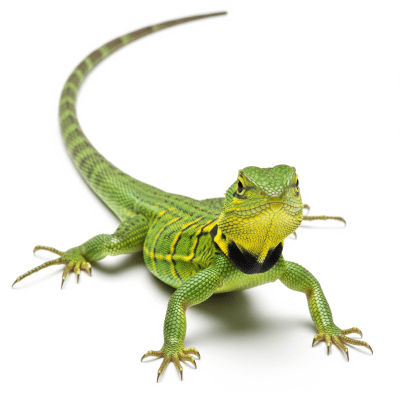
This medium-sized lizard ranges from 22 to 35 centimeters in total length, featuring a robust body, large head, and long tail. Males display bright hues of green, blue, yellow, and orange, contrasted by two prominent black "collars" around the neck, while females tend to have duller coloration. Well-developed limbs enable swift terrestrial movement, including remarkable short bursts of bipedal running.
Active during the day, the Collared Lizard is known for its agility and speed, often sprinting on two legs to evade predators. Primarily insectivorous, it also preys on small vertebrates, playing a vital role in its ecosystem. Its striking appearance and dynamic behavior make it a notable subject for ecological observation and education.
Bring this kind into your world � illustrated posters, mugs, and shirts.
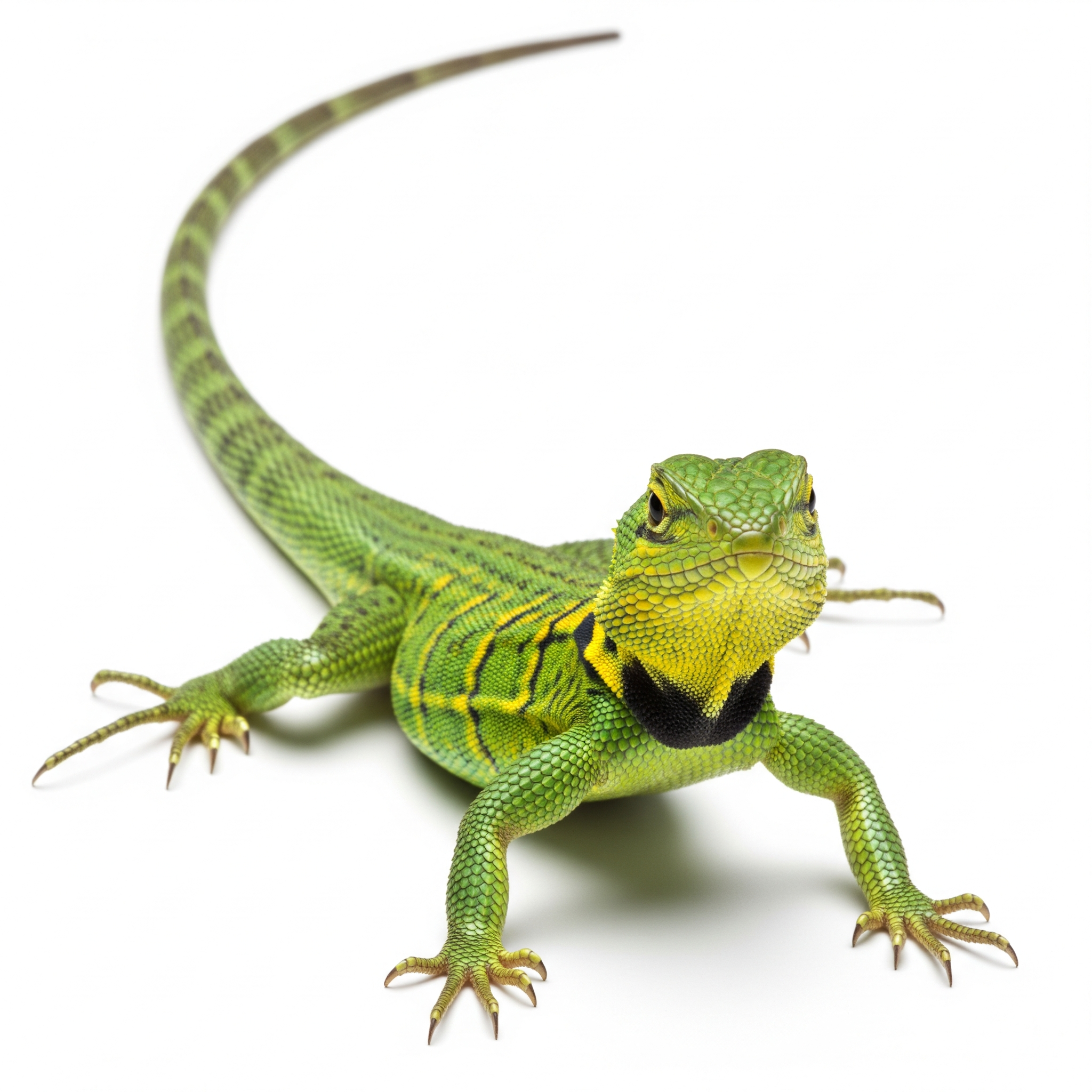
Archival print, museum-grade paper
Buy Poster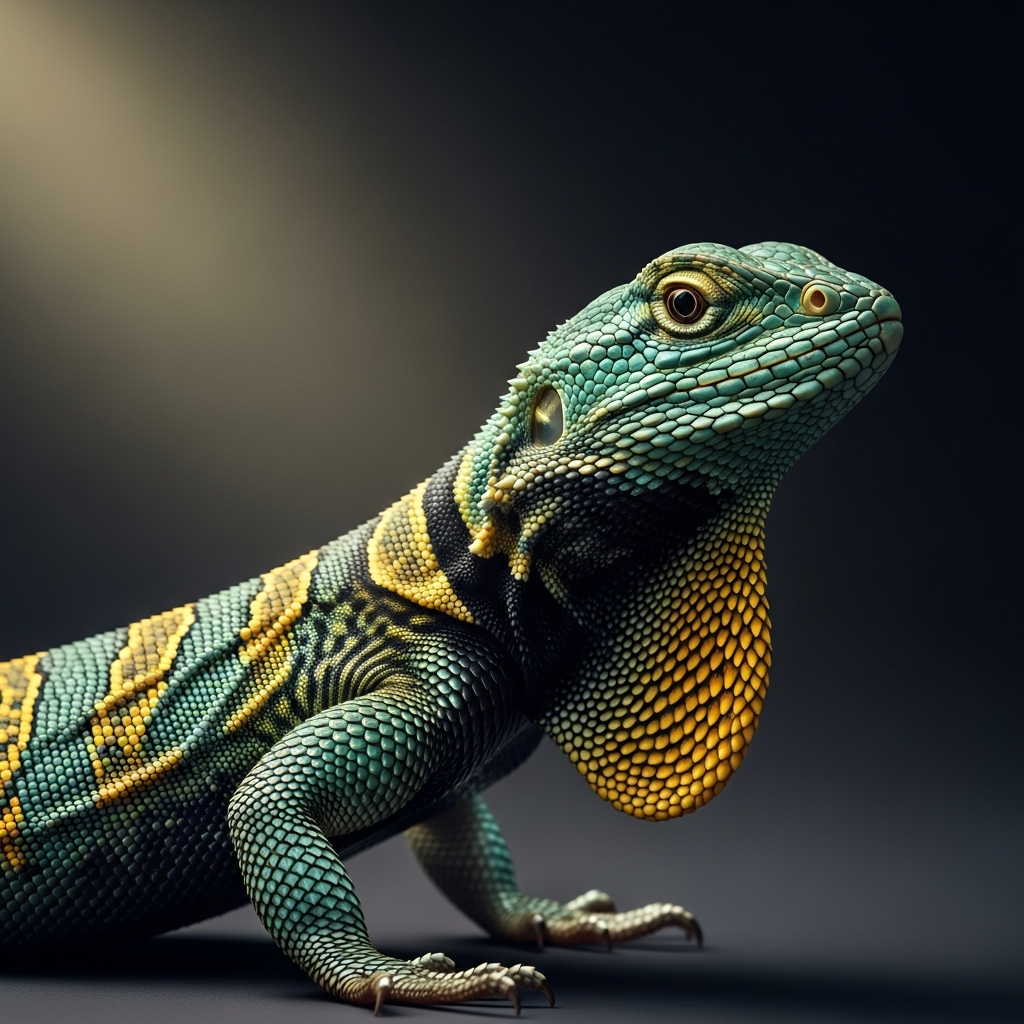
Stoneware mug, dishwasher safe
Buy Mug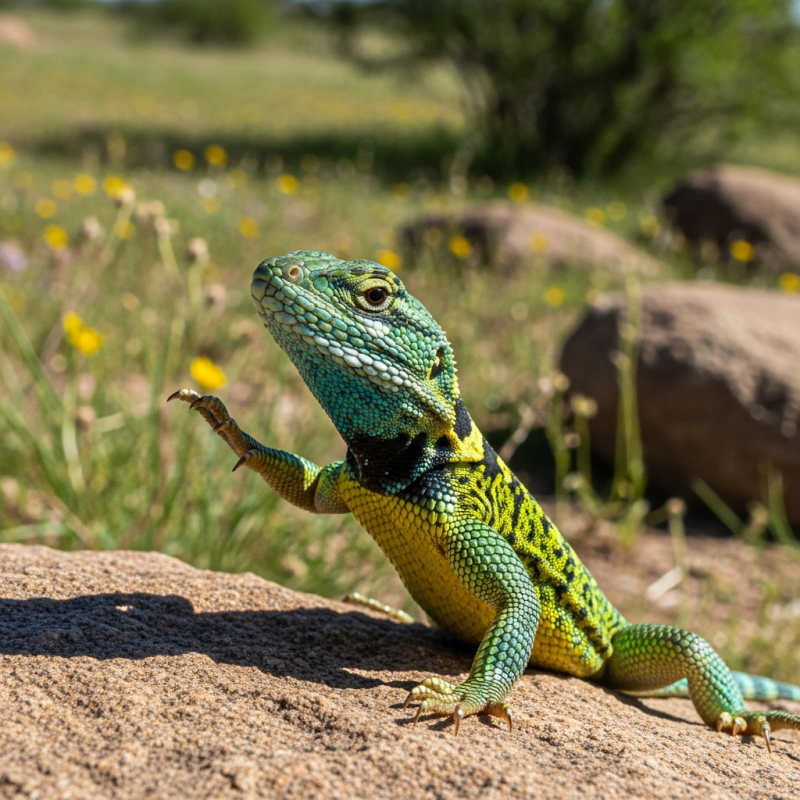
Soft cotton tee, unisex sizes
Buy ShirtThe Collared Lizard holds cultural prominence as the state reptile of Oklahoma, where it is affectionately nicknamed the "Mountain Boomer." While it lacks widespread representation in art or mythology, its status as a regional symbol underscores its importance in local heritage and natural identity.
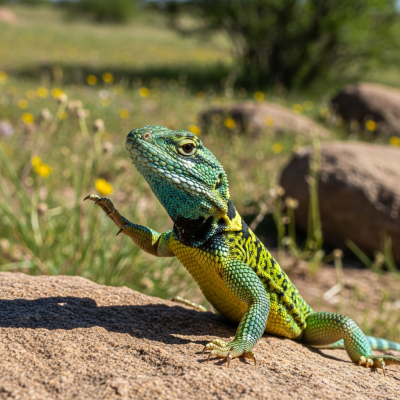
The Collared Lizard inhabits arid and semi-arid environments across the central and southwestern United States. It favors rocky outcrops, open woodlands, and desert scrublands where it can bask and hunt effectively under the sun.
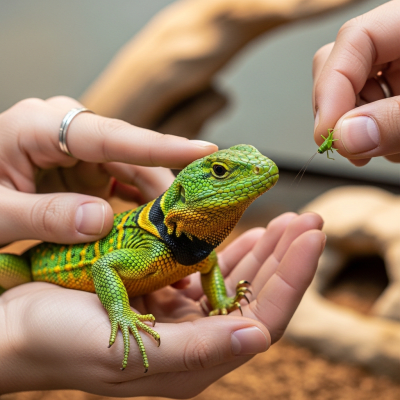
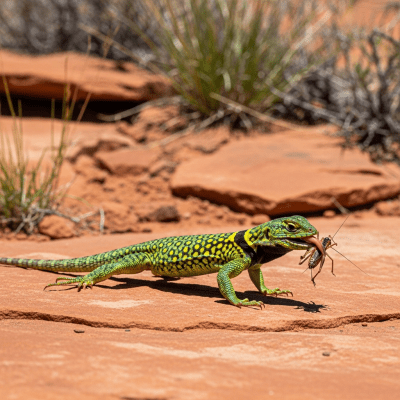
Primarily insectivorous, the Collared Lizard feeds on a variety of insects, supplemented by small vertebrates when available. Its active, diurnal lifestyle supports a hunting strategy reliant on speed and keen eyesight to capture prey.
The Collared Lizard reproduces by laying eggs (oviparous), with breeding occurring in spring and early summer. Growth and development are seasonal, aligned with warmer months that provide optimal conditions for hatchlings to thrive.
While not currently listed as threatened, the Collared Lizard faces pressures from habitat loss and collection in some areas. Regulations on wild capture help protect populations, and its role as a state symbol supports conservation awareness.
Occasionally kept as pets, Collared Lizards require environments that mimic their natural arid habitats, including ample basking spots and a diet rich in live insects. Due to conservation concerns, responsible sourcing and adherence to local regulations are essential for prospective keepers.