
Passionfruit
Passionfruit is a vibrant, aromatic fruit from the genus Passiflora, cherished worldwide for its sweet-tart flavor, juicy pulp, and nutritional richness.
Passionfruit is a vibrant, aromatic fruit from the genus Passiflora, cherished worldwide for its sweet-tart flavor, juicy pulp, and nutritional richness.
Native to southern Brazil, Paraguay, and northern Argentina, passionfruit has been enjoyed by indigenous peoples for centuries before its formal botanical description in the 18th century. The most widely cultivated species, Passiflora edulis, spread globally due to its alluring taste and versatility, with two main forms—purple and yellow—arising through natural mutation and hybridization.
Passionfruit belongs to the family Passifloraceae and is classified botanically as a berry. The primary commercial species is Passiflora edulis, with notable variants including the purple and yellow forms. As a fruit, it fits squarely within the broader taxonomy of edible botanical fruits, celebrated for both its scientific and culinary significance.
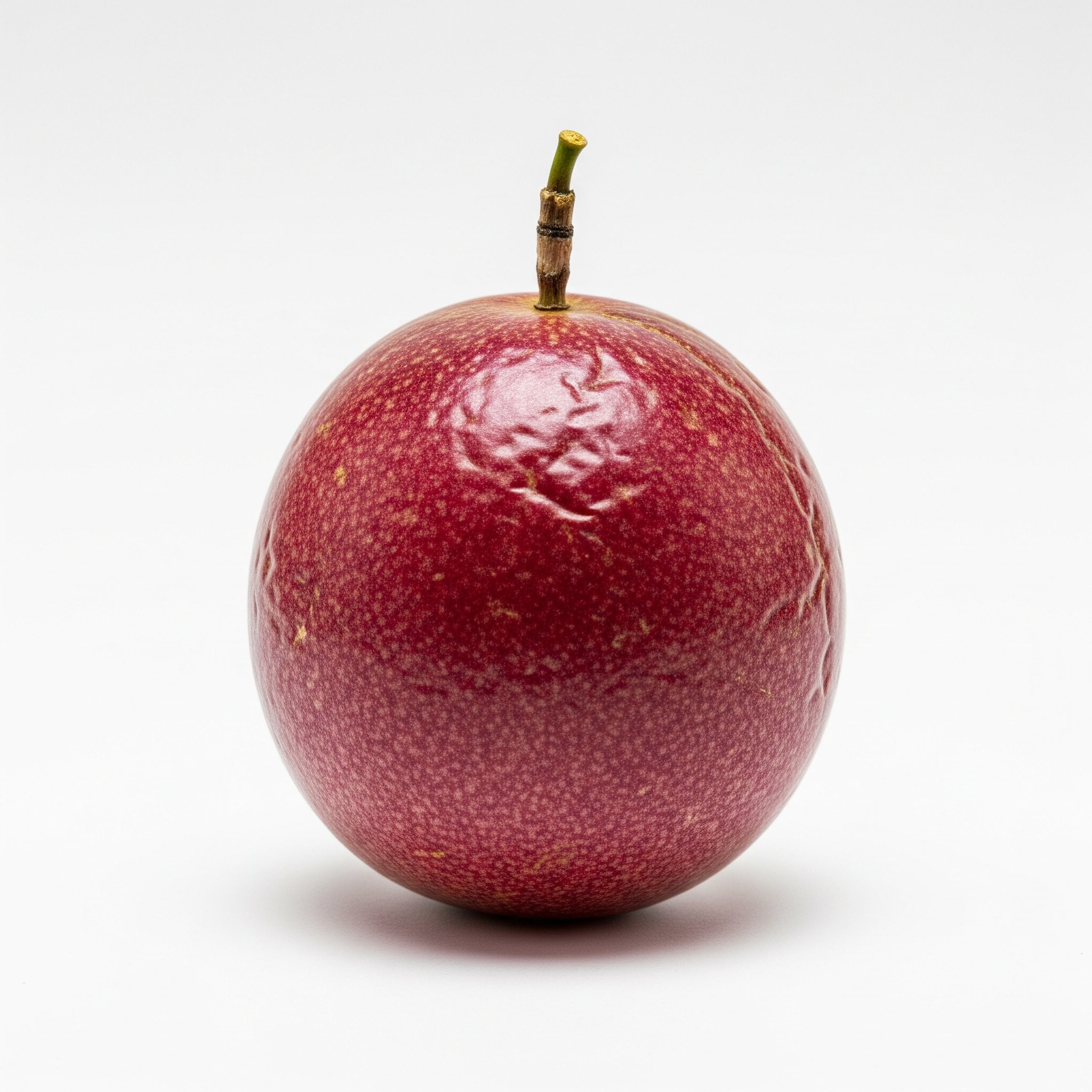
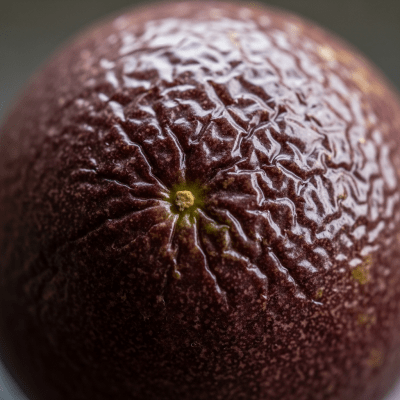
Passionfruit is typically round or oval, measuring 4–8 cm in diameter. Its tough, waxy rind ranges from deep purple to bright yellow, depending on the variety. Inside, a cluster of small black seeds is enveloped by juicy, aromatic, orange-yellow pulp, which is the edible portion prized for its intense fragrance and flavor.
Passionfruit is climacteric, meaning it continues to ripen after harvest. The fruit is often eaten fresh by scooping out the pulp, but it is equally valued for its role in juices, jams, desserts, and flavorings. Its leaves and flowers are sometimes used medicinally or as herbal teas in various cultures. Commercially, passionfruit is traded both fresh and processed, supporting local economies and international markets.
Bring this kind into your world � illustrated posters, mugs, and shirts.
Archival print, museum-grade paper
Buy Poster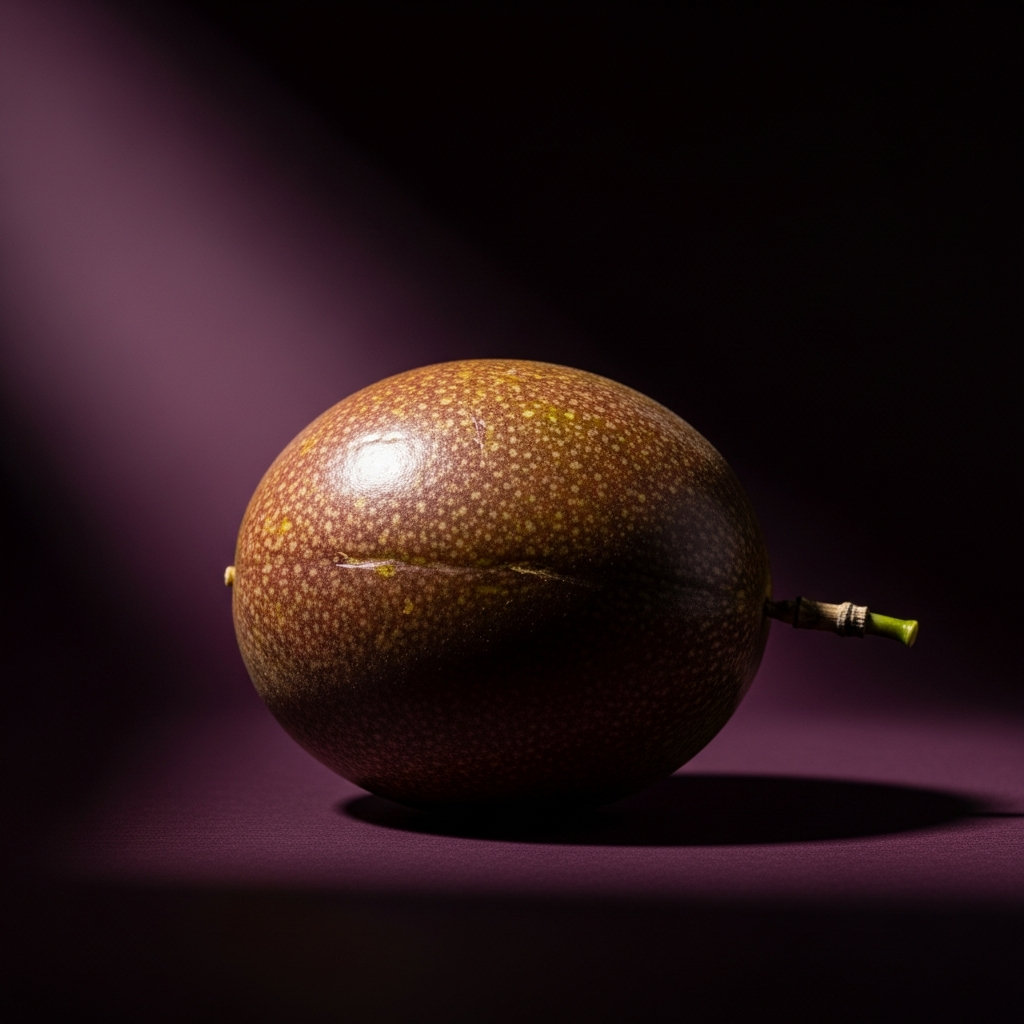
Stoneware mug, dishwasher safe
Buy Mug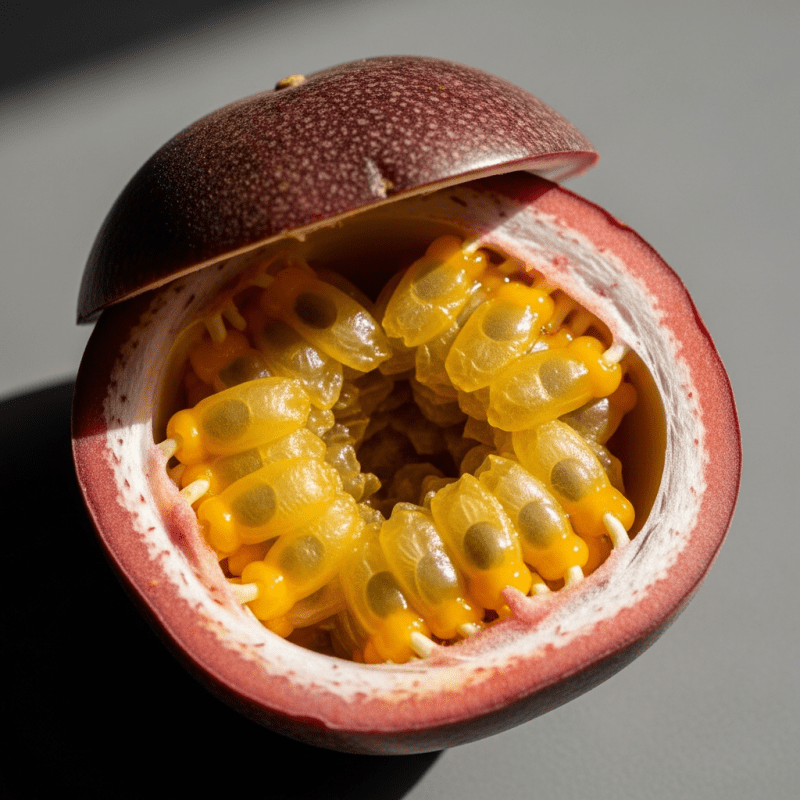
Soft cotton tee, unisex sizes
Buy ShirtPassionfruit’s name originates from the symbolic association of its flower’s structure with the Passion of Christ, as interpreted by Spanish missionaries. Its vivid colors and exotic aroma have made it a staple in tropical cuisines and a symbol of abundance and vitality in art and folklore. In regions like Brazil and Hawaii, passionfruit features prominently in beverages, celebrations, and traditional remedies.
Passionfruit is a nutritional powerhouse, offering high levels of vitamin C, dietary fiber, and beneficial phytochemicals. Its pulp is low in calories, rich in antioxidants, and provides modest amounts of vitamin A, potassium, and iron, making it a healthful addition to many diets.

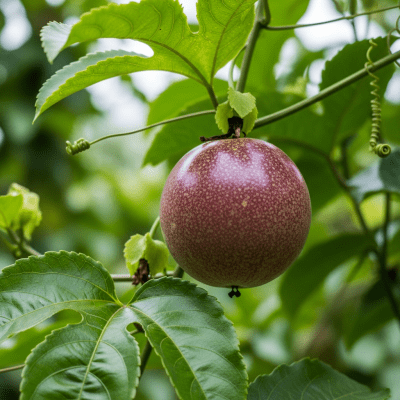
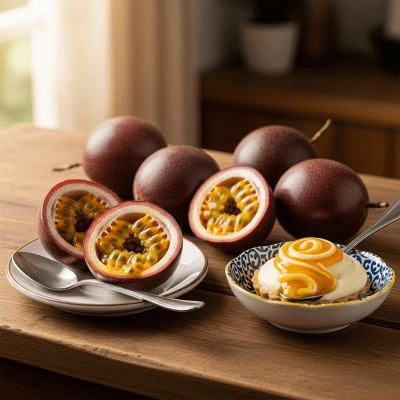
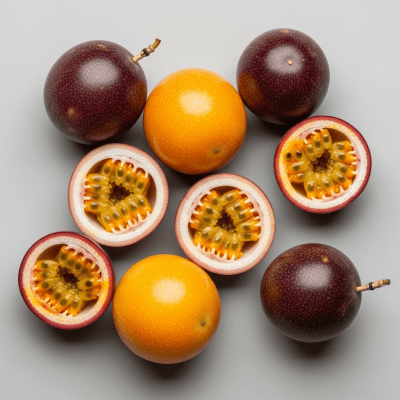
The two principal commercial forms are the purple passionfruit (Passiflora edulis Sims) and the yellow passionfruit (Passiflora edulis f. flavicarpa Deg.). The yellow type is often larger and more vigorous, while the purple variety is prized for its intense aroma and flavor. Other related species, such as sweet granadilla and giant granadilla, are grown regionally but are less common in global trade.
Passionfruit thrives in tropical and subtropical climates, with harvest seasons varying by region. In Brazil and much of South America, fruiting peaks from late summer to early autumn, while in Australia and Africa, availability may extend year-round due to staggered plantings. In export markets, passionfruit is often available throughout the year, though peak freshness coincides with local harvests.
Store passionfruit at cool, humid conditions to extend shelf life up to 2–4 weeks. Allow underripe fruits to ripen at room temperature until the skin wrinkles, indicating peak flavor. Handle gently to avoid bruising, and refrigerate once ripe for best quality. The pulp can be frozen for longer storage or used immediately in recipes.
Passionfruit supports immune health due to its high vitamin C content and provides dietary fiber for digestive wellness. Its antioxidants may help combat inflammation and support heart health. Some cultures use passionfruit leaves and flowers in herbal remedies for relaxation and mild pain relief.