
Panthera uncia
The snow leopard (Panthera uncia) is a large, elusive wild cat native to the high mountains of Central and South Asia, renowned for its smoky-gray coat and extraordinary adaptations to cold, rugged terrain.
The snow leopard (Panthera uncia) is a large, elusive wild cat native to the high mountains of Central and South Asia, renowned for its smoky-gray coat and extraordinary adaptations to cold, rugged terrain.
First described in 1830 by Christian Gottfried Ehrenberg from the Altai Mountains, the snow leopard’s evolutionary roots trace to Central and South Asia’s alpine landscapes. Initially classified in its own genus (Uncia), molecular studies have since placed it firmly within Panthera, closely related to the tiger. The species’ origin is deeply entwined with the dramatic uplift and climatic shifts of the region’s mountain ranges, shaping its unique adaptations and solitary lifestyle.
The snow leopard belongs to the family Felidae, subfamily Pantherinae, and genus Panthera. While previously assigned to its own genus (Uncia), genetic and morphological evidence now confirms its place among the big cats, most closely allied to the tiger (Panthera tigris). No recognized subspecies exist, though regional populations show some genetic differentiation. Its scientific name is Panthera uncia, and it is part of the broader felid lineage that encompasses both iconic large cats and smaller wild species.
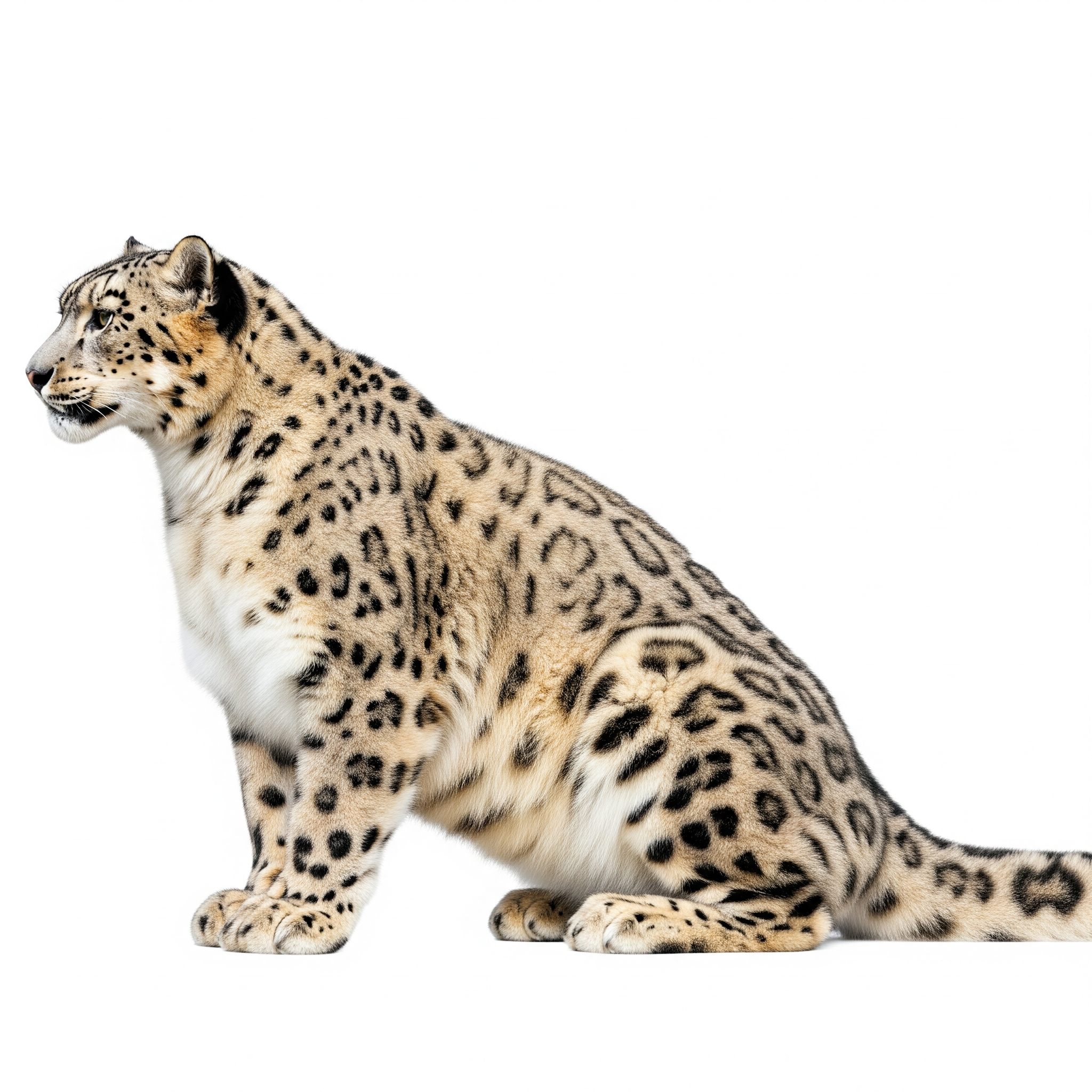
The snow leopard is instantly recognizable by its dense, woolly, pale smoky-gray fur patterned with black rosettes and spots, providing perfect camouflage among rocky outcrops. Adults typically weigh 22–55 kg, with exceptional males reaching up to 75 kg. Their bodies are compact and muscular, featuring a long, thick tail (80–105 cm) used for balance and warmth, short muzzle, small rounded ears, and broad, fur-covered paws that act as natural snowshoes. These features, combined with large nasal cavities, help the snow leopard thrive in frigid, high-altitude environments.
Snow leopards are solitary and crepuscular, most active at dawn and dusk. As apex predators, they hunt wild ungulates such as blue sheep, ibex, and Himalayan tahr, but also pursue smaller mammals and birds. Their powerful build and agility allow them to leap up to 15 meters and navigate steep, rocky terrain with ease. While rarely seen by humans, they play a vital ecological role in maintaining the balance of mountain ecosystems. Human interactions are limited, but conservation efforts increasingly involve local communities to protect both the cats and their habitats.
Bring this kind into your world � illustrated posters, mugs, and shirts.
Archival print, museum-grade paper
Buy Poster
Stoneware mug, dishwasher safe
Buy Mug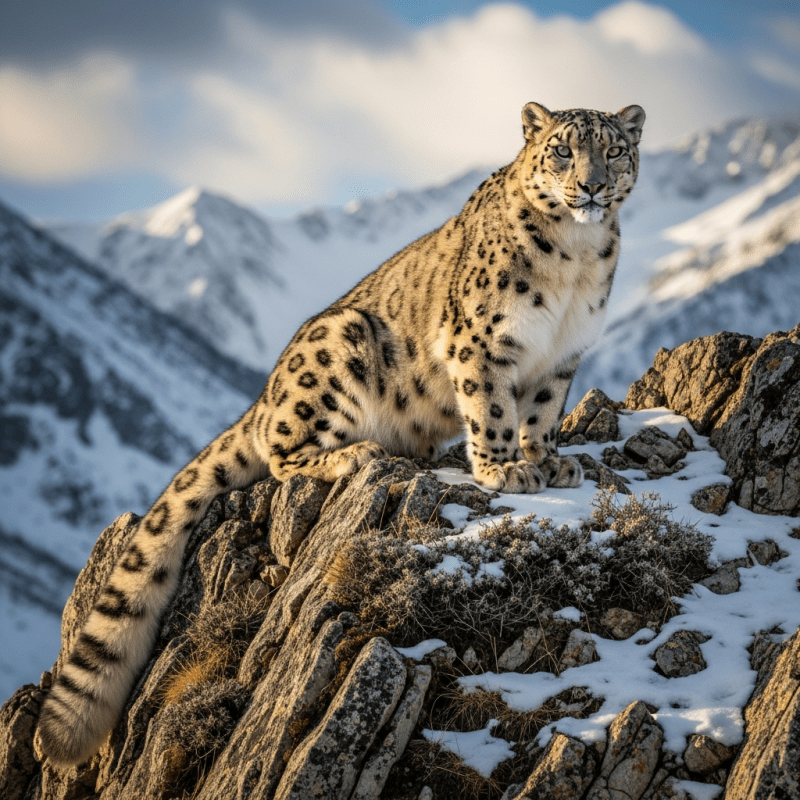
Soft cotton tee, unisex sizes
Buy ShirtThroughout their range, snow leopards are revered in folklore, art, and spiritual traditions. Known as "irbis" in Russian and "shan" in Tibetan, they symbolize mystery, strength, and resilience. In Himalayan cultures, they are often regarded as guardians of the mountains, appearing in legends and religious iconography. Globally, the snow leopard serves as a flagship species for mountain conservation, inspiring environmental campaigns and international cooperation to protect fragile alpine habitats.
Historically and currently, snow leopards range across approximately 2 million square kilometers in Central and South Asia. Their territory spans 12 countries: Afghanistan, Bhutan, China, India, Kazakhstan, Kyrgyzstan, Mongolia, Nepal, Pakistan, Russia, Tajikistan, and Uzbekistan. They primarily inhabit mountainous regions, with populations scattered across the Himalayas, Pamirs, Tien Shan, and Altai ranges.
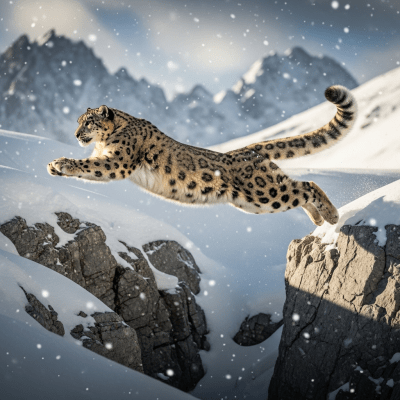

Snow leopards prefer alpine and subalpine zones at elevations from 3,000 to 5,500 meters, favoring steep, rugged mountains, cliffs, and rocky outcrops with sparse vegetation. Their ecological role as apex predators helps regulate populations of wild ungulates and maintain the health of mountain ecosystems. In winter, they may descend to lower altitudes in search of prey. Their elusive nature and solitary habits make them difficult to study, but they are vital indicators of ecosystem integrity in their remote habitats.
The snow leopard is listed as Vulnerable on the IUCN Red List (2023), with an estimated global population of 4,080–6,590 mature individuals and a decreasing trend. This status reflects ongoing risks from habitat loss, poaching, and prey depletion. The species is protected under CITES Appendix I and by national laws in most range countries, with numerous conservation initiatives in place to safeguard its future.
Major threats to snow leopards include habitat fragmentation due to human development, retaliatory killing by herders protecting livestock, poaching for illegal trade in fur and bones, depletion of natural prey, and the impacts of climate change on alpine environments. These challenges are compounded by the species’ low population density and elusive behavior, making conservation efforts both urgent and complex.
Snow leopards possess remarkable adaptations for survival in cold, high-altitude environments: a stocky build and thick, woolly fur for insulation; short muzzle and small rounded ears to minimize heat loss; large nasal cavities for warming cold air; and broad, fur-covered paws that function as snowshoes. Their camouflage coat blends seamlessly with rocky terrain, and physiological traits enable them to thrive in low-oxygen (hypoxic) conditions. Their agility allows them to leap vast distances and traverse precipitous slopes with ease.
Breeding occurs in late winter, with a gestation period of 90–100 days. Females give birth to litters of 1–5 cubs (typically 2–3) in spring or early summer, often in secluded rocky dens. Cubs remain dependent on their mother for up to 18–22 months, learning to hunt and navigate the rugged terrain before dispersing. Snow leopards reach sexual maturity at around 2–3 years, and their solitary nature means encounters between adults are rare outside the breeding season.
No formal subspecies or breeds of snow leopard are currently recognized. While genetic studies indicate some regional population structure, all individuals are classified as Panthera uncia. Historical synonyms include Uncia uncia and Felis uncia, reflecting earlier taxonomic debates.
Genetic research has firmly placed the snow leopard within the genus Panthera, with the tiger (Panthera tigris) as its closest living relative. The complete genome, sequenced in 2013, reveals adaptations to hypoxia and cold, supporting its alpine lifestyle. Mitochondrial DNA barcodes are widely published, and population genetic studies show moderate diversity with some regional differentiation, but no evidence of hybridization with other big cats in the wild.