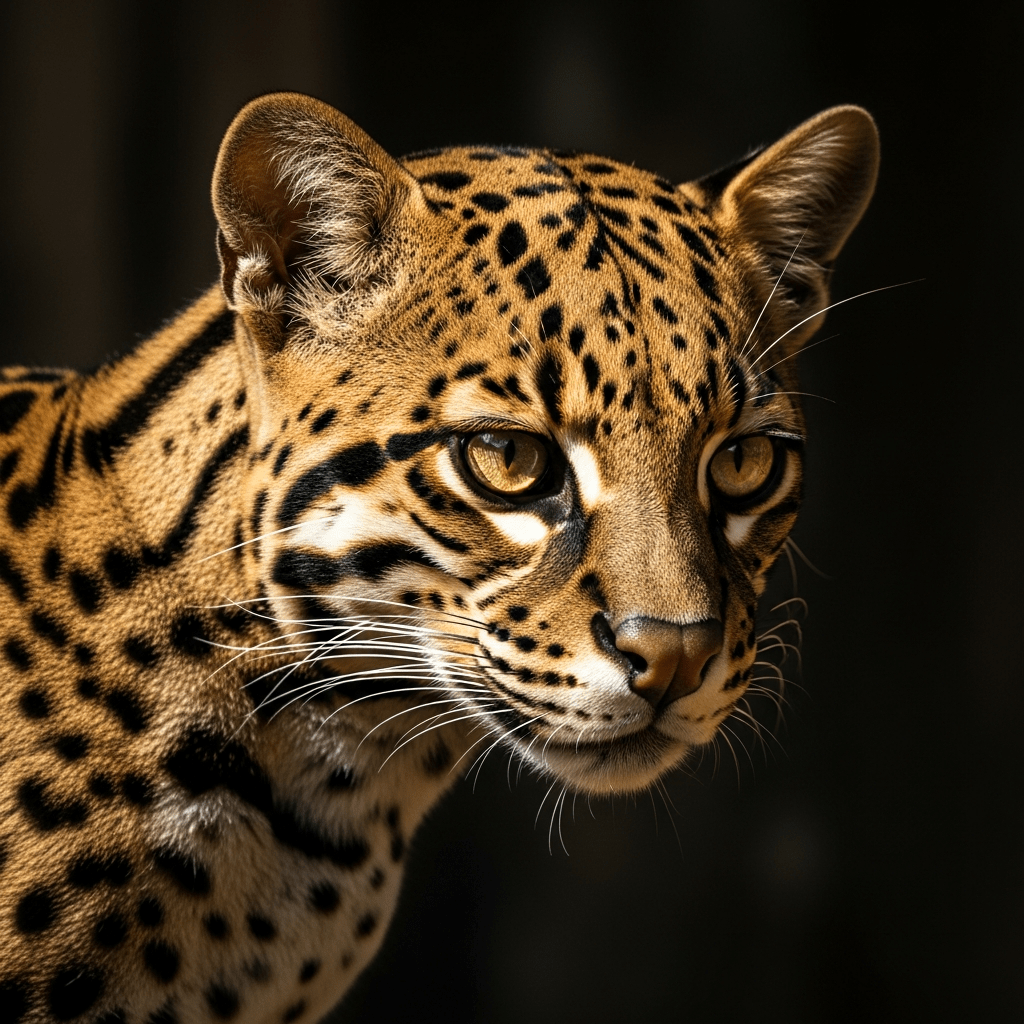
Leopardus pardalis
The ocelot (Leopardus pardalis) is a medium-sized wild cat native to the Americas, instantly recognizable by its striking coat of dark rosettes and stripes on tawny fur.
The ocelot (Leopardus pardalis) is a medium-sized wild cat native to the Americas, instantly recognizable by its striking coat of dark rosettes and stripes on tawny fur.
First described scientifically by Carl Linnaeus in 1758, the ocelot’s origins trace to the lush forests and scrublands of Central and South America. Early European naturalists encountered and documented the species during expeditions in regions such as Brazil and Mexico, where its distinctive appearance and elusive habits captured attention. The ocelot belongs to the genus Leopardus, a lineage of small to medium-sized spotted cats that evolved in the Americas, reflecting a deep evolutionary history shaped by diverse habitats and prey.
The ocelot is classified within the family Felidae, subfamily Felinae, and genus Leopardus. Its scientific name is Leopardus pardalis. This places it among the small and medium-sized wild cats of the Americas, closely related to species like the margay and oncilla. Subspecies designations—such as L. p. pardalis, L. p. mitis, and L. p. albescens—reflect regional variations, though recent genetic studies suggest limited differentiation among them.
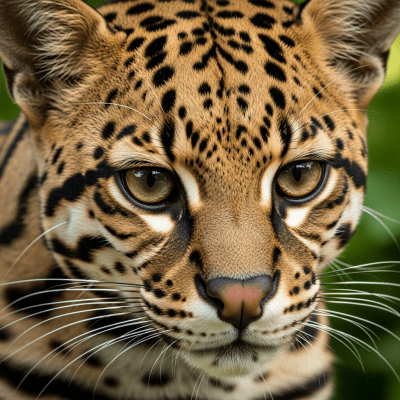
The ocelot’s beauty is defined by its short, dense fur adorned with bold black rosettes, spots, and stripes set against a tawny background. Its underparts are lighter, often white or cream. Adults typically weigh between 8 and 18 kilograms and measure 70 to 100 centimeters in length, with a tail adding 30 to 45 centimeters. Large, expressive eyes adapted for night vision, retractable claws, and a muscular, agile build make the ocelot an expert climber and swimmer—perfectly suited for navigating dense forests and waterways.
Ocelots are solitary, territorial hunters, primarily active at night. Each individual maintains a home range that can span from 1 to 18 square kilometers, depending on habitat and prey availability. Their diet is diverse, including small mammals, birds, reptiles, and amphibians. Ocelots hunt with stealth and precision, relying on ambush tactics and their acute senses. Highly agile, they climb trees and swim with ease, and their presence helps regulate prey populations, maintaining ecological balance in their habitats.
Bring this kind into your world � illustrated posters, mugs, and shirts.
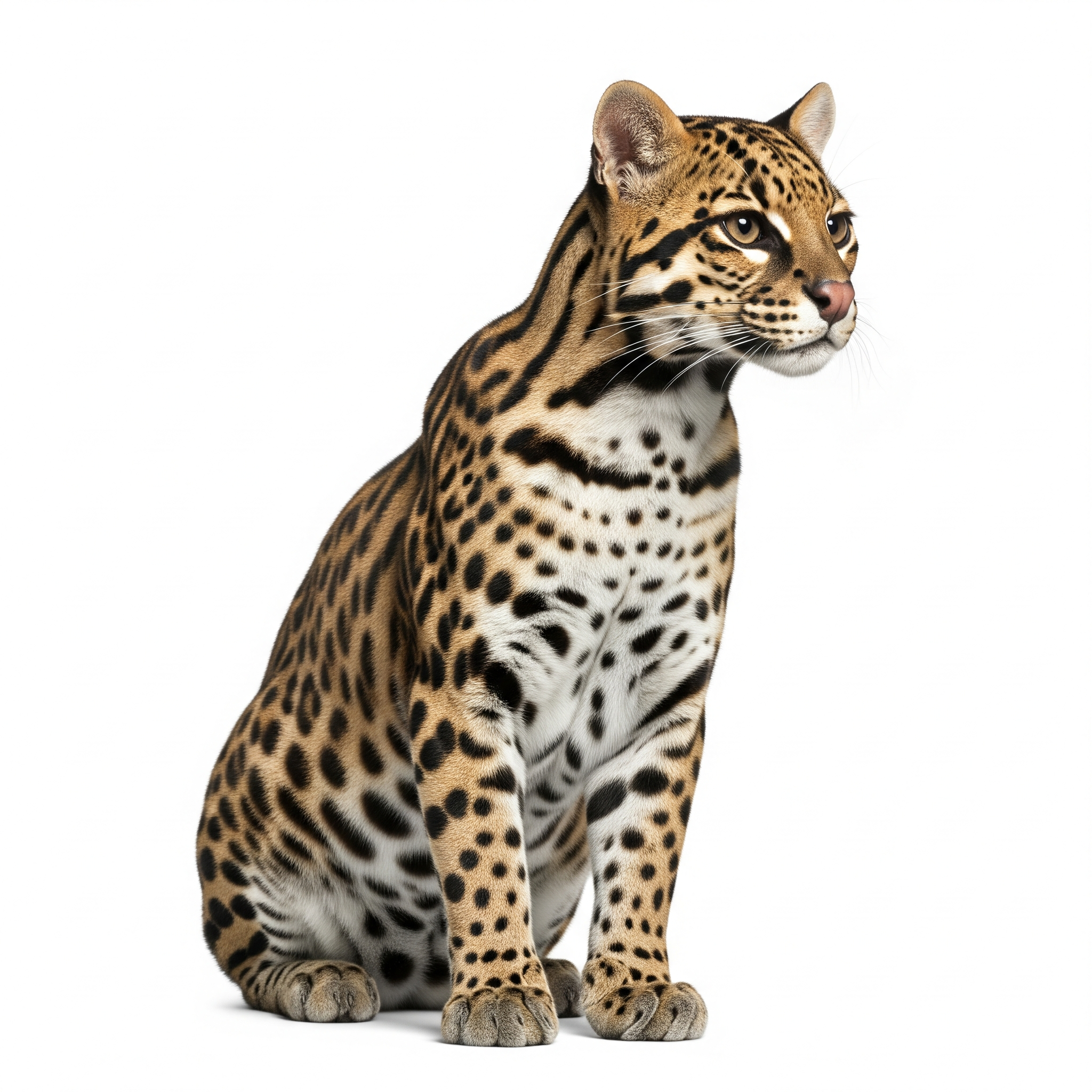
Archival print, museum-grade paper
Buy Poster
Stoneware mug, dishwasher safe
Buy Mug
Soft cotton tee, unisex sizes
Buy ShirtThroughout history, the ocelot has held a place in indigenous folklore, art, and mythology across the Americas. Its striking appearance and elusive nature have inspired names such as “tigrillo,” “jaguarito,” and “painted leopard cat.” In modern culture, the ocelot often symbolizes wild beauty and adaptability, appearing in literature, visual arts, and conservation campaigns. Its fur was once highly prized, leading to its depiction in fashion and luxury goods, though this contributed to historical declines in population.
The ocelot’s range stretches from southern Texas in the United States through Mexico, Central America, and much of South America, reaching as far south as northern Argentina and Uruguay. Historically widespread, ocelots remain common in core South American habitats but have become rare and isolated at the northern and southern edges of their distribution.

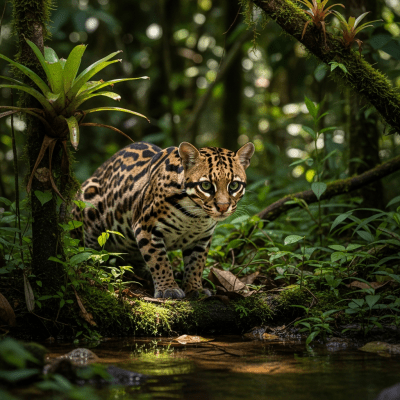
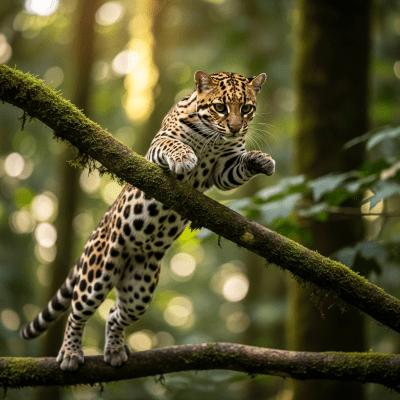
Ocelots thrive in a variety of environments, including tropical rainforests, dry forests, mangroves, savannas, and scrublands. They favor areas with dense vegetation and proximity to water, which provide cover for hunting and protection from larger predators. As mesopredators, ocelots play a crucial ecological role by controlling populations of small mammals and birds, contributing to the health and balance of their ecosystems.
Globally, the ocelot is classified as Least Concern by the IUCN Red List, thanks to its wide distribution and presumed large population. However, in the United States, it is listed as Endangered due to habitat loss and fragmentation, with only a few isolated populations remaining. Conservation efforts focus on protecting habitats, establishing wildlife corridors, and combating poaching.
Major threats to ocelot populations include habitat loss from deforestation, fragmentation due to development, poaching for the fur trade, and road mortality. In regions where their habitat is shrinking, ocelots face increasing isolation, making them more vulnerable to genetic bottlenecks and local extinction.
Ocelots possess several remarkable adaptations: their arboreal agility allows them to climb trees with ease, while acute hearing and a highly developed sense of smell enhance their hunting success. Their patterned coats provide effective camouflage in dappled forest light, and their muscular build supports both climbing and swimming, enabling them to exploit a wide range of habitats.
Ocelots have a gestation period of approximately 79 to 85 days, typically giving birth to one to three kittens per litter. Kittens remain with their mother for several months, learning essential survival skills before dispersing to establish their own territories. Sexual maturity is reached at around two years of age, and ocelots are solitary throughout most of their lives, coming together only for mating.
Genetic research places the ocelot firmly within the Leopardus genus, closely related to the margay and oncilla. Mitochondrial DNA and nuclear markers have been sequenced, revealing moderate genetic diversity and some population structure shaped by geographic barriers. Hybridization with other Leopardus species is rare but has been documented in overlapping ranges. While the complete genome is not yet published, available genetic data support ongoing conservation and evolutionary studies.