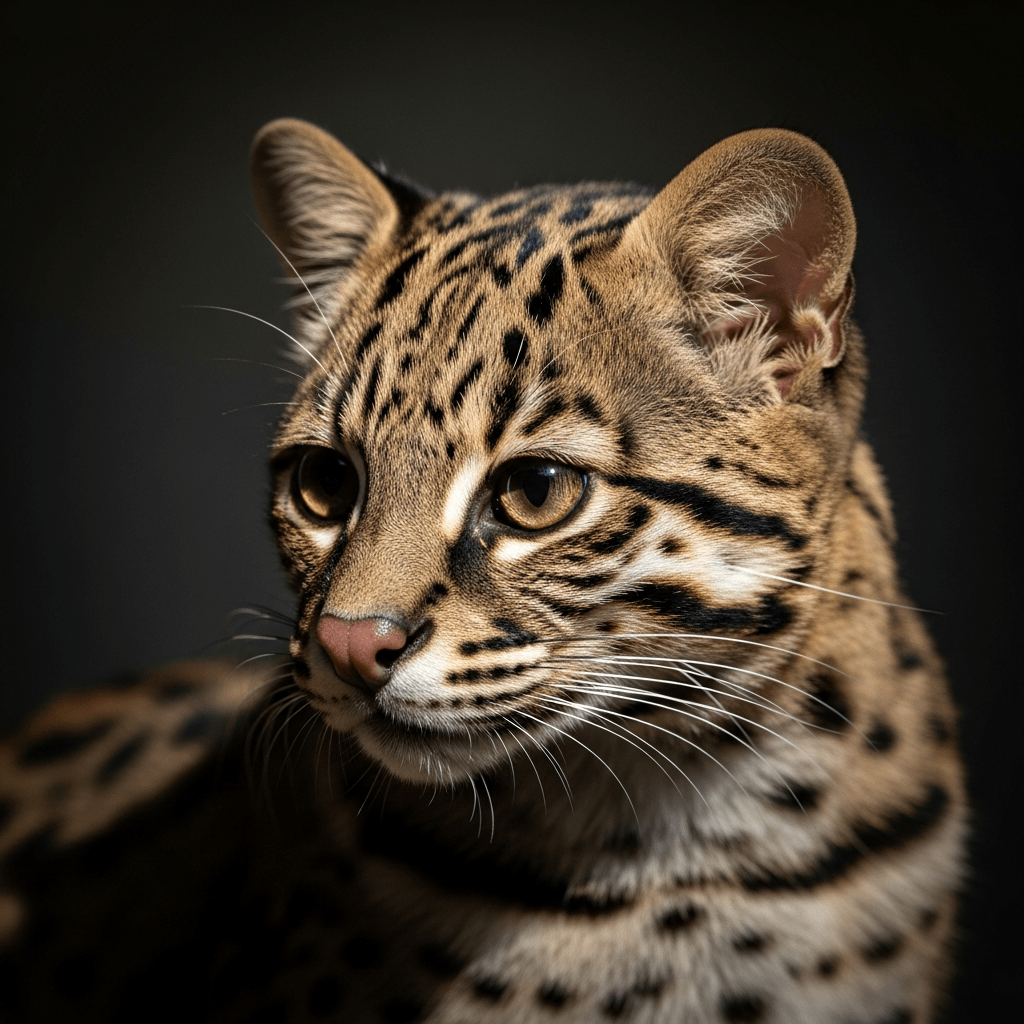
Leopardus guigna
The Kodkod (Leopardus guigna) is the smallest wild cat species in the Americas, native to the temperate rainforests of southern Chile and western Argentina.
The Kodkod (Leopardus guigna) is the smallest wild cat species in the Americas, native to the temperate rainforests of southern Chile and western Argentina.
First described in 1844 by German zoologist Heinrich Rudolf Schinz, the Kodkod was identified from specimens collected in Chile. Its evolutionary lineage places it within the genus Leopardus, closely related to other South American spotted cats such as Geoffroy’s cat and the oncilla. The species diverged from its relatives during the Pleistocene, adapting to the unique environments of southern South America.
The Kodkod belongs to the family Felidae, subfamily Felinae, and genus Leopardus. This group encompasses several small, spotted wild cats of Central and South America. Unlike domestic cats or larger felids, Kodkods are part of a lineage specialized for forested habitats and solitary lifestyles, with no recognized subspecies to date.
Diminutive and elusive, the Kodkod typically weighs 2 to 2.5 kilograms and measures 37 to 51 centimeters in body length, with a bushy, ringed tail extending 20 to 25 centimeters. Its soft, dense fur ranges from gray-brown to yellowish-brown, patterned with dark spots and stripes. Distinct black lines mark its face, while large feet and short legs give it a compact, agile form suited for climbing and moving through dense undergrowth.
Kodkods are solitary and primarily nocturnal, though daytime activity occurs in undisturbed settings. They are skilled climbers, often using trees for shelter and hunting. Their diet consists of small mammals, birds, reptiles, and insects, positioning them as mesopredators that help regulate prey populations. Kodkods rarely interact with humans, but may venture near settlements in search of food or cover.
Bring this kind into your world � illustrated posters, mugs, and shirts.
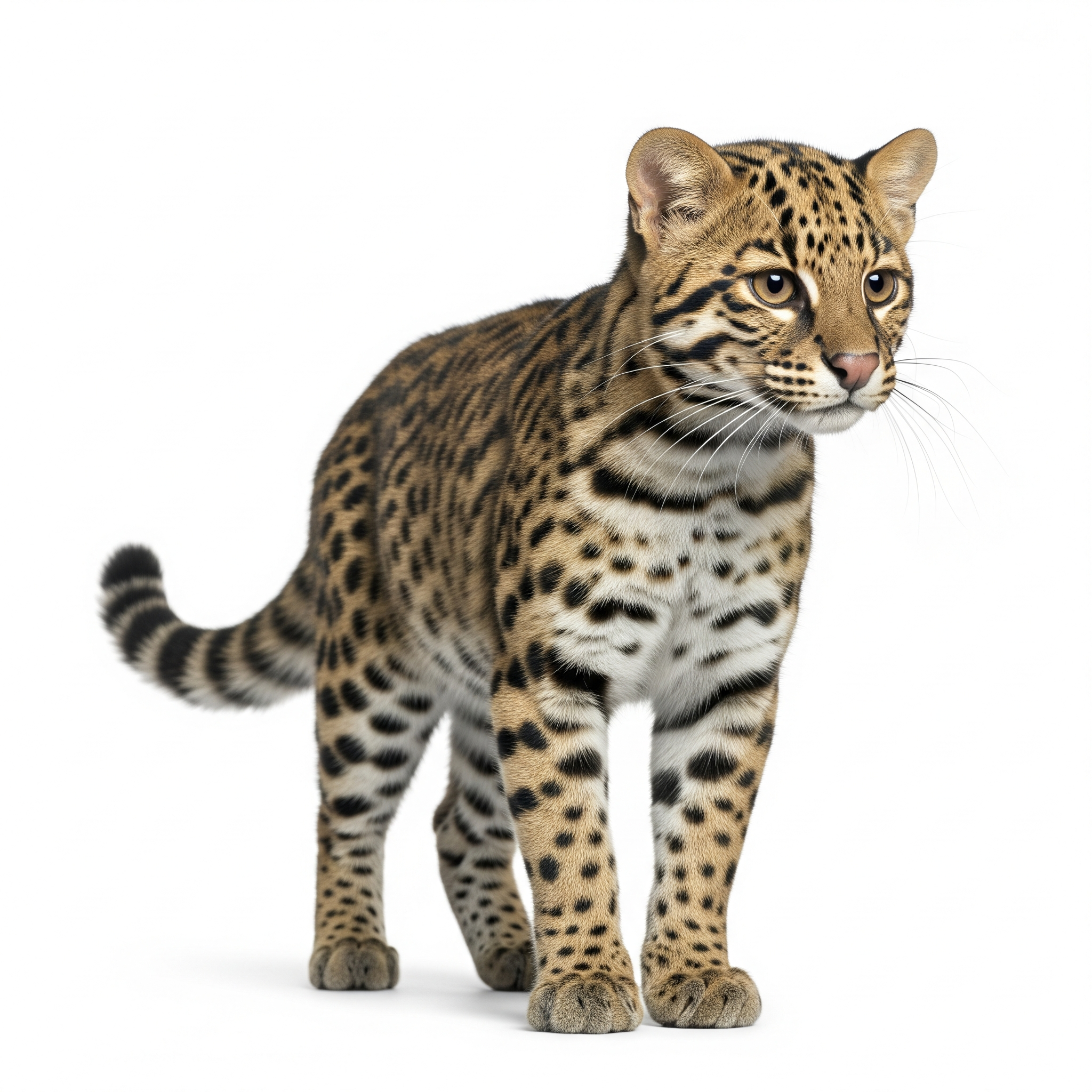
Archival print, museum-grade paper
Buy Poster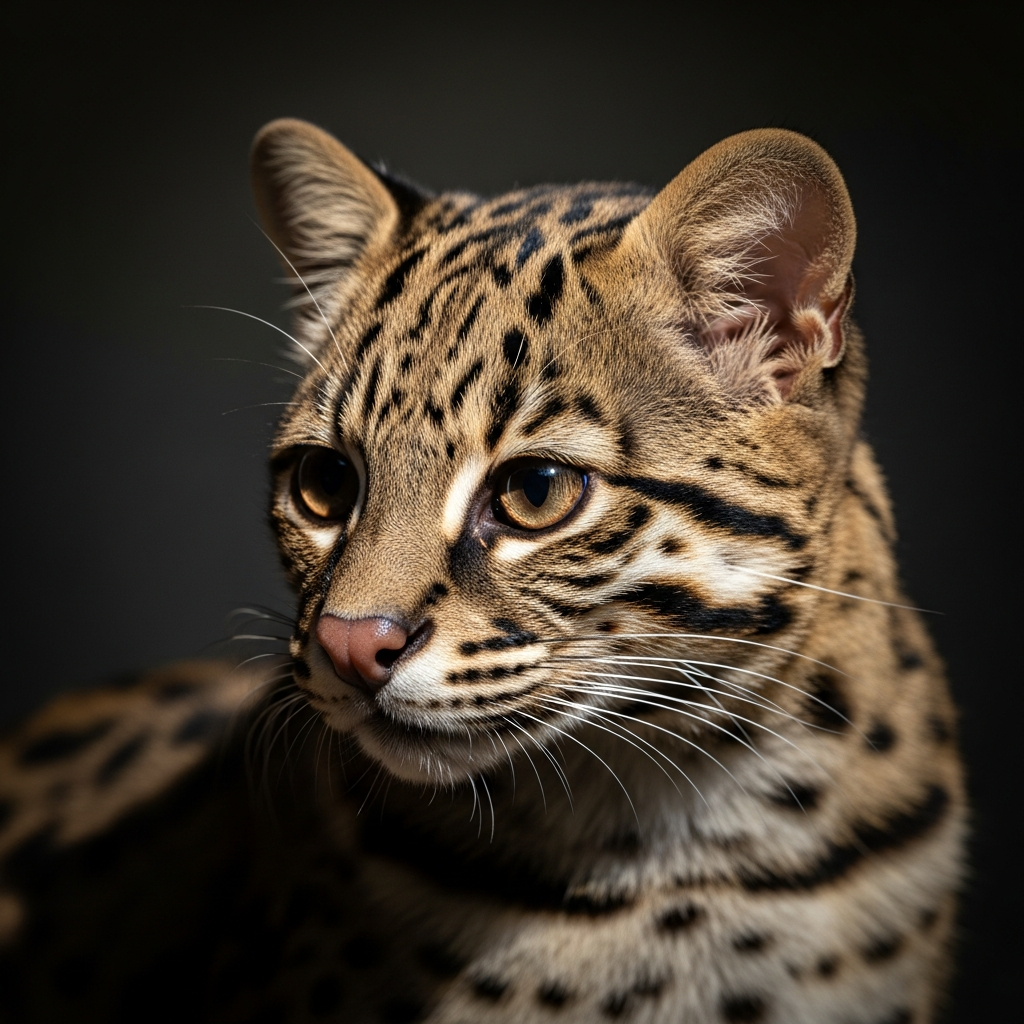
Stoneware mug, dishwasher safe
Buy Mug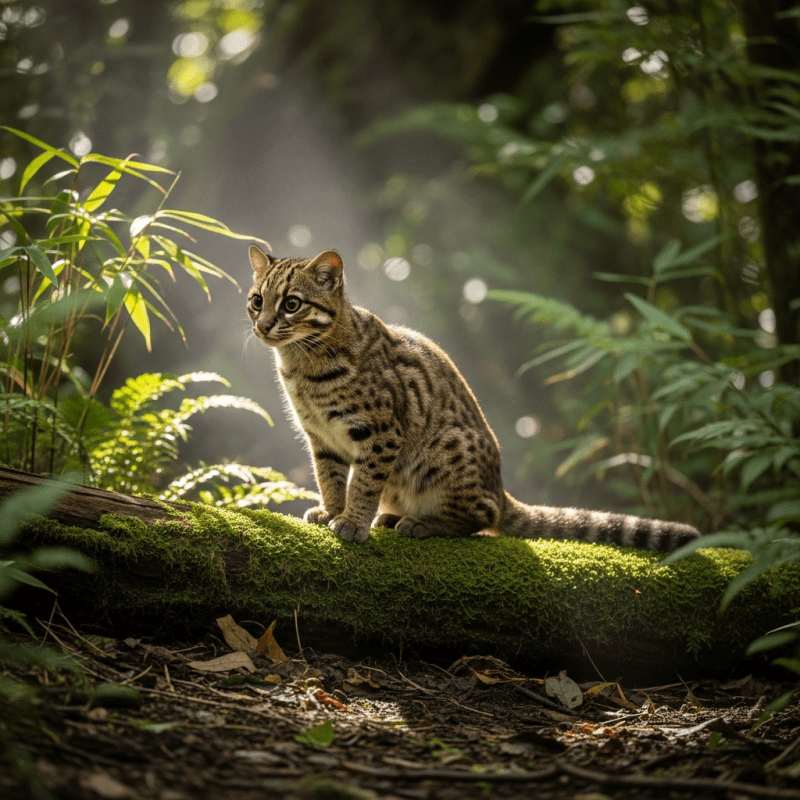
Soft cotton tee, unisex sizes
Buy ShirtKnown locally as "guiña" in Chile, the Kodkod holds subtle cultural presence, often appearing in regional folklore as a symbol of the mysterious and untamed forest. While not as prominent in art or mythology as larger cats, its elusive nature and striking appearance have inspired local stories and conservation efforts, especially as awareness of its vulnerability grows.
The Kodkod’s range spans southern and central Chile, extending slightly into western Argentina. It is most abundant in temperate rainforests such as the Valdivian and Araucaria forests, but can also be found in secondary forests, shrublands, and occasionally near human settlements. Historically, its distribution has been closely tied to regions with dense vegetation and minimal human disturbance.
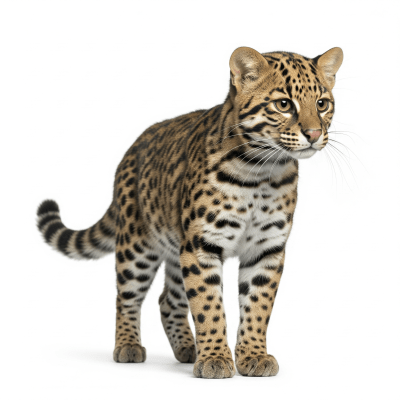
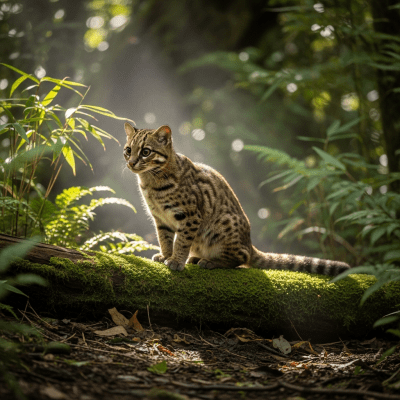
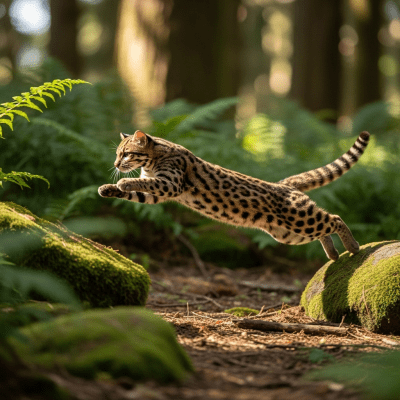
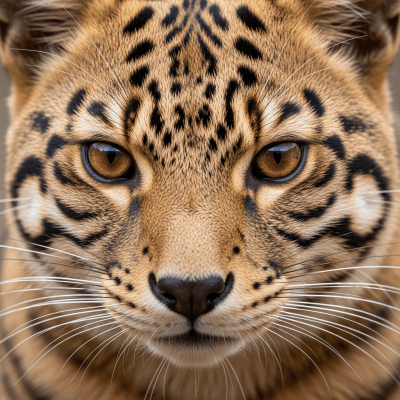
Kodkods favor temperate rainforests with thick undergrowth, especially the Valdivian and Araucaria forests. They also inhabit secondary forests and shrublands, demonstrating remarkable adaptability to fragmented landscapes. As mesopredators, Kodkods play a key ecological role by controlling populations of small mammals, birds, and reptiles. Their reliance on dense vegetation for cover makes them sensitive to habitat changes and fragmentation.
According to the IUCN Red List, the Kodkod is classified as Vulnerable. This status indicates a high risk of extinction in the wild, driven by ongoing habitat loss, fragmentation, and human persecution. Conservation measures include protected areas and habitat connectivity initiatives, but population trends remain negative.
The Kodkod faces significant threats from deforestation for agriculture and logging, which fragment and reduce its forest habitat. Retaliatory killing by humans, especially due to predation on domestic poultry, further endangers the species. Its dependence on dense vegetation for shelter and hunting makes it especially vulnerable to habitat degradation and loss of connectivity between forest patches.
Large feet and short legs enable the Kodkod to navigate dense undergrowth and climb trees with ease. Its bushy, ringed tail aids balance during arboreal movement, while its solitary, secretive behavior helps avoid predators and human encounters. The species’ ability to persist in fragmented and secondary forests demonstrates notable ecological flexibility.
Kodkods are seasonal breeders, with females giving birth to litters of one to three kittens after a gestation period of 72 to 78 days. Kittens are raised in secluded dens, receiving parental care until they are able to hunt independently. The lifecycle is closely tied to the rhythms of the forest, with breeding and rearing timed to maximize survival in a challenging environment.
No subspecies or regional breeds of the Kodkod are currently recognized by major authorities. Historical synonyms include Felis guigna and Oncifelis guigna, but genetic and morphological studies confirm its status as a distinct species within the Leopardus genus.
Genetic analyses place the Kodkod firmly within the Leopardus genus, closely related to Geoffroy’s cat and the oncilla. Mitochondrial DNA studies support its distinctiveness, and DNA barcodes are available in major genetic databases. While the full genome has not been sequenced, partial genetic data reveal a divergence from its relatives during the Pleistocene and suggest some isolation among fragmented populations.