Origin Story

The hydraulic mini crawler excavator originated in Japan during the late 1960s, pioneered by manufacturers like Takeuchi who introduced the first compact excavator in 1971. This innovation rapidly spread worldwide through the 1980s and 1990s as major equipment makers adapted full-sized hydraulic excavators into smaller, more maneuverable machines suited for urban and utility work.

Classification

This excavator belongs to the hydraulic class of excavating machines, characterized by articulated booms and arms powered by hydraulic cylinders. It falls within the mini size class, distinguished by crawler mobility on tracks and an operating weight typically between 1,000 and 5,500 kilograms, making it ideal for small-scale construction and utility tasks.

Appearance or Form

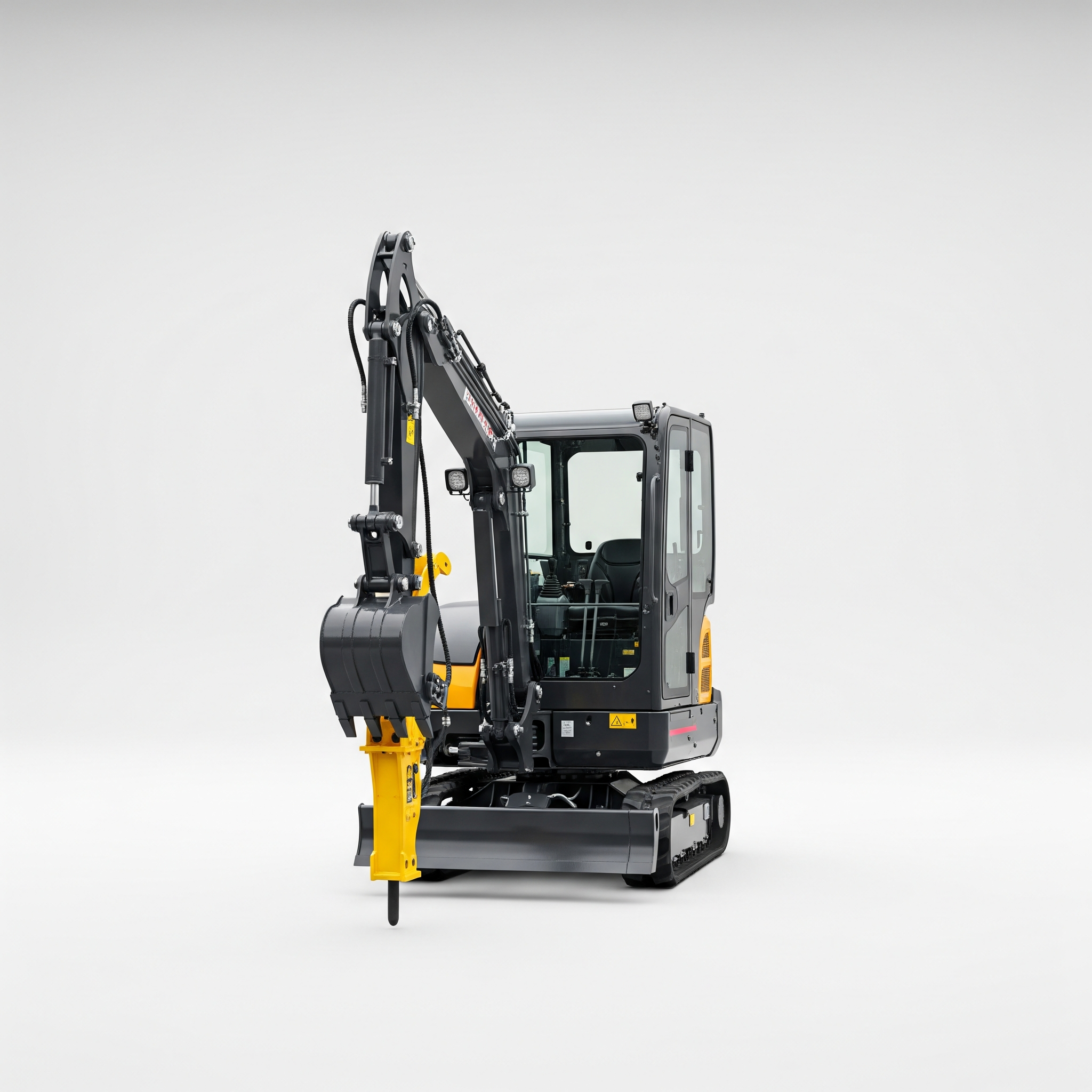
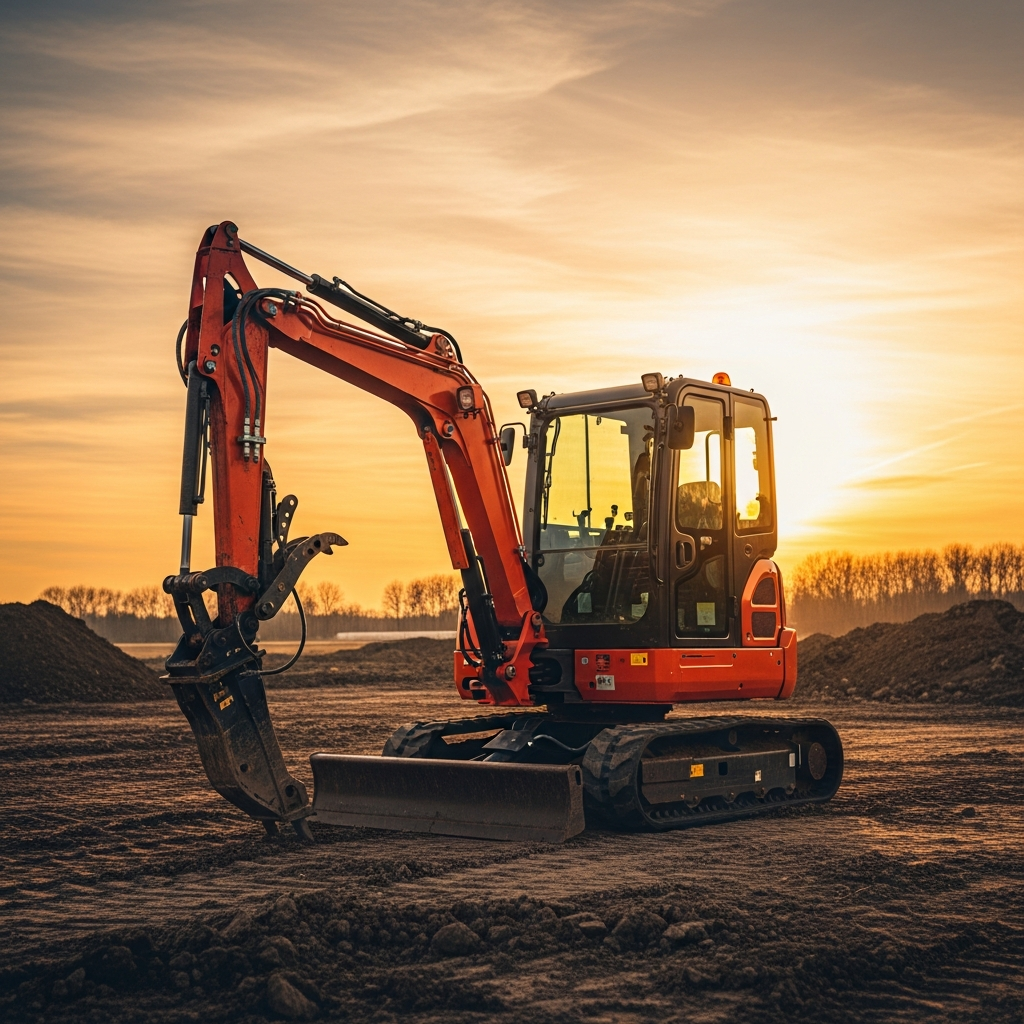
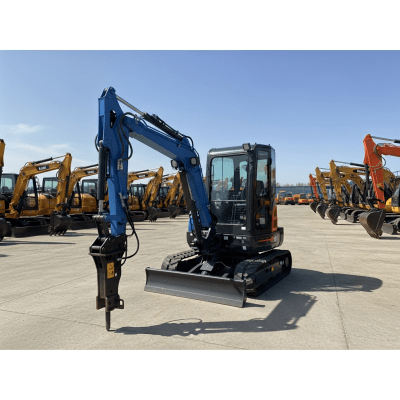
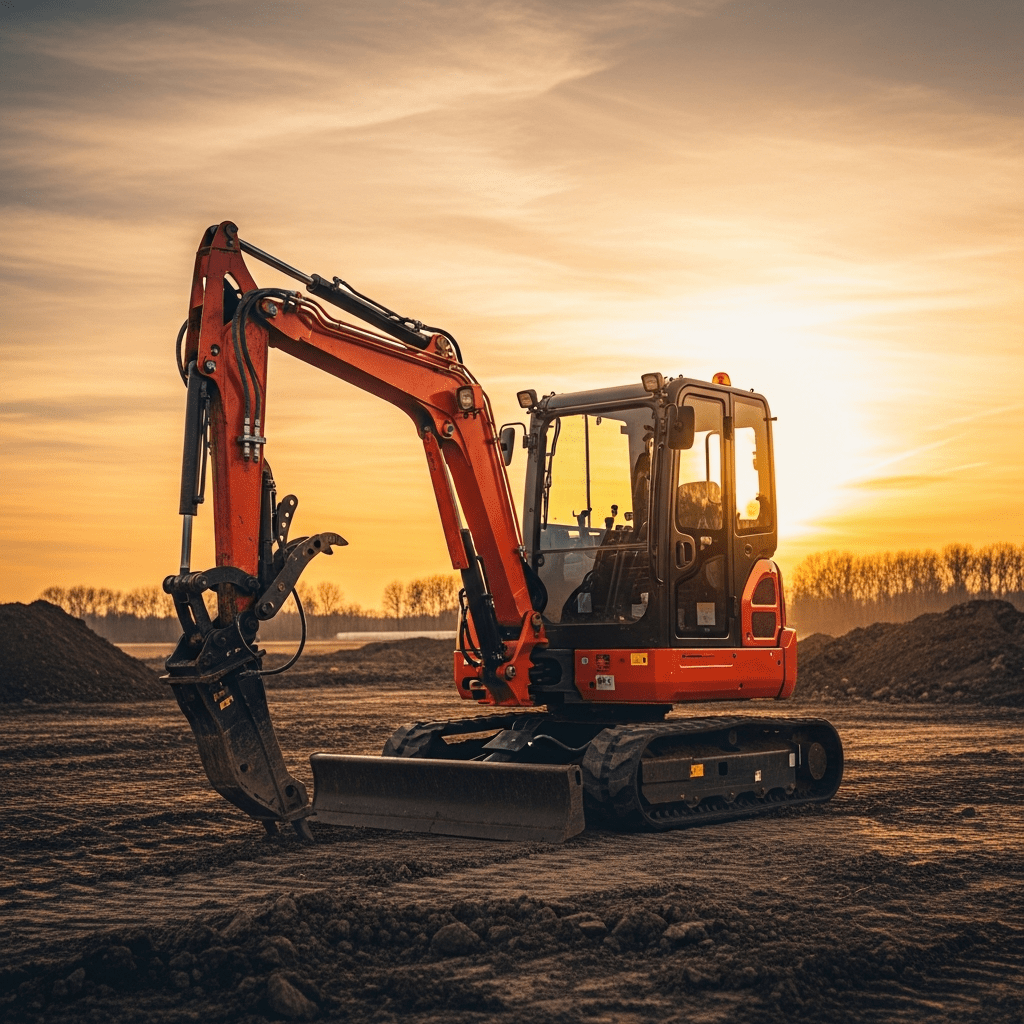
Visually, the hydraulic mini crawler excavator features a compact body mounted on rubber or steel tracks, allowing stability and low ground pressure. Its articulated boom and arm extend forward with a small bucket at the end, often complemented by a zero or short tail swing design to navigate tight spaces. The operator's station is either an enclosed cab or open canopy, emphasizing visibility and protection.

Behavior or Usage

These machines excel at digging, grading, and material handling in confined or sensitive environments such as urban construction sites, landscaping projects, and utility installations. Their tracked mobility enables operation on uneven or delicate terrain with minimal disturbance, while a range of attachments expands their versatility for tasks like trenching, breaking concrete, or drilling.

Merchandise & Prints

Bring this kind into your world � illustrated posters, mugs, and shirts.

Hydraulic mini crawler excavator Hydraulic mini crawler excavator Poster

Hydraulic mini crawler excavator Poster

Archival print, museum-grade paper

Hydraulic mini crawler excavator Hydraulic mini crawler excavator Mug

Hydraulic mini crawler excavator Mug

Stoneware mug, dishwasher safe

Hydraulic mini crawler excavator Hydraulic mini crawler excavator Shirt

Hydraulic mini crawler excavator Shirt

Soft cotton tee, unisex sizes

Attributes & Insights

Taxon-Specific Insights

🌍Cultural Significance

While primarily functional, hydraulic mini crawler excavators have become symbols of efficient urban development and modern construction. Their presence in cityscapes and small-scale projects highlights the shift toward precision machinery that balances power with environmental sensitivity, reflecting broader trends in sustainable and compact engineering solutions.

📌Notable Facts

  • First compact excavator introduced by Takeuchi in 1971.
  • Typical operating weight ranges from 1,000 to 5,500 kg.
  • Commonly equipped with zero or short tail swing for tight space operation.
  • Bucket capacities vary from 0.02 to 0.18 cubic meters.
  • Emerging electric and hybrid variants are expanding usage in low-emission zones.

⚙️Mechanism Details

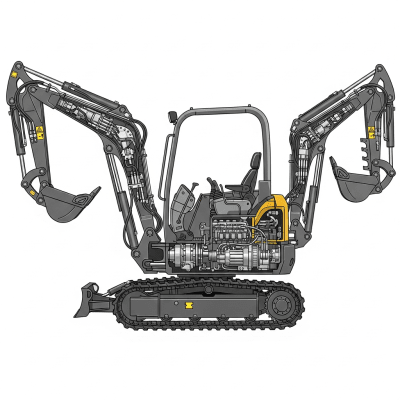
At the core, the hydraulic mini crawler excavator operates via an articulated boom, arm, and bucket assembly actuated by hydraulic cylinders. Hydraulic fluid pressurized by a diesel engine-driven pump transmits force to these cylinders, enabling smooth, precise movements for digging and material handling. The hydraulic system allows variable speed and force control, essential for delicate operations in restricted environments.

Visual Variations

High quality studio photograph of a single Hydraulic mini (compact) crawler excavator from the excavators taxonomy
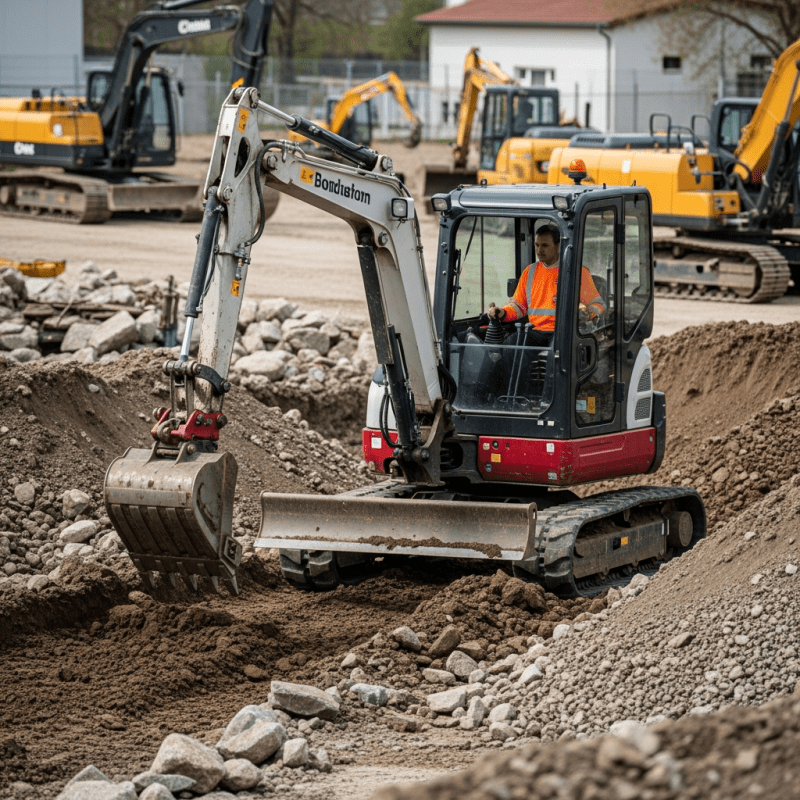
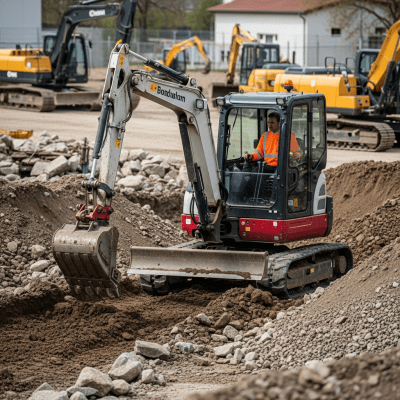
A realistic image of a Hydraulic mini (compact) crawler excavator (excavators) at work on a construction site, surrounded by soil, rocks, and machinery
Detailed cross-sectional illustration of a Hydraulic mini (compact) crawler excavator from the excavators taxonomy
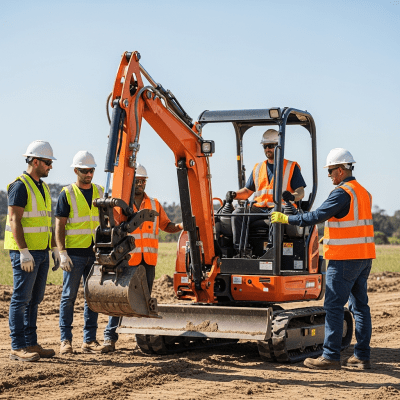
Image of a diverse group of construction workers operating or interacting with a Hydraulic mini (compact) crawler excavator from the excavators taxonomy
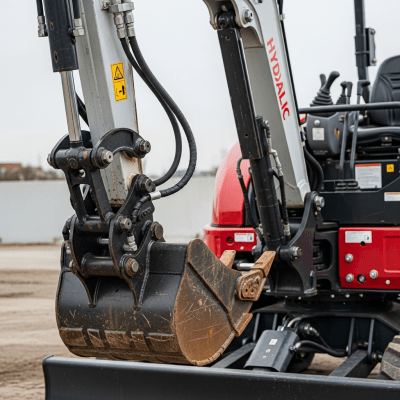
A close-up photograph focusing on the bucket and arm of a Hydraulic mini (compact) crawler excavator (excavators), showing details such as hydraulic lines, metal textures, and wear marks
A wide-angle image of a fleet of various excavators, with the specific Hydraulic mini (compact) crawler excavator in the foreground for emphasis

Composition & Context

Taxon-Specific Insights

🚜Mobility Types

This excavator uses crawler mobility, featuring continuous tracks that distribute weight evenly and provide superior traction on soft, uneven, or slippery surfaces. Rubber tracks are common to reduce ground damage and noise, making them well-suited for urban and landscaping applications. Compared to wheeled excavators, crawlers offer greater stability and off-road capability but move slower on paved roads.

📏Size And Capacity

Classified as mini excavators, these machines typically weigh between 1,000 and 5,500 kilograms. Their bucket capacities range from 0.02 to 0.18 cubic meters, with maximum horizontal reaches between 3.5 and 6 meters. Their compact size allows passage through narrow gates and doorways, while maintaining sufficient power for a variety of small to medium excavation tasks.

🦺🌿Safety And Emissions

Safety features include ROPS (Roll-Over Protective Structure) and FOPS (Falling Object Protective Structure) certified cabs or canopies, adhering to ISO and SAE operator protection standards. Optional rear-view cameras and overload warning systems enhance operator awareness. Emissions compliance typically meets Tier 4 or equivalent standards, reducing environmental impact with low noise and vibration levels.

🔧Attachments And Accessories

Common attachments enhance versatility, including:

  • Standard digging buckets for general excavation
  • Grading buckets for smoothing surfaces
  • Hydraulic breakers for demolition and concrete breaking
  • Augers for drilling holes
  • Grapples and thumbs for material handling
  • Compact rotary handlers for precision tasks
  • Trenching buckets specialized for narrow trenches

🛠️⏳Maintenance And Lifecycle

Maintenance focuses on hydraulic system integrity, track tension and wear, and engine servicing. Regular checks of hydraulic fluid, filters, and seals are essential to prevent leaks and maintain performance. Typical service life ranges from 6,000 to 10,000 operating hours, with high utilization common in rental fleets. Proper upkeep ensures durability and reliable operation in demanding environments.

Faq

  • What distinguishes a mini crawler excavator from larger models? Mini excavators are smaller, lighter, and designed for confined spaces with operating weights under 6 tonnes.
  • What types of attachments are commonly used? Standard digging buckets, hydraulic breakers, augers, grapples, and trenching buckets are typical.
  • Are these machines suitable for indoor use? Yes, especially emerging electric models designed for low emissions and noise.