Origin Story

The hydraulic large crawler excavator emerged in the mid-20th century as hydraulic technology replaced cable-operated systems, with major advancements during the 1970s and 1980s. Leading manufacturers like Caterpillar, Komatsu, and Liebherr refined this class to meet the needs of heavy construction and quarrying, guided by standards such as ISO 6165 and SAE J1057.

Classification

This excavator belongs to the hydraulic class of excavating machines, featuring a crawler (tracked) mobility system and classified within the large size band, typically weighing between 30 and 80 metric tonnes. It is primarily used in construction, quarrying, and heavy civil engineering projects.

Appearance or Form

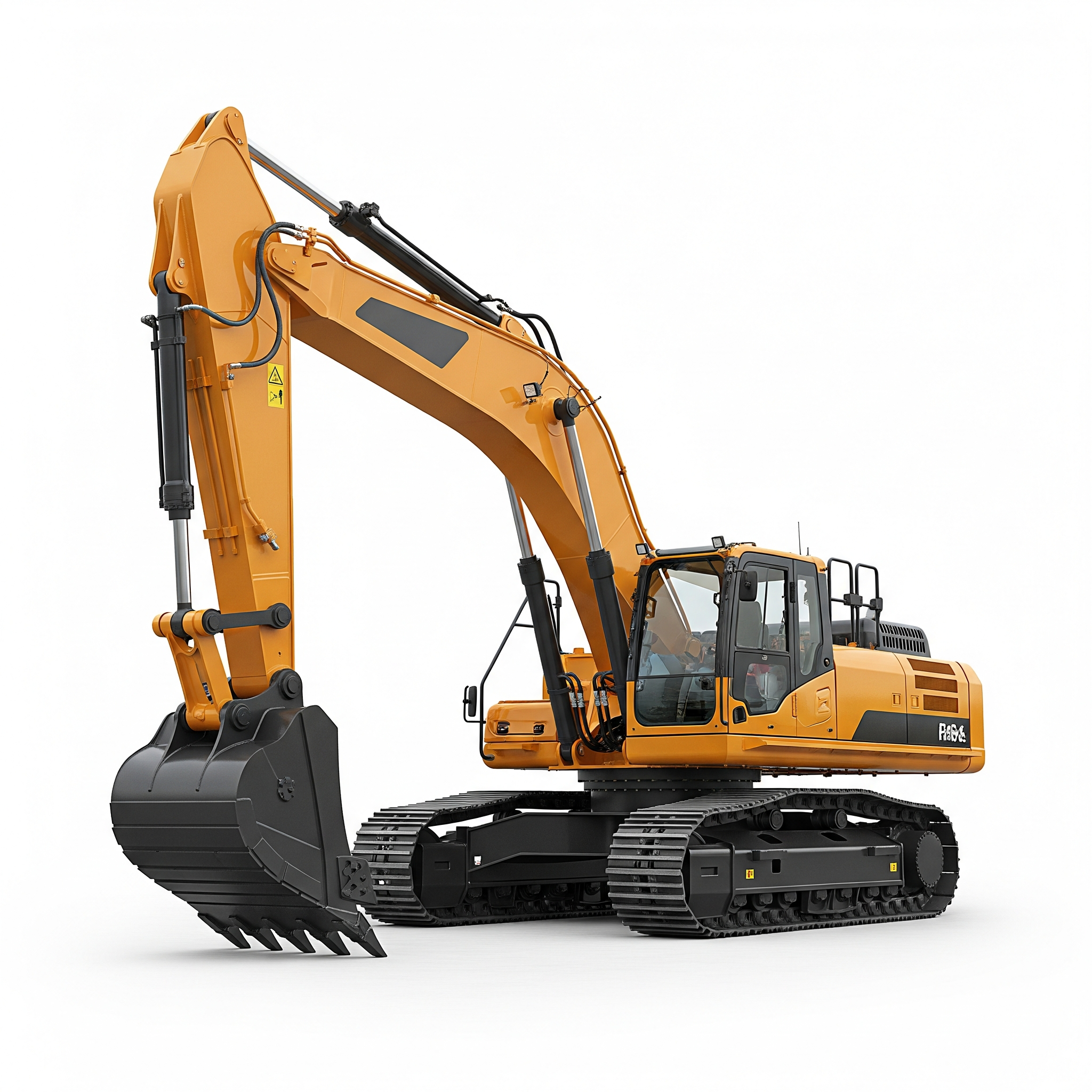
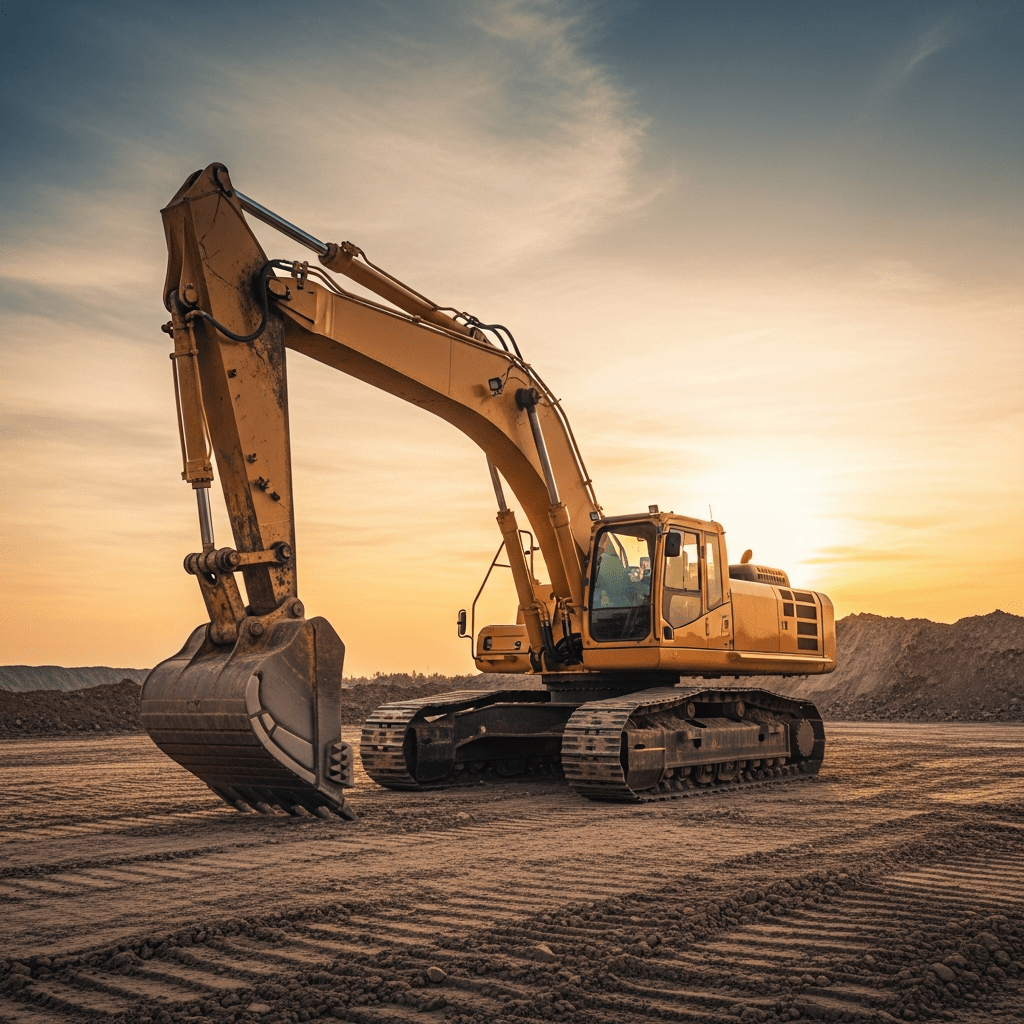
Visually, these machines are robust and imposing, mounted on wide tracked undercarriages that provide stability on uneven terrain. Their articulated booms and arms, powered by hydraulic cylinders, support large buckets and attachments. The operator cab is enclosed and fortified with safety structures, often featuring cameras and ergonomic controls.

Behavior or Usage

Hydraulic large crawler excavators perform heavy-duty digging, trenching, and material handling. Their tracked mobility allows operation on rough ground, while their hydraulic systems enable precise and powerful movement of the boom, arm, and bucket. They are widely used in infrastructure projects, quarrying, and bulk earthmoving, handling rock, soil, and other dense materials.

Merchandise & Prints

Bring this kind into your world � illustrated posters, mugs, and shirts.

Hydraulic large crawler excavator (heavy duty) Hydraulic large crawler excavator (heavy duty) Poster

Hydraulic large crawler excavator (heavy duty) Poster

Archival print, museum-grade paper

Hydraulic large crawler excavator (heavy duty) Hydraulic large crawler excavator (heavy duty) Mug

Hydraulic large crawler excavator (heavy duty) Mug

Stoneware mug, dishwasher safe

Hydraulic large crawler excavator (heavy duty) Hydraulic large crawler excavator (heavy duty) Shirt

Hydraulic large crawler excavator (heavy duty) Shirt

Soft cotton tee, unisex sizes

Attributes & Insights

Taxon-Specific Insights

🌍Cultural Significance

While primarily industrial tools, these excavators symbolize modern engineering prowess and the scale of human construction efforts. They appear in documentaries, construction site imagery, and occasionally in art or media as icons of heavy industry and progress.

📌Notable Facts

  • Operating weights range from 30 to 80 tonnes, making them among the heaviest hydraulic excavators used in construction.
  • Typical bucket capacities vary between 1.5 and 5 cubic meters, accommodating a broad range of materials.
  • Rated engine power usually falls between 250 and 400 kW, powered by diesel engines compliant with Tier 4/Stage V emissions standards.
  • Tail swing radius is generally 3 to 4 meters, with zero-tail swing designs rare at this size.
  • Advanced safety features include ROPS/FOPS cabs, overload warnings, and optional fire suppression systems.

⚙️Mechanism Details

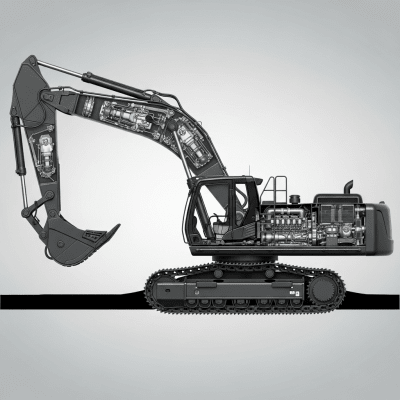
⚙️ The primary excavation mechanism is a hydraulic-powered articulated boom, arm, and bucket system. Hydraulic cylinders actuate each joint, enabling smooth, powerful, and precise movements. Hydraulic fluid under pressure transmits force from the engine-driven pump to the cylinders, allowing the operator to control digging depth, reach, and bucket orientation efficiently.

Visual Variations

High quality studio photograph of a single Hydraulic large crawler excavator (heavy duty) from the excavators taxonomy
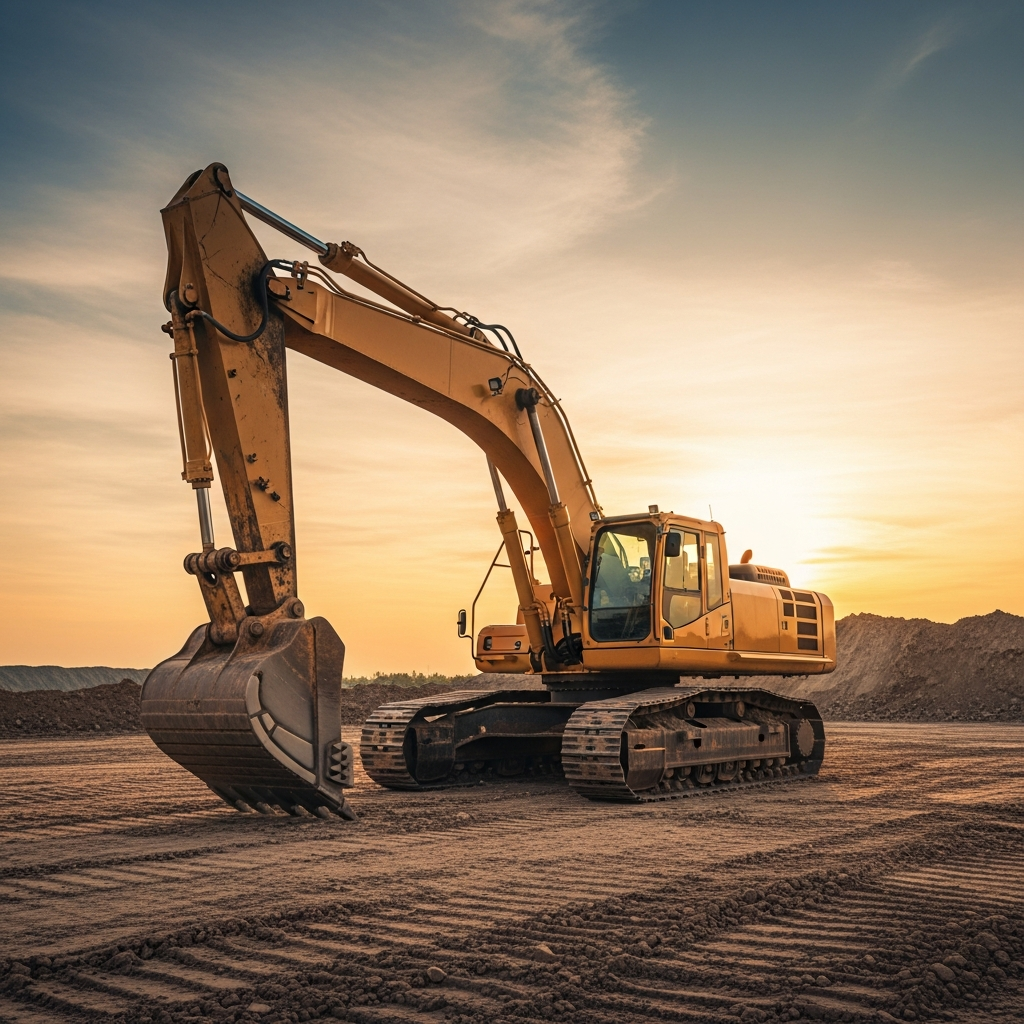
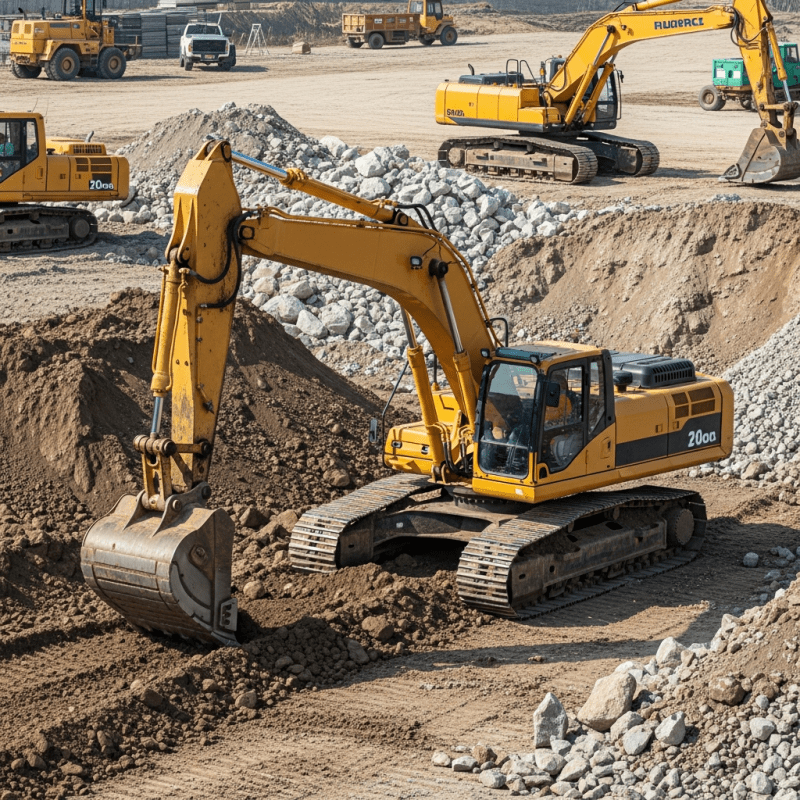
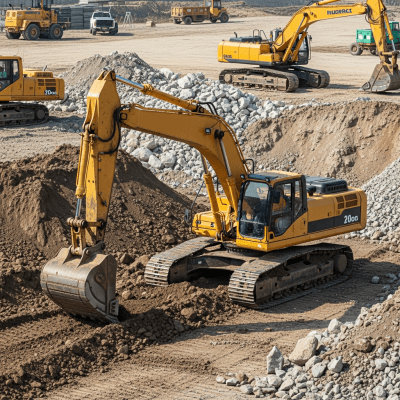
A realistic image of a Hydraulic large crawler excavator (heavy duty) (excavators) at work on a construction site, surrounded by soil, rocks, and machinery
Detailed cross-sectional illustration of a Hydraulic large crawler excavator (heavy duty) from the excavators taxonomy
Image of a diverse group of construction workers operating or interacting with a Hydraulic large crawler excavator (heavy duty) from the excavators taxonomy
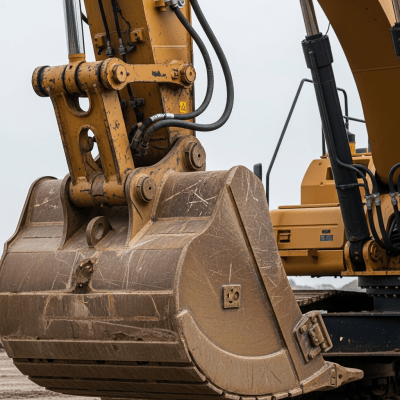
A close-up photograph focusing on the bucket and arm of a Hydraulic large crawler excavator (heavy duty) (excavators), showing details such as hydraulic lines, metal textures, and wear marks
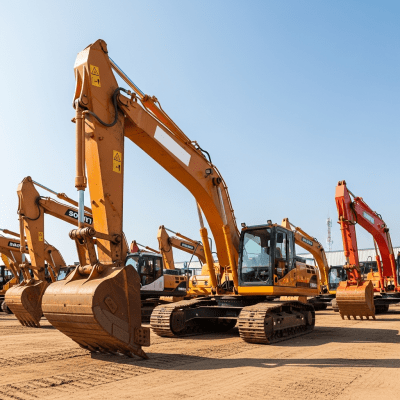
A wide-angle image of a fleet of various excavators, with the specific Hydraulic large crawler excavator (heavy duty) in the foreground for emphasis

Composition & Context

Taxon-Specific Insights

🚜Mobility Types

🚨 This excavator uses a crawler mobility system, featuring continuous tracks that distribute weight evenly and provide excellent traction on soft, uneven, or rugged surfaces. Compared to wheeled excavators, crawlers offer superior stability and off-road capability, essential for heavy-duty excavation in challenging environments.

📏Size And Capacity

📇 Classified as large, these excavators typically weigh between 30,000 and 80,000 kilograms. Engine power ranges from 250 to 400 kilowatts, supporting bucket capacities from 1.5 to 5 cubic meters. Their maximum horizontal reach spans 10 to 14 meters, enabling deep and wide excavation zones.

🦺🌿Safety And Emissions

🧪🧰 Safety features include reinforced ROPS/FOPS operator cabs, rear and side cameras for enhanced visibility, overload warning systems, hydraulic lockouts to prevent accidental movements, and optional fire suppression systems. Emissions compliance is achieved through Tier 4 Final or Stage V diesel engines equipped with particulate filters and selective catalytic reduction (SCR) systems.

🔧Attachments And Accessories

🔧 Common attachments include standard buckets for earth and rock, hydraulic breakers for demolition, grapples for material handling, shears for cutting, clamshell buckets for bulk material, augers for drilling, and quick coupler systems to facilitate rapid attachment changes.

🛠️⏳Maintenance And Lifecycle

🛠️⏳ These excavators are engineered for high utilization with typical service lives extending over tens of thousands of operating hours. Regular maintenance includes hydraulic system checks, engine servicing, track and undercarriage inspection, and safety system testing. Major rebuilds or component replacements often occur after 10,000 to 20,000 hours to sustain performance and reliability.

Faq

Q: What distinguishes a hydraulic large crawler excavator from smaller models?
A: Its larger operating weight (30–80 tonnes), higher engine power, and greater digging capacity set it apart for heavy-duty tasks.

Q: Why use a crawler undercarriage?
A: Tracks provide superior traction and stability on rough or uneven terrain compared to wheeled alternatives.

Q: Are these excavators environmentally compliant?
A: Yes, most meet stringent emissions standards such as Tier 4 Final in the US and Stage V in the EU.