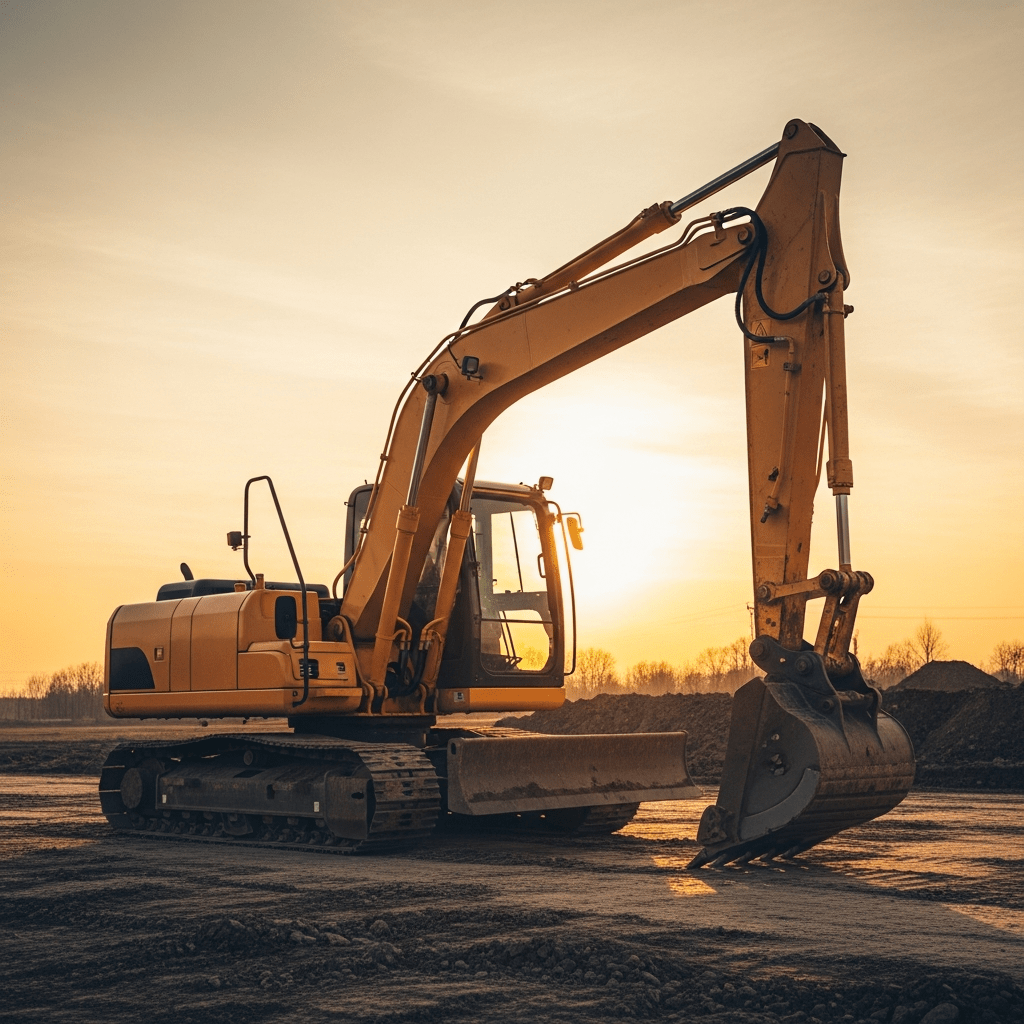
Origin Story

Emerging in the 1960s from the shift away from cable-operated shovels, hydraulic crawler excavators combined hydraulic actuation with tracked undercarriages adapted from earlier vehicles to enhance stability and terrain handling. By the late 1970s, the standard size class (15–30 tonnes) became the global benchmark for general-purpose excavation, propelled by innovations from manufacturers like Hitachi, Caterpillar, and Komatsu and formalized through international standards.

Classification

This excavator belongs to the hydraulic class of excavators, distinguished by its use of hydraulic cylinders to power an articulated boom and arm. It is categorized within the crawler mobility type due to its tracked undercarriage, and falls into the standard size class, balancing power and maneuverability for general construction and utility applications.

Appearance or Form

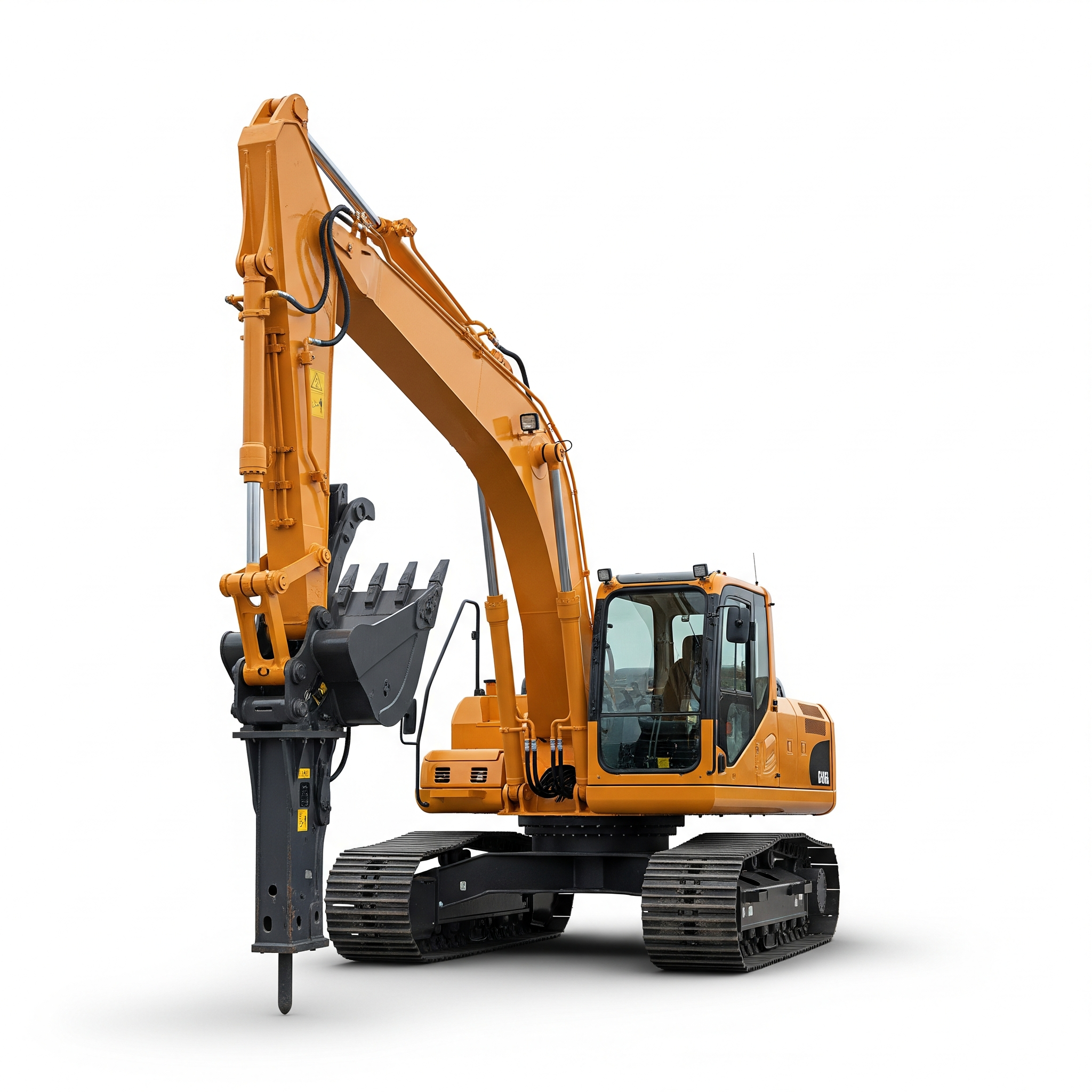
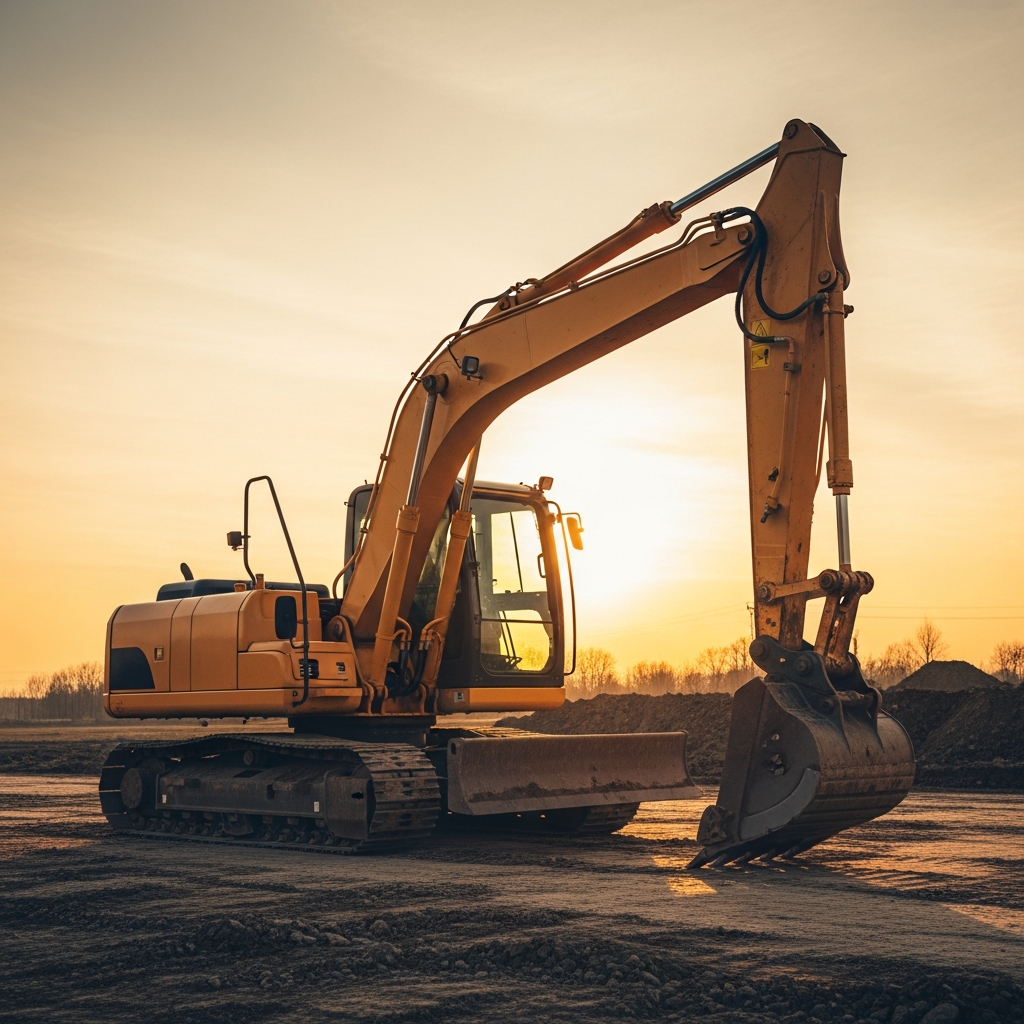
Visually, the standard hydraulic crawler excavator features a robust steel tracked base supporting a rotating upper structure with a boom and arm assembly. The operator sits in an enclosed cab mounted atop the chassis. Typical machines measure between 15,000 and 30,000 kilograms and exhibit a conventional tail swing radius of approximately 2.5 to 3.5 meters, giving the machine a balanced, purposeful profile suited for diverse terrain.

Behavior or Usage

Primarily, this excavator performs digging, lifting, trenching, and material handling by manipulating earth and debris with its hydraulically actuated boom and arm. It is widely employed in site preparation, foundation work, demolition, and utility installation. Operators control the machine from an ergonomic cab, using a variety of attachments to adapt to tasks ranging from general excavation to rock breaking and compaction.

Merchandise & Prints

Bring this kind into your world � illustrated posters, mugs, and shirts.

Hydraulic crawler excavator (standard) Hydraulic crawler excavator (standard) Poster

Hydraulic crawler excavator (standard) Poster

Archival print, museum-grade paper

Hydraulic crawler excavator (standard) Hydraulic crawler excavator (standard) Mug

Hydraulic crawler excavator (standard) Mug

Stoneware mug, dishwasher safe

Hydraulic crawler excavator (standard) Hydraulic crawler excavator (standard) Shirt

Hydraulic crawler excavator (standard) Shirt

Soft cotton tee, unisex sizes

Attributes & Insights

Taxon-Specific Insights

🌍Cultural Significance

As a symbol of modern construction and infrastructure development, the hydraulic crawler excavator represents human ingenuity in reshaping the environment. It frequently appears in media depicting urban growth and industrial progress. While not central to myth or traditional culture, it embodies the technological advancement and labor intensity of contemporary building practices worldwide.

📌Notable Facts

  • Standard operating weight ranges from 15 to 30 metric tonnes, making it versatile for many job sites.
  • Typical bucket capacities span 0.6 to 1.7 cubic meters, adaptable to soil or rock conditions.
  • Rated engine power varies between 70 and 180 kilowatts, primarily diesel-powered.
  • Tail swing radius of 2.5 to 3.5 meters balances maneuverability with stability.
  • Complies with stringent emissions standards such as EU Stage V.

⚙️Mechanism Details

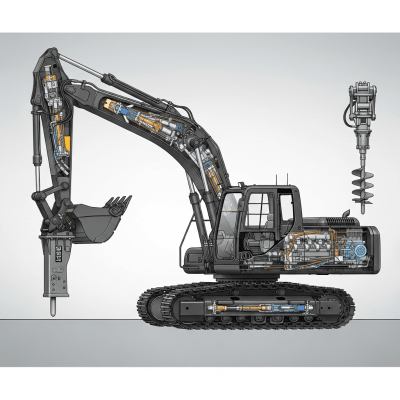
⚙️ The core excavation mechanism involves an articulated boom and arm assembly actuated by hydraulic cylinders. Hydraulic fluid under pressure moves pistons within these cylinders, enabling precise control of digging depth, arm extension, and bucket manipulation. This hydraulic system delivers high breakout forces and smooth, responsive movements, allowing operators to perform delicate trenching or heavy-duty digging with the same machine. The boom pivots vertically from the upper structure, while the arm extends and retracts, culminating in a bucket or other attachment that performs the material engagement.

Visual Variations

High quality studio photograph of a single Hydraulic crawler excavator (standard) from the excavators taxonomy
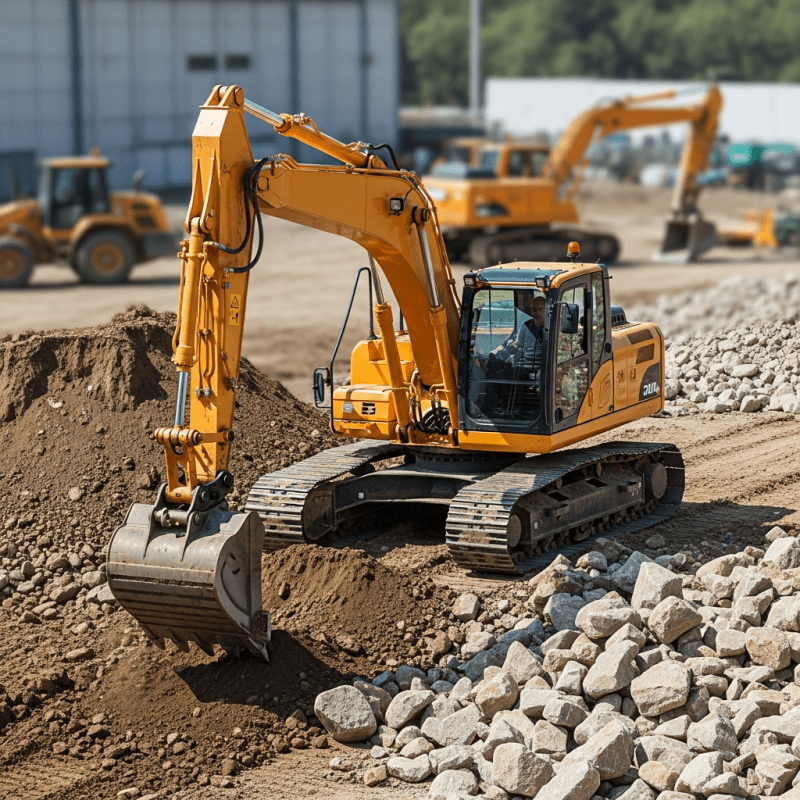
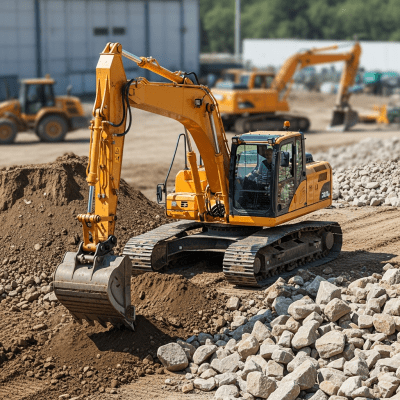
A realistic image of a Hydraulic crawler excavator (standard) (excavators) at work on a construction site, surrounded by soil, rocks, and machinery
Detailed cross-sectional illustration of a Hydraulic crawler excavator (standard) from the excavators taxonomy
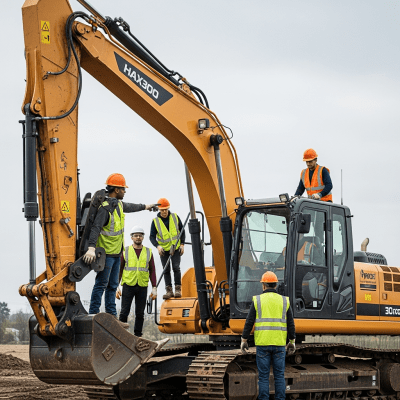
Image of a diverse group of construction workers operating or interacting with a Hydraulic crawler excavator (standard) from the excavators taxonomy
A close-up photograph focusing on the bucket and arm of a Hydraulic crawler excavator (standard) (excavators), showing details such as hydraulic lines, metal textures, and wear marks
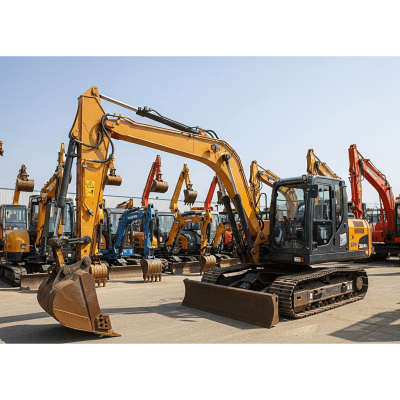
A wide-angle image of a fleet of various excavators, with the specific Hydraulic crawler excavator (standard) in the foreground for emphasis

Composition & Context

Taxon-Specific Insights

🚜Mobility Types

🚨 This excavator employs a crawler mobility system, featuring steel tracks that distribute weight evenly and provide excellent traction on soft, uneven, or rugged terrain. Compared to wheeled excavators, crawlers offer superior stability and are less prone to ground damage, making them ideal for construction sites with challenging ground conditions. While wheeled excavators excel in road mobility, crawler excavators prioritize off-road capability and load-bearing stability.

📏Size And Capacity

📇 Falling into the standard size band, these excavators typically weigh between 15,000 and 30,000 kilograms. Their bucket capacities range from 0.6 to 1.7 cubic meters, suitable for a variety of materials including soil, gravel, and rock. Maximum horizontal reach spans approximately 8 to 11 meters, allowing operators to work efficiently across a broad area without repositioning. Breakout forces range from 100 to 200 kilonewtons, providing the power needed for demanding excavation tasks.

🦺🌿Safety And Emissions

🛡️🌿 Standard safety features include ROPS (Roll-Over Protective Structure) and FOPS (Falling Object Protective Structure) certified operator cabs, rear-view cameras for enhanced visibility, overload warning systems to prevent structural stress, and hydraulic lockout mechanisms to avoid unintended movements. Emissions compliance typically meets EU Stage V standards, reflecting advanced engine technologies that reduce particulate and nitrogen oxide outputs. Noise levels at the operator position generally range from 70 to 85 decibels, balancing operator comfort with regulatory requirements.

🔧Attachments And Accessories

🛠️ Common attachments expand the excavator’s versatility, including:

  • General-purpose buckets for earthmoving
  • Rock buckets designed for abrasive materials
  • Hydraulic breakers for demolition and concrete breaking
  • Augers for drilling holes
  • Grapples for material handling
  • Shears for cutting metal or demolition debris
  • Compactors for soil densification

Quick coupler systems facilitate rapid switching between these tools, enhancing productivity on diverse job sites.

🛠️⏳Maintenance And Lifecycle

🛠️️⏳ Routine maintenance includes regular hydraulic system inspections, track and undercarriage wear checks, engine servicing, and lubrication of pivot points. Typical service intervals vary by manufacturer but generally follow hourly usage thresholds. The expected service life ranges from 8,000 to 15,000 operating hours before requiring major overhauls. Proper maintenance ensures longevity, operational safety, and compliance with emissions standards, while minimizing downtime and repair costs.

Faq

Q: What distinguishes a hydraulic crawler excavator from other excavators?
A: It uses hydraulic cylinders to power an articulated boom and arm, mounted on steel tracks for superior stability and traction.

Q: What is the typical size and weight of a standard hydraulic crawler excavator?
A: They usually weigh between 15,000 and 30,000 kilograms and fall into the standard size class.

Q: What attachments are commonly used with this excavator?
A: General-purpose buckets, rock buckets, hydraulic breakers, augers, grapples, shears, and compactors are typical.