Akita
The Akita is a large, dignified breed of domestic dog from Japan, celebrated for its loyalty, protective instincts, and striking double coat.
The Akita is a large, dignified breed of domestic dog from Japan, celebrated for its loyalty, protective instincts, and striking double coat.
Originating in the Akita Prefecture of northern Japan during the early 17th century, the Akita was developed as a versatile hunting dog for large game such as bears, boar, and deer. Over centuries, Japanese breeders refined the Akita Inu, emphasizing its noble bearing and resilience. In the post-World War II era, the American Akita emerged through crossbreeding imported Akitas with other breeds, resulting in distinct lines recognized by different kennel authorities. Today, the Akita Inu is a symbol of Japanese heritage, while the American Akita reflects Western influences in both appearance and temperament.
The Akita belongs to the Canidae family, classified under the species Canis lupus familiaris. Within breed groupings, the Japanese Akita Inu is recognized as a separate breed by the FCI and Japanese Kennel Club, while the American Akita is treated as a variety of the same breed by the AKC. Both types are considered working dogs, valued for their strength, intelligence, and versatility.
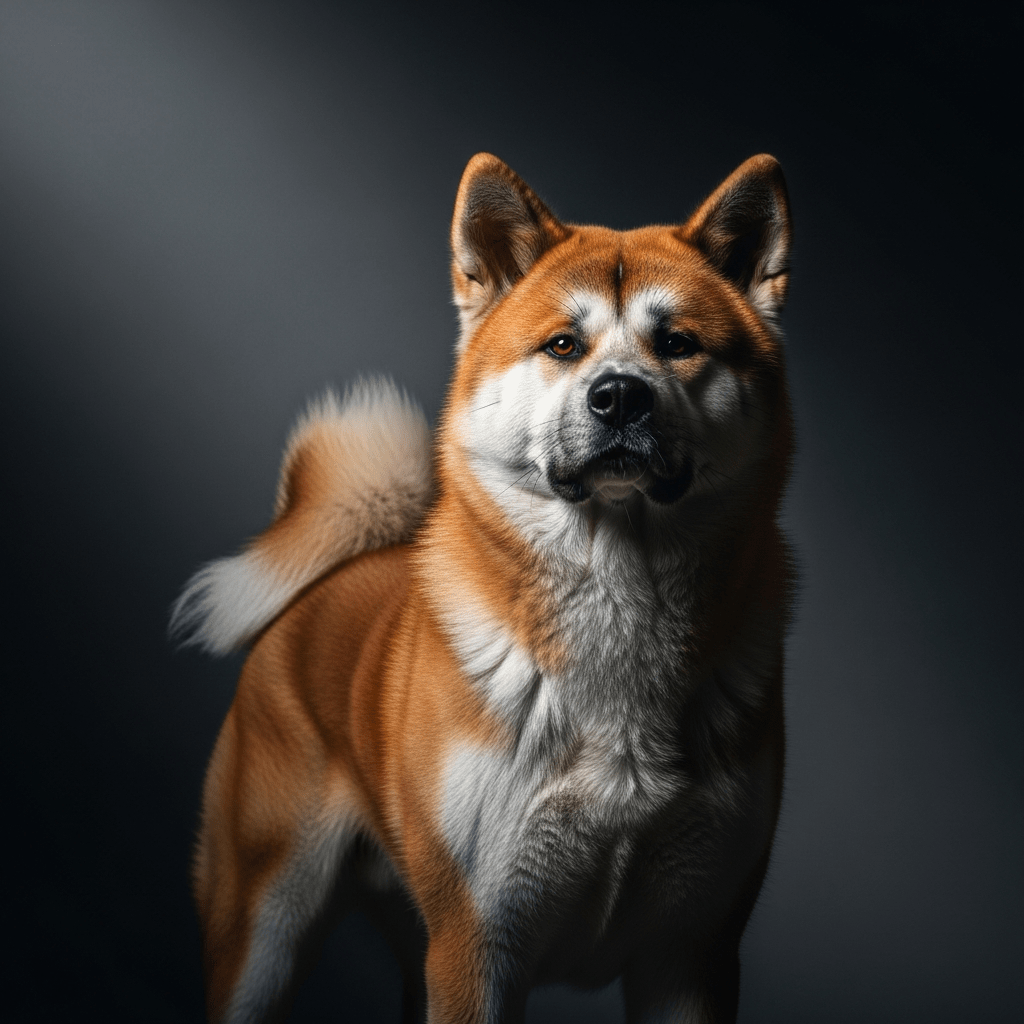
Akitas are imposing and muscular, with a robust frame and a thick double coat that insulates against cold. The Japanese Akita Inu features a fox-like face, erect triangular ears, and a tightly curled tail, with strict color markings in red, brindle, white, or sesame. The American Akita is generally heavier, with a broader head, deeper muzzle, and greater variety in coat colors, including pinto and black masks. Both types possess a straight, harsh outer coat and a soft undercoat, contributing to their plush, dense appearance.
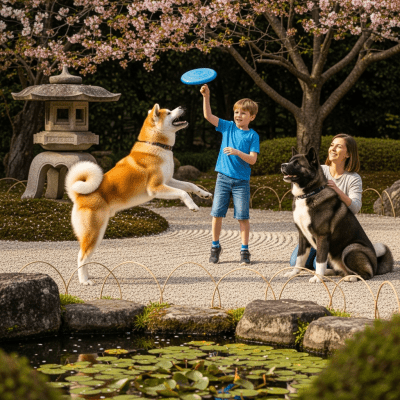
Akitas are renowned for their deep loyalty and protective nature, forming strong bonds with their families. They are intelligent and reserved, often aloof with strangers, and require consistent training and early socialization to thrive as companions. Historically, Akitas served as hunters and guardians; today, they excel as family protectors, show dogs, and, in some cases, therapy and search-and-rescue dogs. Their clean habits and minimal odor make them appealing household pets, though their strong-willed temperament demands experienced handling.
Bring this kind into your world � illustrated posters, mugs, and shirts.
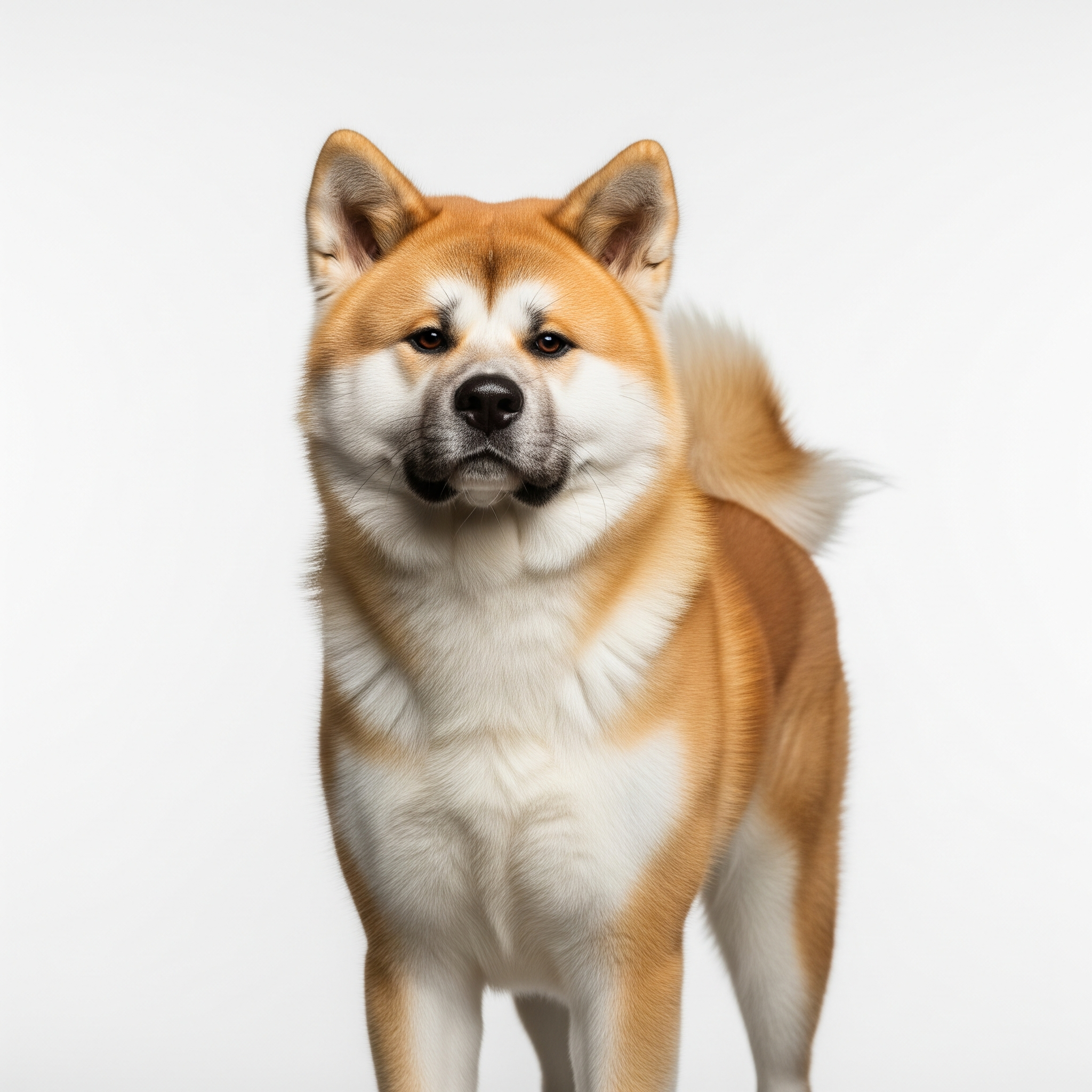
Archival print, museum-grade paper
Buy Poster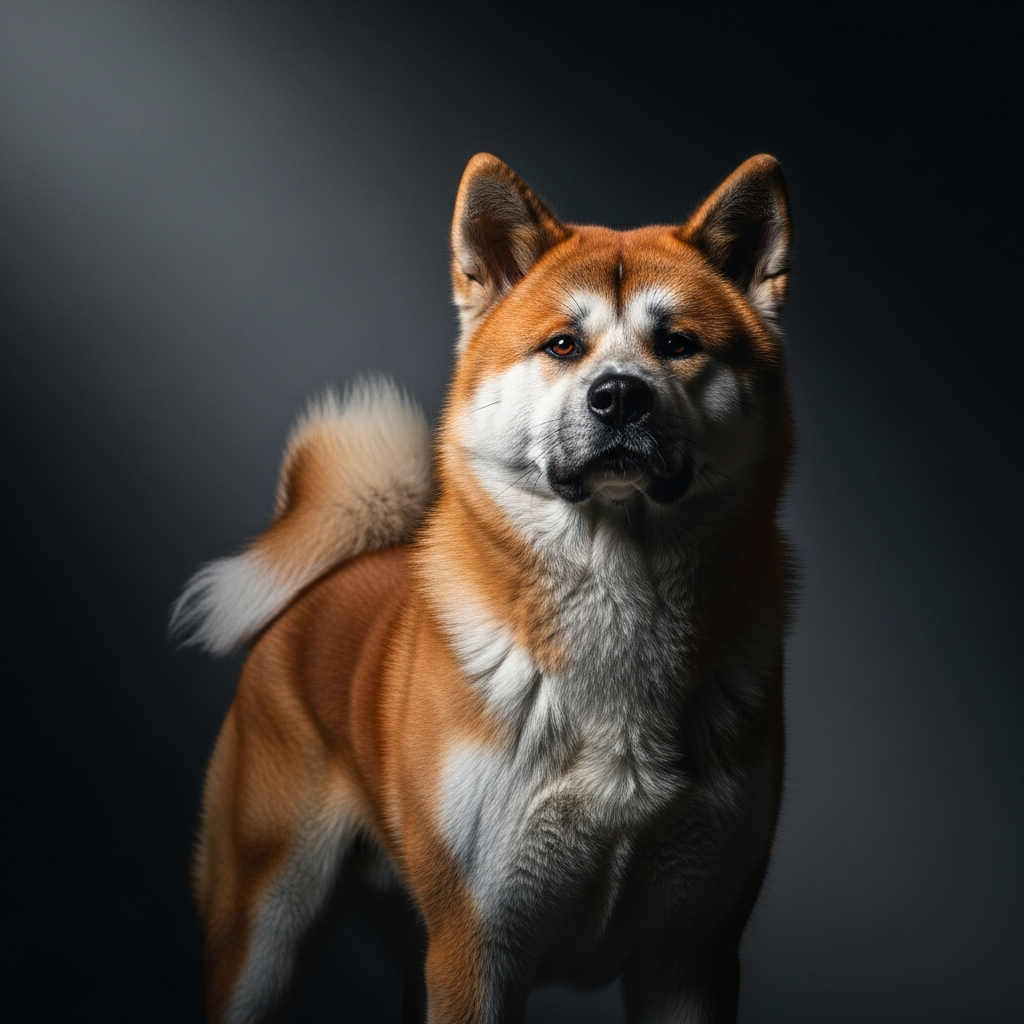
Stoneware mug, dishwasher safe
Buy Mug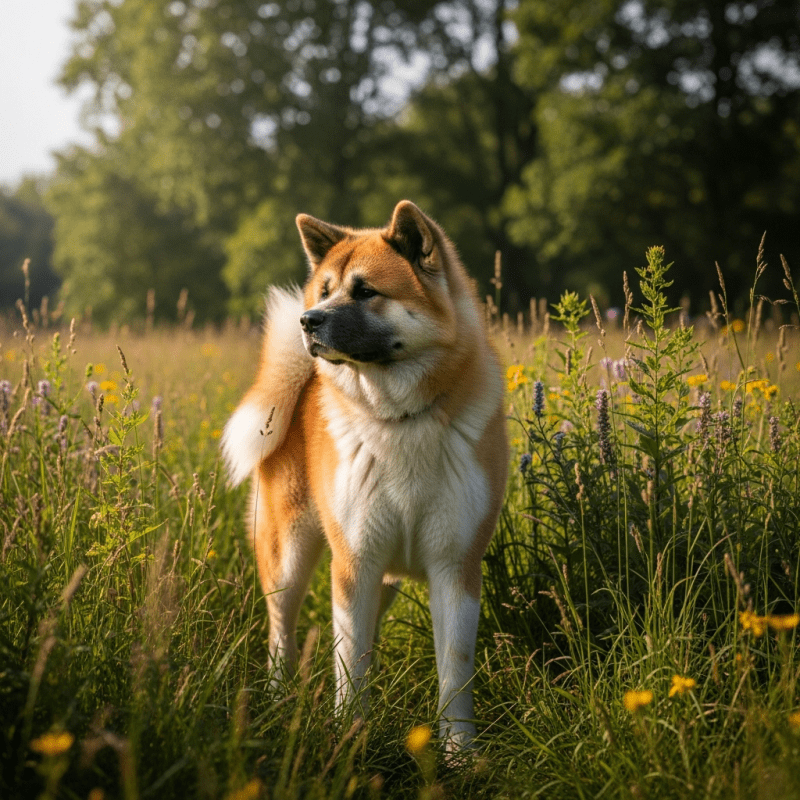
Soft cotton tee, unisex sizes
Buy ShirtIn Japan, the Akita Inu is revered as a national treasure and a symbol of good health, happiness, and longevity. Statues of Akitas are often gifted to celebrate births and recoveries, and the breed’s image appears in folklore, art, and popular culture. Globally, the Akita’s dignified presence and loyalty have made it a favorite in dog shows and as a subject in literature and film, embodying ideals of courage and devotion.
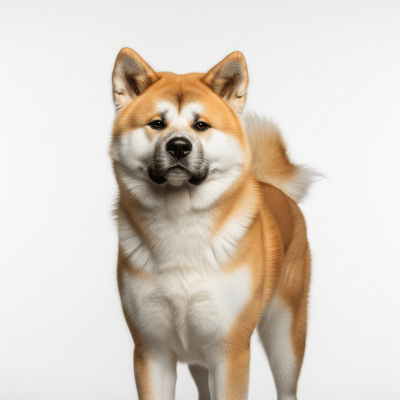
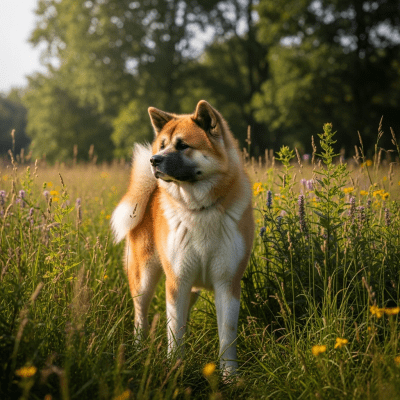



The Akita is a large breed, typically standing 61–71 cm (24–28 inches) at the shoulder and weighing between 32–59 kg (70–130 pounds), with males generally larger than females.
Akitas have a thick double coat, featuring a straight, harsh outer layer and a soft undercoat. Common colors include red, brindle, white, sesame, pinto, and black mask, with the Japanese type favoring strict markings and the American type allowing greater variety.
Akitas are intelligent, strong-willed, and deeply loyal. While reserved and sometimes aloof with strangers, they are affectionate with their families. Training requires consistency and patience, as Akitas are independent and protective by nature; early socialization is crucial for balanced behavior.
Akitas typically live 10–14 years. They are generally healthy but may be prone to autoimmune disorders, hip dysplasia, and progressive retinal atrophy. Responsible breeding and regular veterinary care help mitigate these risks.
The Akita exists in two notable regional forms: the Japanese Akita Inu, which is lighter, fox-faced, and strictly marked, and the American Akita, which is heavier, broader-headed, and allows a wider range of coat colors. These variants are recognized as separate breeds by some authorities and as varieties by others, reflecting differences in appearance, temperament, and breed standards.