Maiasaura
Maiasaura is a large, herbivorous hadrosaurid dinosaur from the Late Cretaceous of North America, celebrated as the first dinosaur to provide clear fossil evidence of parental care and communal nesting behavior.
Maiasaura is a large, herbivorous hadrosaurid dinosaur from the Late Cretaceous of North America, celebrated as the first dinosaur to provide clear fossil evidence of parental care and communal nesting behavior.
Maiasaura was first described in 1979 by paleontologists Jack Horner and Robert Makela, following remarkable discoveries in Montana's Two Medicine Formation. The genus name, meaning "good mother lizard," honors its association with extensive nesting sites and evidence of nurturing behavior. The holotype specimen, MOR 547, is housed at the Museum of the Rockies, anchoring Maiasaura's scientific legacy in the American West during the Late Cretaceous.
Maiasaura belongs to the clade Ornithischia, within the family Hadrosauridae and subfamily Saurolophinae. As a hadrosaurid, it is part of the "duck-billed" dinosaurs, a group renowned for their advanced dental structures and social habits. This places Maiasaura among the most evolutionarily successful herbivores of the Mesozoic Era.
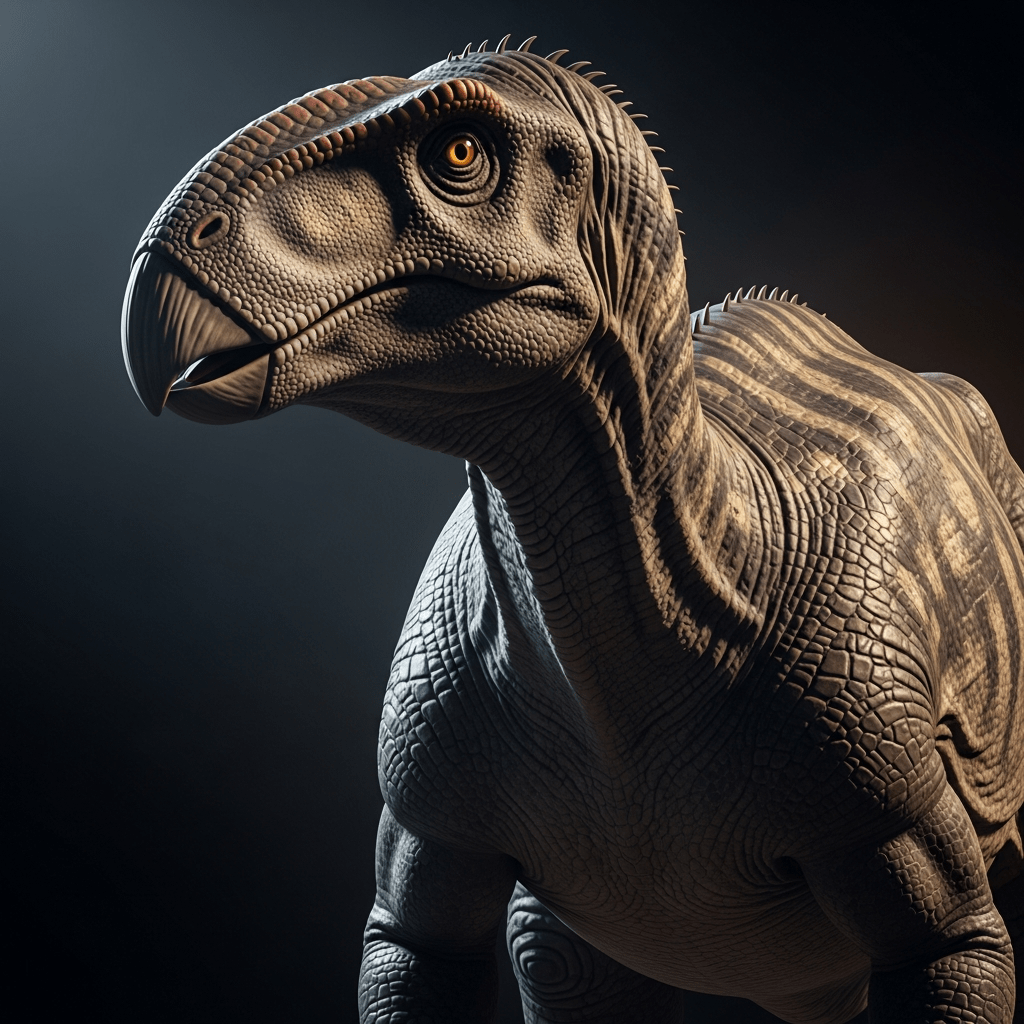
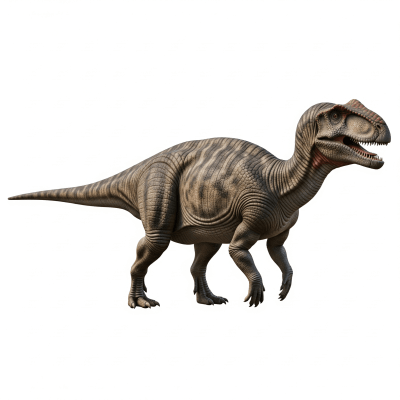
Maiasaura was a robust dinosaur, reaching lengths of up to 9 meters (30 feet) and weighing between 2 and 4 metric tons. Its broad, flattened snout and dental batteries were perfectly adapted for grinding tough Cretaceous vegetation. The body was primarily quadrupedal, though Maiasaura could rear on its hind legs. Fossilized skin impressions reveal a scaly texture, while coloration remains unknown. Unlike some relatives, it lacked horns or armor, presenting a streamlined, gentle appearance.
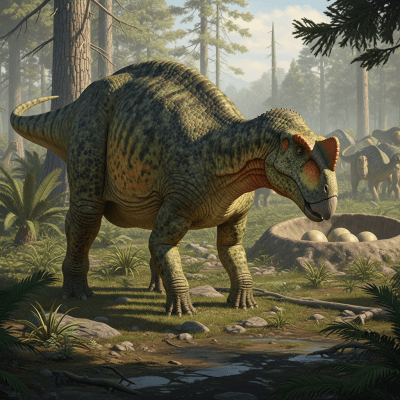
Maiasaura is renowned for its highly social lifestyle. Fossil evidence shows that it formed large nesting colonies, where multiple generations lived and cared for their young. Eggs were laid in communal nests, and hatchlings required significant parental care, as indicated by their altricial development and rapid growth. These behaviors have made Maiasaura a keystone genus for understanding dinosaur sociality and reproductive strategies. While extinct, its fossils are invaluable for research, education, and museum display.
Bring this kind into your world � illustrated posters, mugs, and shirts.
Archival print, museum-grade paper
Buy Poster
Stoneware mug, dishwasher safe
Buy Mug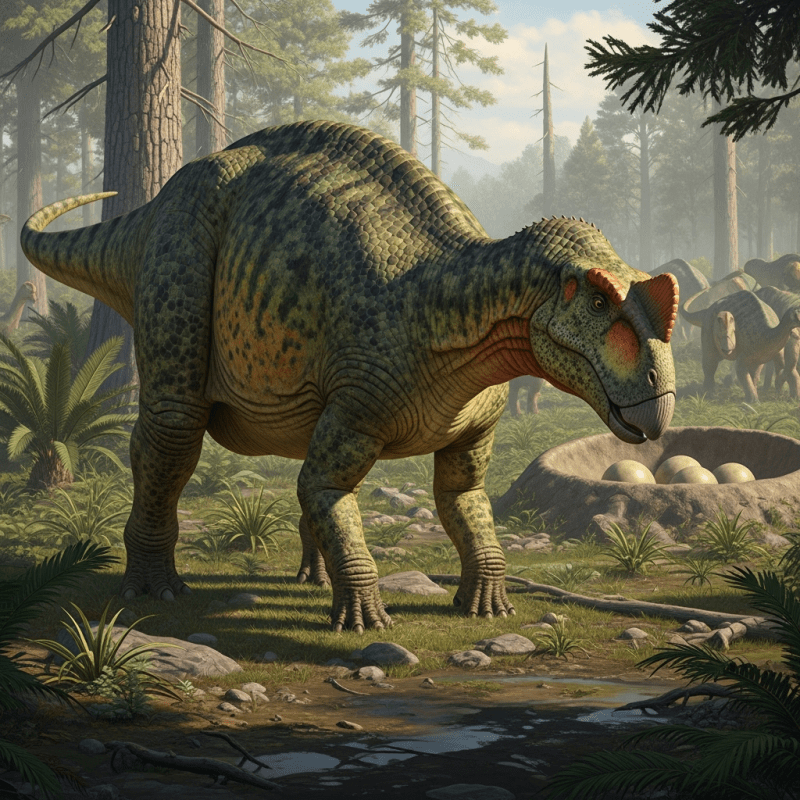
Soft cotton tee, unisex sizes
Buy ShirtMaiasaura holds a special place in paleontology and public imagination. Its discovery revolutionized perceptions of dinosaur parenting and social life, making it a frequent subject in educational materials, museum exhibits, and documentaries. The "good mother lizard" has become an emblem of nurturing in prehistoric times, inspiring books, media, and outreach programs that highlight the complexity of dinosaur behavior.
Maiasaura lived during the Late Cretaceous period, approximately 76–70 million years ago, a time when dinosaurs flourished across North America.
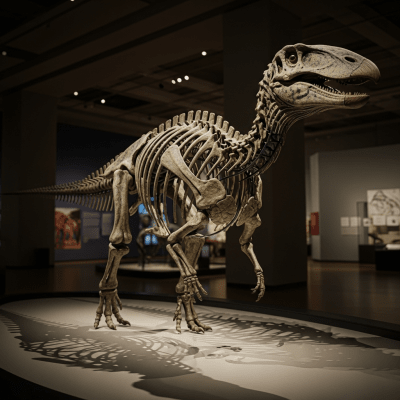
The first Maiasaura fossils were unearthed in the Two Medicine Formation of Montana, USA, in the late 1970s. The holotype specimen, MOR 547, is preserved at the Museum of the Rockies. These discoveries included nesting sites with eggs, hatchlings, and adults, providing a rare window into dinosaur family life and growth. Maiasaura fossils remain among the most significant for studying dinosaurian reproduction and social structure.
Maiasaura inhabited what is now Montana, USA, within the Two Medicine Formation. This region during the Late Cretaceous was characterized by floodplains, river valleys, and lush vegetation, offering abundant food and suitable nesting grounds. Fossil evidence suggests Maiasaura thrived in large, stable colonies, indicating a widespread and successful distribution across western North America.
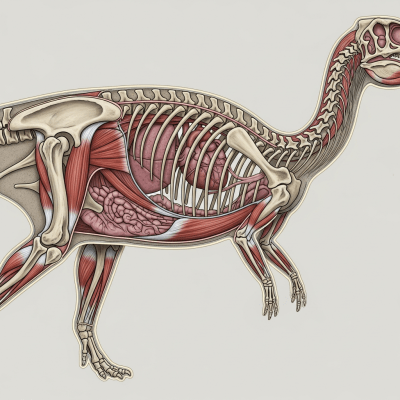
Maiasaura was a dedicated herbivore, equipped with specialized dental batteries for grinding tough, fibrous plants. Its broad snout allowed it to crop vegetation efficiently, and its digestive system was adapted to process large quantities of Cretaceous flora, supporting rapid growth in juveniles and sustaining adult colonies.
Maiasaura's life cycle began in communal nests, where eggs hatched into altricial young requiring parental care. Fossilized bones reveal rapid juvenile growth rates, with hatchlings developing quickly under the watchful eyes of adults. Multiple generations often coexisted within nesting colonies, highlighting a complex social structure and advanced reproductive strategy.
Maiasaura, like all non-avian dinosaurs, vanished during the mass extinction event at the end of the Cretaceous period. Theories suggest a combination of catastrophic asteroid impact, volcanic activity, and climate change led to the abrupt disappearance of these remarkable creatures, reshaping life on Earth.
Maiasaura is a cornerstone of paleontological research, offering the first concrete evidence of dinosaurian parental care and social nesting. Its fossils have advanced understanding of dinosaur growth, reproductive biology, and behavior, making it a model genus for evolutionary studies and science education worldwide.