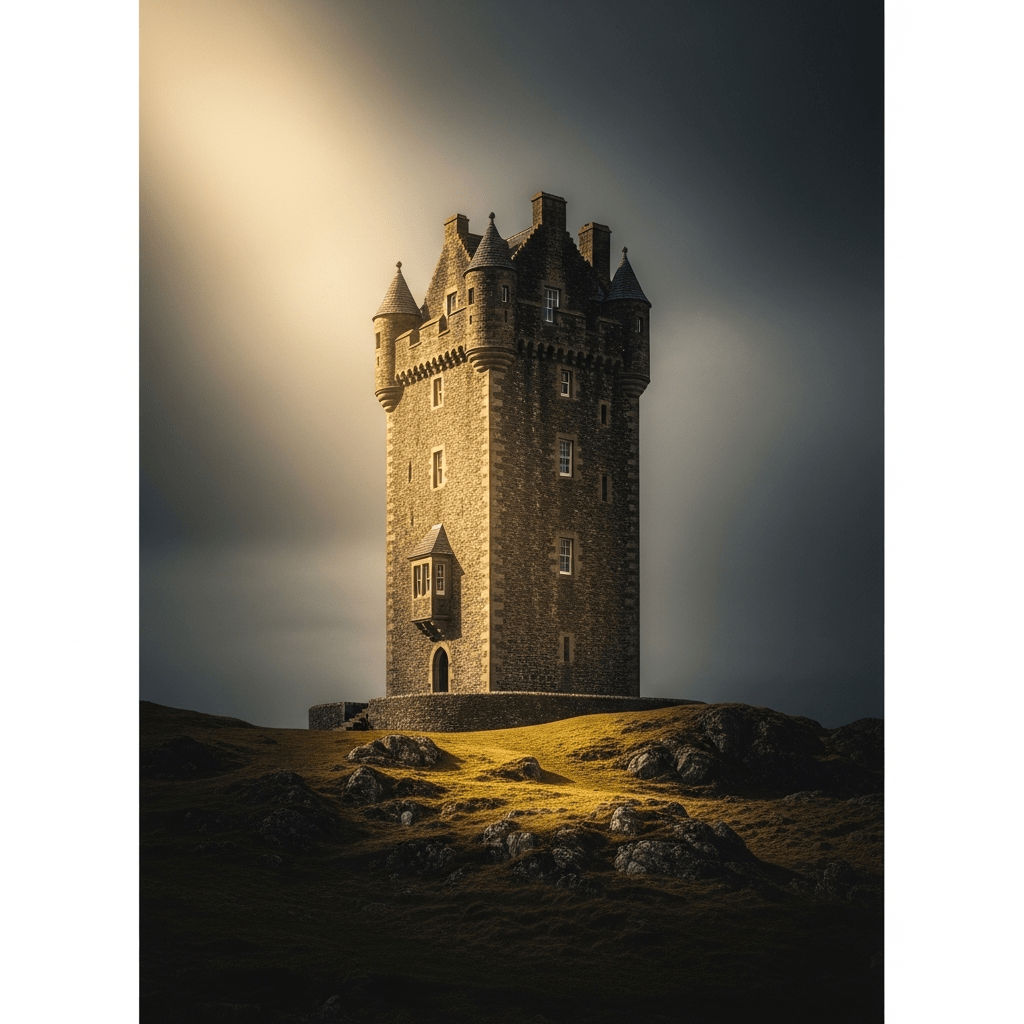
Tower House
The tower house is a tall, narrow, multi-storey castle type that served as both fortified residence and defensive stronghold for minor nobility, especially in Scotland, Ireland, and northern England from the late medieval period onward.
The tower house is a tall, narrow, multi-storey castle type that served as both fortified residence and defensive stronghold for minor nobility, especially in Scotland, Ireland, and northern England from the late medieval period onward.
Tower houses originated in the late 14th century, flourishing through the 17th century in regions marked by local conflict and instability—most notably Scotland, Ireland, and northern England. Their emergence was driven by the need for affordable, defensible homes for lesser nobility and landowners, often encouraged by royal licenses or statutes like Ireland’s Statute of 1429. The design evolved from earlier stone keeps and hall houses, adapting to local conditions and available materials.
Within the broader family of castles, tower houses are classified as fortified residential structures, distinct for their vertical form and relatively modest scale compared to grander castles. They are often considered a subtype of medieval castles, related to stone keeps and hall houses, and are sometimes categorized as "fortified houses" or "small castles" in heritage registers.
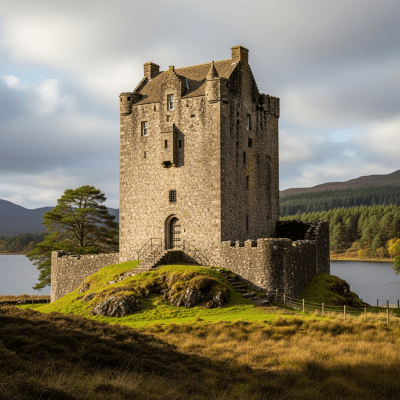
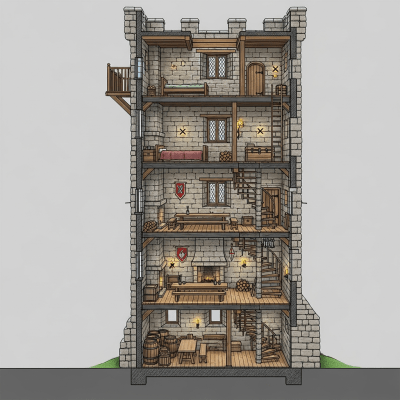
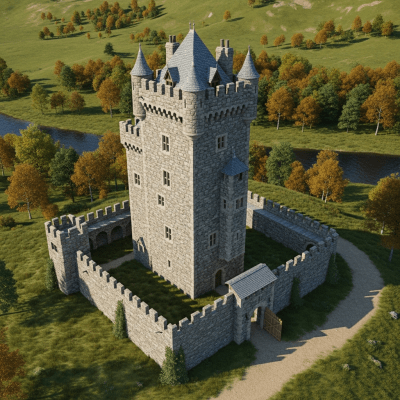
Tower houses typically present a striking vertical silhouette, with three to five storeys rising above the landscape. Built of locally quarried stone, their thick walls—often exceeding 1.5 meters—convey a sense of solidity and security. Exteriors are austere, with minimal ornamentation, punctuated by narrow slit windows and crenellated parapets. Many feature L-shaped or rectangular plans, spiral staircases, vaulted basements, and occasionally a surrounding bawn or courtyard wall. Inside, vaulted ground floors provide storage, while upper levels house living quarters and private chambers.
Tower houses functioned as the principal residences for minor nobles, clan chiefs, and landowners, offering both domestic comfort and robust defense against local feuds, raids, and small-scale warfare. They served as administrative centers, status symbols, and focal points for community life. Over time, some were expanded or adapted for new uses, while others became ruins or were incorporated into later estates.
Bring this kind into your world � illustrated posters, mugs, and shirts.
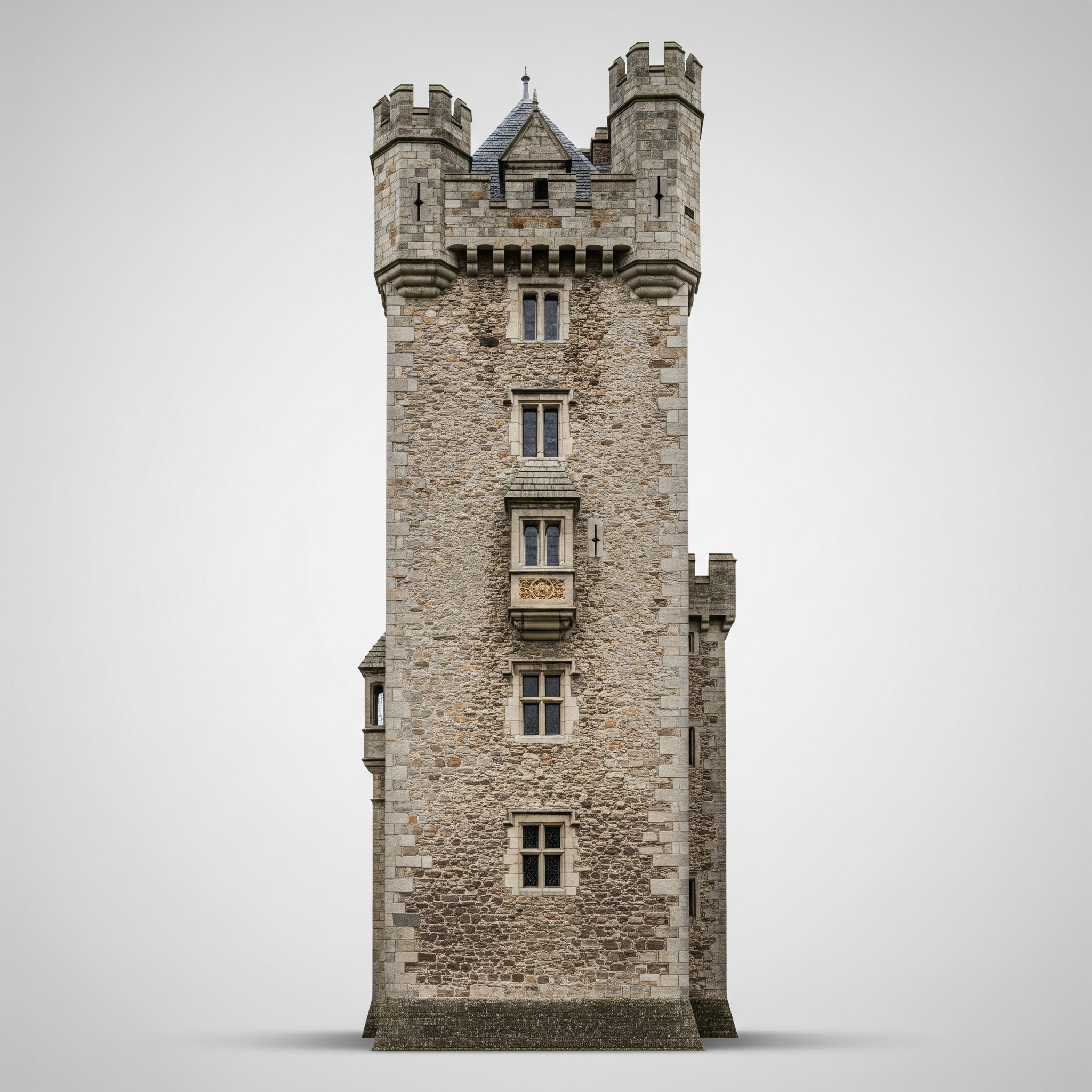
Archival print, museum-grade paper
Buy Poster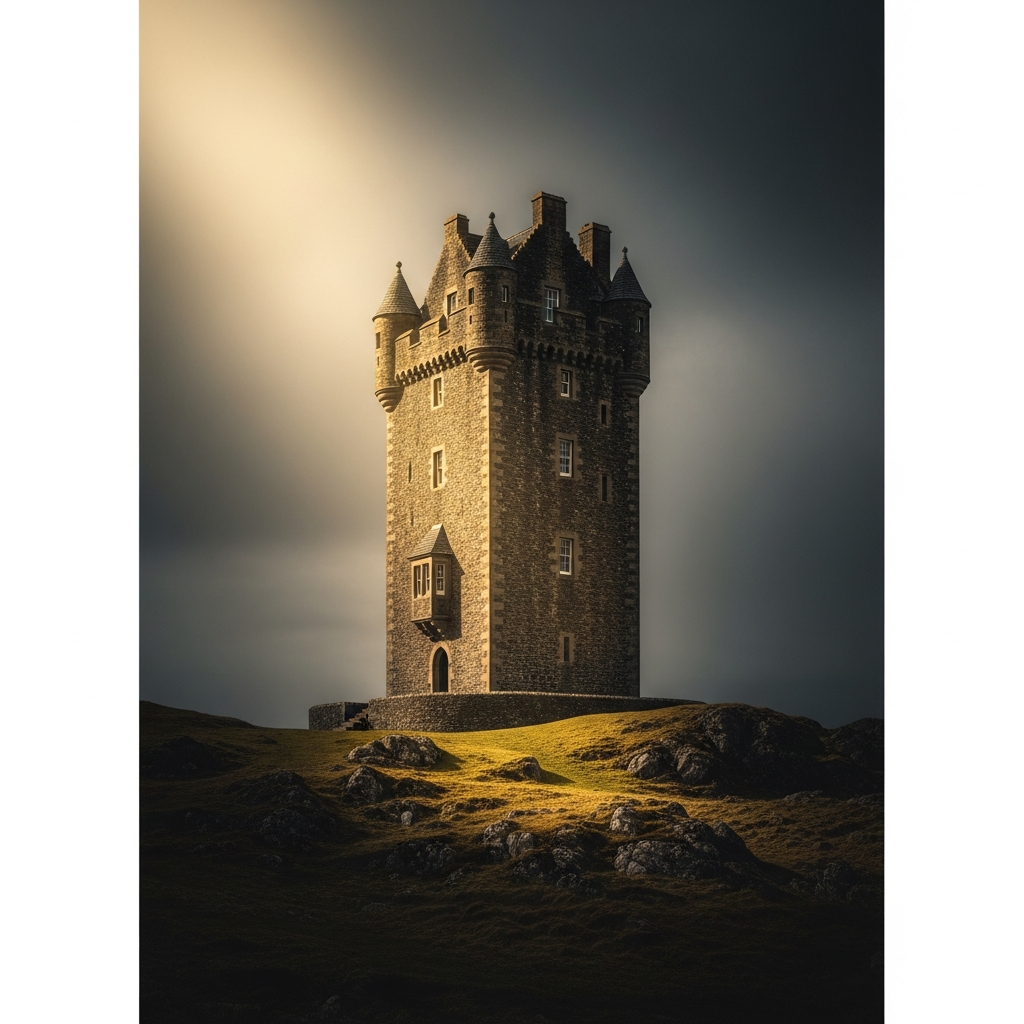
Stoneware mug, dishwasher safe
Buy Mug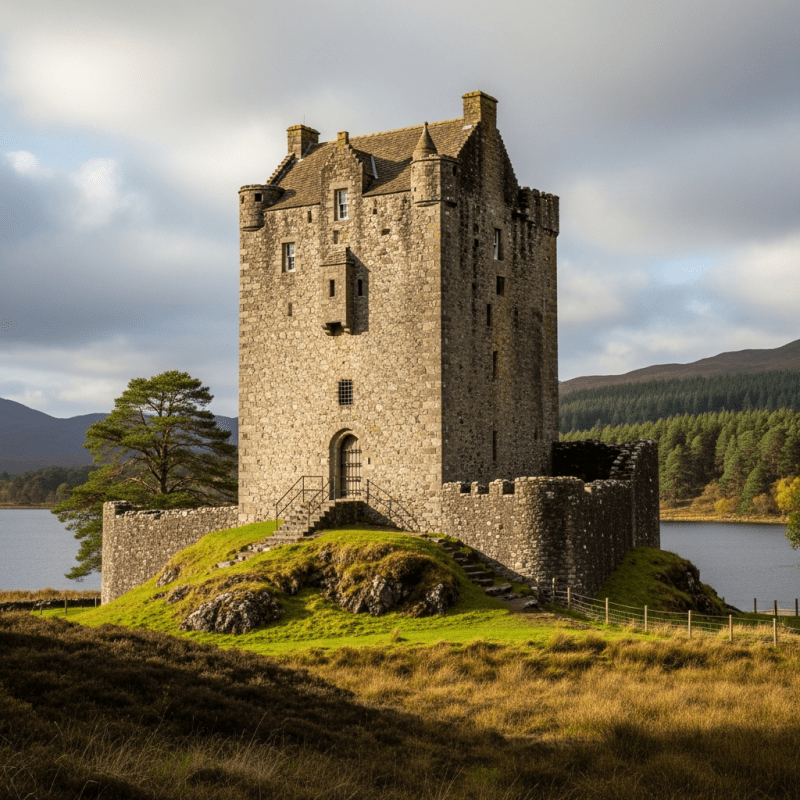
Soft cotton tee, unisex sizes
Buy ShirtTower houses are emblematic of the turbulent histories of Scotland and Ireland, featuring prominently in local folklore, literature, and art. Their enduring presence in the landscape has made them symbols of resilience and heritage, often associated with clan identity and regional pride. Today, they are celebrated in tourism, conservation efforts, and popular media as icons of medieval life and architecture.
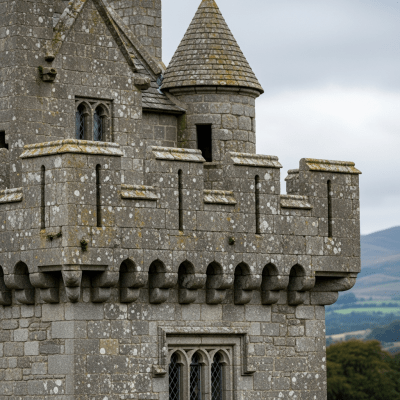
Key architectural features of tower houses include thick stone walls, narrow arrow loops, crenellated parapets, machicolations, spiral staircases, and vaulted basements. Most are rectangular or L-plan in shape, with limited external decoration. Defensive elements are prioritized, and many are surrounded by a bawn or courtyard wall. Internally, the layout typically consists of storage vaults, a great hall, and private chambers, with some examples boasting mural chambers, garderobes, and wall-walks.


Tower houses served as secure homes for minor nobility and landowners, providing protection against raids and local warfare. They were administrative hubs, centers of local authority, and symbols of status. Many played roles in regional conflicts, clan battles, and the plantation of Ulster, reflecting the shifting political landscape of late medieval Britain and Ireland.
Regional terminology and features vary: in northern England and the Scottish Borders, "peel towers" denote similar defensive structures; "bastle houses" are fortified farmhouses. In Ireland, the surrounding wall is called a "bawn." Scottish tower houses are often distinguished by their smaller scale and fewer outer defenses compared to larger castles. Continental variants exist, such as the "château-tour" in France and "Wehrturm" in Germanic regions, each reflecting local materials and traditions.
Hundreds of tower houses survive today, ranging from well-preserved monuments and restored residences to evocative ruins. Many are protected as national monuments or listed buildings, with ongoing conservation and restoration efforts led by heritage organizations in Scotland, Ireland, and England. Some have been adapted for modern use, while others remain as archaeological sites or tourist attractions.
Tower houses are steeped in local legend, often said to be haunted by the ghosts of former occupants or linked to tales of clan feuds and sieges. Stories abound of secret passages, hidden treasures, and dramatic escapes. In Irish folklore, some tower houses are associated with banshees or supernatural guardians, while Scottish tales recount brave defenders and mysterious disappearances.
When visiting a tower house, check opening times and access restrictions, as some are privately owned or only open seasonally. Wear sturdy footwear for uneven ground and spiral stairs, and respect preservation guidelines by avoiding climbing on fragile masonry. Guided tours often provide rich historical context, and early morning or late afternoon visits offer the best light for photography. Always be mindful of local etiquette and conservation rules.
Alternate terms for tower houses include "peel tower" (northern England, Scottish Borders), "bastle house" (fortified farmhouse variant), "château-tour" (French), "Burg" or "Wehrturm" (Germanic regions), and "bawn" (Irish term for the enclosing wall). In heritage registers, they may be classified as "fortified houses" or "small castles." Regional nuances affect classification, with Scottish tower houses often distinguished by their scale and defensive features.