Origin Story

Indian Hill Forts originated across the Indian subcontinent during the medieval period, roughly from the 9th to the 17th centuries CE. Their construction was driven by the need for elevated, defensible positions in a landscape shaped by frequent warfare and shifting dynastic powers. Early fortification practices evolved under influential dynasties such as the Mauryas, Rajputs, Marathas, and Mughals, who adapted designs to suit local terrain and political realities. The tradition of hilltop forts reflects both indigenous innovation and the layered history of successive rulers, with many sites expanded and renovated over centuries.

Classification

Indian Hill Forts belong to the broader family of castles, specifically classified as hill castles due to their strategic placement on natural elevations. Within Indian architecture, they are distinguished from other fort types such as desert forts (Maru Durg) and water forts (Jal Durg). Their classification is shaped by both topographical features and regional terminology, with UNESCO recognizing several as the "Hill Forts of Rajasthan." These forts exemplify a unique fusion of martial and palatial functions within the global taxonomy of fortified residences.

Appearance or Form

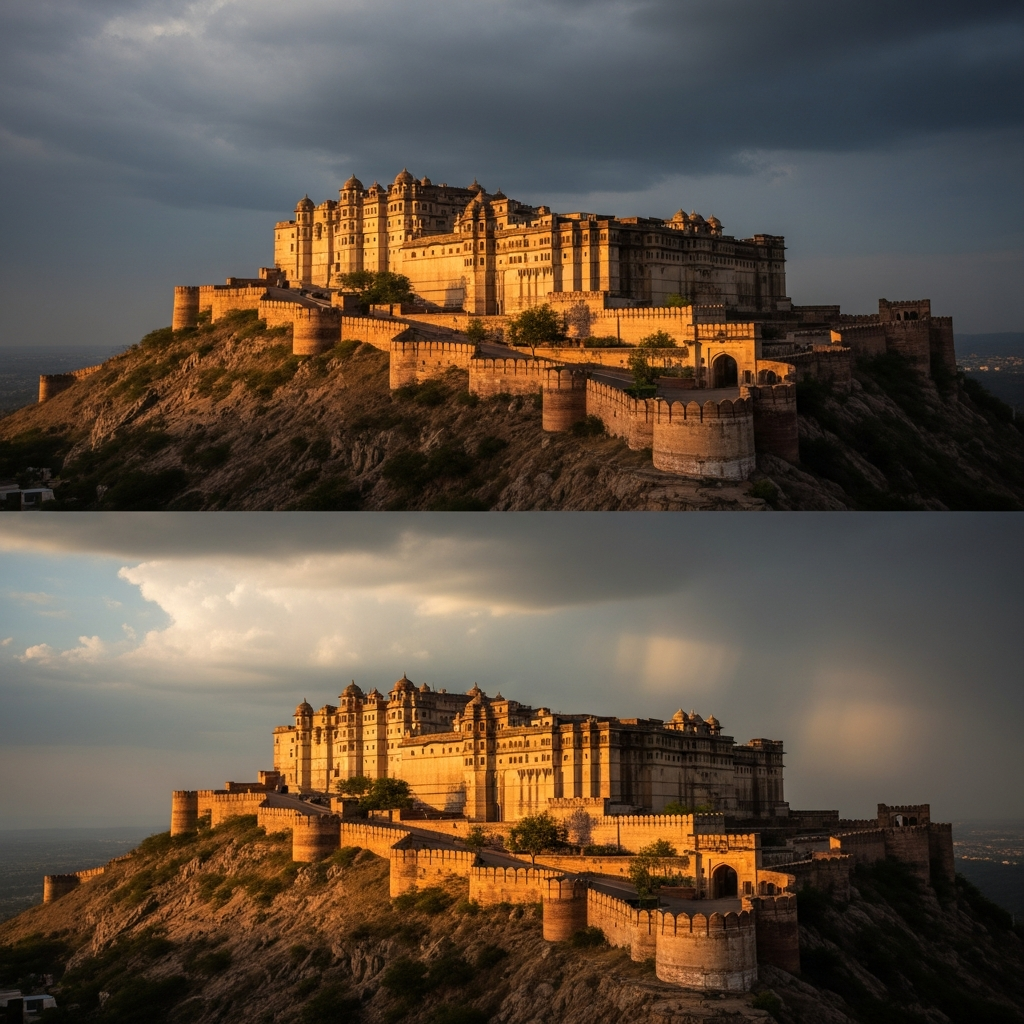
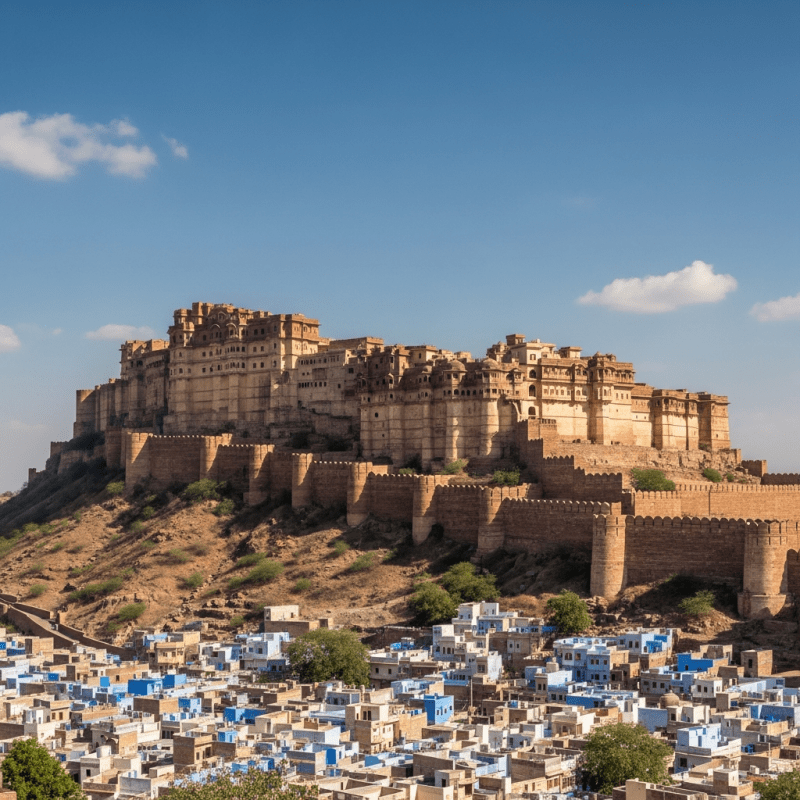
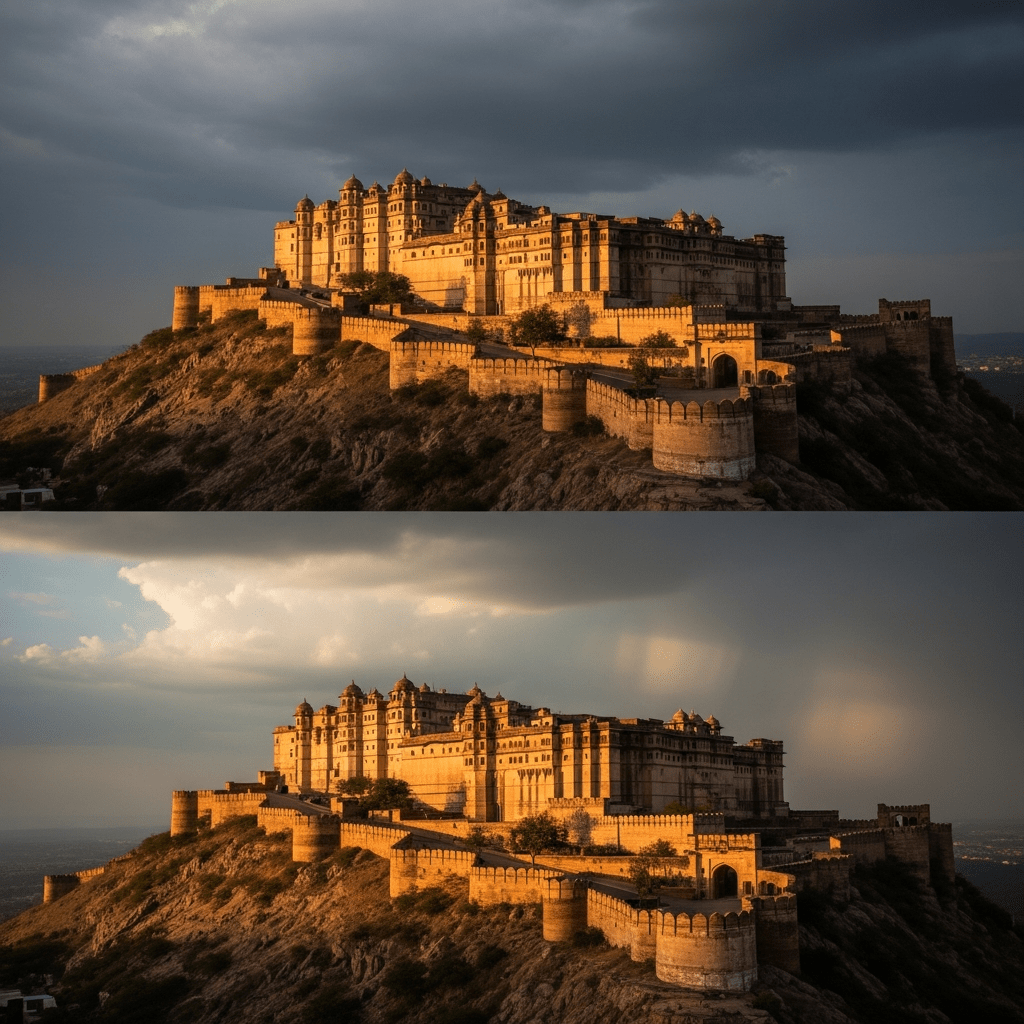
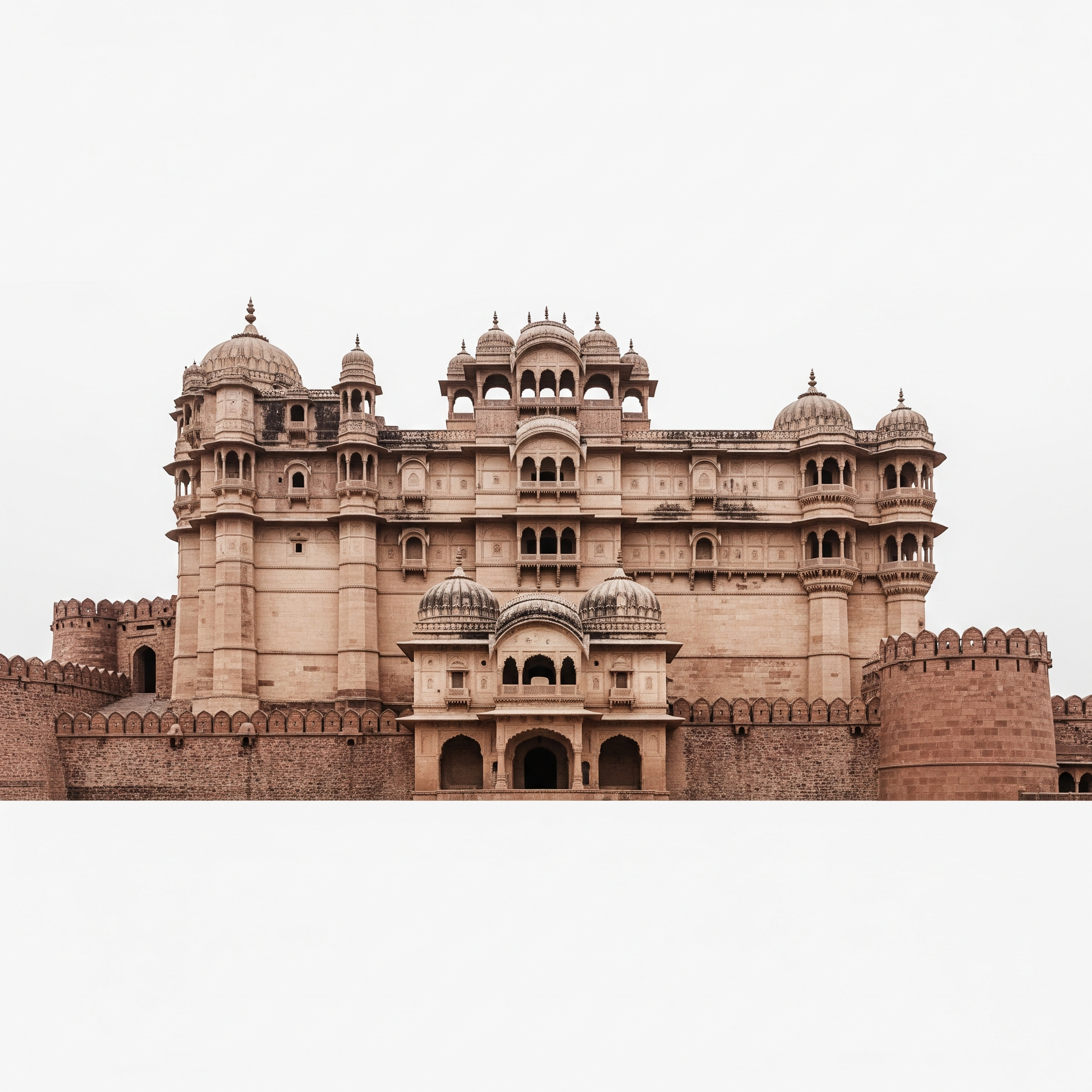
Indian Hill Forts impress with their dramatic silhouettes rising above rugged hills, often encircled by massive stone ramparts and bastions. Approaches are steep and winding, designed to slow attackers and showcase the fort’s imposing scale. Within the fortified walls, visitors encounter ornate palaces, temples, courtyards, and water reservoirs, all constructed from locally sourced sandstone or granite. Defensive gateways bristling with iron spikes, intricate carvings, and overhanging balconies (jharokhas) add both beauty and strength. Some forts, like Kumbhalgarh, boast walls stretching for tens of kilometers, rivaling the world’s longest fortifications.

Behavior or Usage

Historically, Indian Hill Forts served as seats of power, military strongholds, and administrative centers for ruling dynasties. Their elevated positions provided natural defense against invaders, while the enclosed complexes supported courtly life, religious ceremonies, and governance. During sieges and battles, these forts became symbols of resistance and valor. Beyond warfare, they hosted festivals, rituals, and daily life for royal families and retainers, blending martial utility with cultural richness. Today, many forts are heritage sites, attracting visitors and scholars alike.
Merchandise & Prints

Bring this kind into your world � illustrated posters, mugs, and shirts.

Indian Hill Fort Indian Hill Fort Poster

Indian Hill Fort Poster

Archival print, museum-grade paper

Indian Hill Fort Indian Hill Fort Mug

Indian Hill Fort Mug

Stoneware mug, dishwasher safe

Indian Hill Fort Indian Hill Fort Shirt

Indian Hill Fort Shirt

Soft cotton tee, unisex sizes

Attributes & Insights

Taxon-Specific Insights

🌍Cultural Significance

Indian Hill Forts are deeply woven into the cultural and historical fabric of India. They symbolize royal authority, resilience, and regional identity, often celebrated in folklore, literature, and art. Legendary events such as the jauhar at Chittorgarh—where women performed mass self-immolation to avoid capture—have elevated these sites to near-mythic status. Their architecture and stories inspire contemporary festivals, films, and tourism, while UNESCO recognition underscores their global cultural value.

📌Notable Facts

  • Kumbhalgarh Fort’s walls extend over 36 kilometers, making them among the longest in the world.
  • Many Indian Hill Forts, including Chittorgarh and Amber, are UNESCO World Heritage Sites.
  • Defensive gates were often studded with iron spikes to repel elephant charges during sieges.
  • These forts frequently contain temples, palaces, and water reservoirs, supporting both defense and daily life.
  • The layered architecture reflects centuries of expansion and renovation by successive dynasties.

🏰Architectural Features

Key architectural features of Indian Hill Forts include massive stone ramparts, bastions, and fortified gateways known as pols. Steep, zigzagging access roads and iron-spiked gates provide formidable defense. The complexes often encompass palaces adorned with intricate carvings, temples, courtyards, and water reservoirs (baolis or kunds). Defensive elements such as machicolations, arrow slits, and layered walls—sometimes extending for dozens of kilometers—distinguish these forts. Palatial structures feature jharokhas (overhanging balconies) and elaborate stonework, blending martial and aesthetic traditions.

Visual Variations

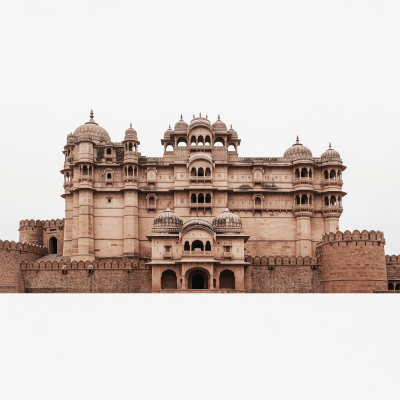
High quality studio photograph of a Indian Hill Fort, belonging to the castles taxonomy
A realistic image of the Indian Hill Fort from the castles taxonomy, situated in its historical or natural environment
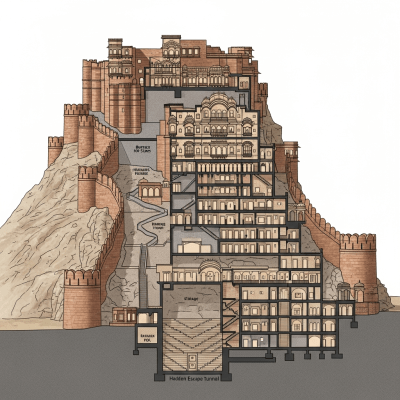
A detailed cross-sectional illustration of a Indian Hill Fort, from the castles taxonomy
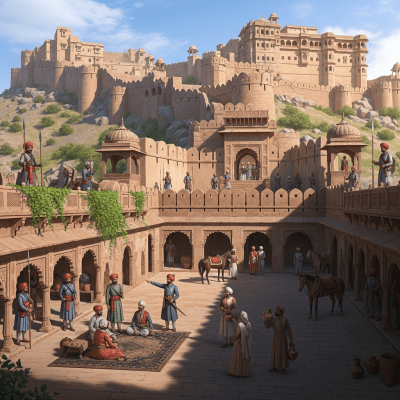
An image showing the Indian Hill Fort from the castles taxonomy being used or inhabited historically
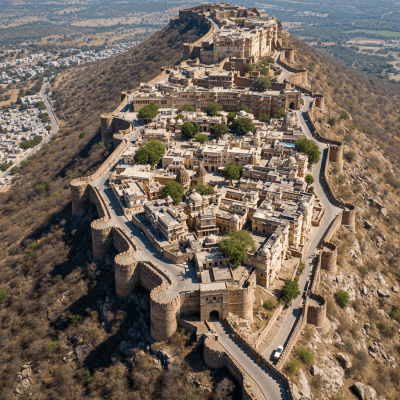
A bird's-eye view rendering of a Indian Hill Fort, classified in the castles taxonomy
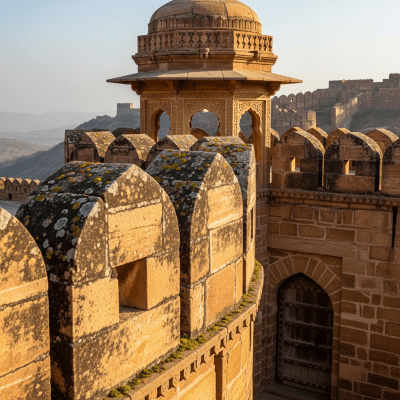
A close-up image focusing on unique architectural details of a Indian Hill Fort, from the castles taxonomy

Composition & Context

Taxon-Specific Insights

⚔️Historical Roles

Indian Hill Forts played vital roles as military bastions, administrative centers, and royal residences. They were focal points during regional conflicts and sieges, such as those led by Mughal emperor Akbar at Chittorgarh. Beyond warfare, the forts hosted courtly ceremonies, religious observances, and governance, anchoring the social and political life of their regions. Their enduring legacy includes tales of resistance, sacrifice, and dynastic ambition.

🌍Famous Examples

  • Chittorgarh Fort (Rajasthan) – Renowned for its epic sieges and legendary acts of valor.
  • Mehrangarh Fort (Jodhpur) – A massive fort built by Rao Jodha in 1459 CE, noted for its palatial architecture.
  • Kumbhalgarh Fort (Rajasthan) – Famous for its extensive walls and strategic location.
  • Amber Fort (Jaipur) – Blends hill fort defenses with ornate palace structures.

🗺️Regional Variations

Regional terminology and classification vary: in Rajasthan, "Hill Forts" are distinct from "Desert Forts" and "Water Forts" (Jal Durg). Alternate names include Kila (Hindi/Urdu), Durg (Sanskrit), Gadh (Marathi), and Qila (Persian/Urdu). UNESCO collectively designates several as the "Hill Forts of Rajasthan," reflecting their unique architectural and cultural heritage in the region.

🛡️Preservation Status

Many Indian Hill Forts are protected as national monuments by the Archaeological Survey of India (ASI) and recognized as UNESCO World Heritage Sites. Restoration efforts focus on conserving both structural integrity and historical authenticity, though some forts remain partially ruined or face challenges from environmental and human impact. Heritage designations help safeguard these sites for future generations, promoting responsible tourism and ongoing research.

👻Legends And Myths

Indian Hill Forts are steeped in legends and folklore. Chittorgarh is famous for the tale of jauhar, where women chose self-immolation over capture. Mehrangarh Fort is said to be protected by a hermit’s curse, and many forts are associated with stories of hidden treasures, heroic battles, and supernatural guardians. These myths enrich the cultural allure and mystique of the forts, drawing visitors and storytellers alike.

🎟️Visiting Tips

  • Visit during cooler months (October to March) for comfortable exploration.
  • Wear sturdy footwear, as access roads and pathways can be steep and uneven.
  • Respect local customs and heritage guidelines; some areas may be restricted or sacred.
  • Guided tours offer deeper insight into the history and architecture.
  • Photography is encouraged, but check site-specific rules regarding flash or drone use.

📝Terminology And Synonyms

Indian Hill Forts are also known as Kila (Hindi/Urdu), Durg (Sanskrit), Gadh (Marathi), and Qila (Persian/Urdu). These terms reflect linguistic and regional nuances, with "Hill Forts" specifically denoting those built on elevated terrain. UNESCO and ASI often use "Hill Forts of Rajasthan" for collective designation. Understanding these synonyms aids in navigating historical texts and local signage.

Faq

  • What is an Indian Hill Fort?
    A fortified complex built atop a hill in India, serving both defensive and residential functions for royal dynasties.
  • Can you visit Indian Hill Forts today?
    Yes, many are open to tourists and are protected heritage sites, especially in Rajasthan and Maharashtra.
  • What materials were used to build these forts?
    Primarily sandstone, granite, lime mortar, and occasionally brick, sourced locally.