Origin Story

The origins of the Alcázar trace back to the period of Al-Andalus, when Muslim rulers constructed fortified palaces across Spain between the 8th and 15th centuries. The very word "Alcázar" comes from the Arabic al-qaṣr, meaning "the castle" or "the palace." Many Alcázars began as Islamic strongholds and were later expanded or transformed by Christian monarchs after the Reconquista, resulting in layered structures that reveal centuries of cultural exchange and adaptation.

Classification

Alcázars belong to the broader family of castles, but are distinguished by their dual function as both defensive fortresses and royal residences. They are often classified as palace-castle hybrids, setting them apart from purely military castillos and ceremonial palaces. Their classification reflects the fusion of Islamic and Christian influences, as well as their unique role in Spanish history.

Appearance or Form

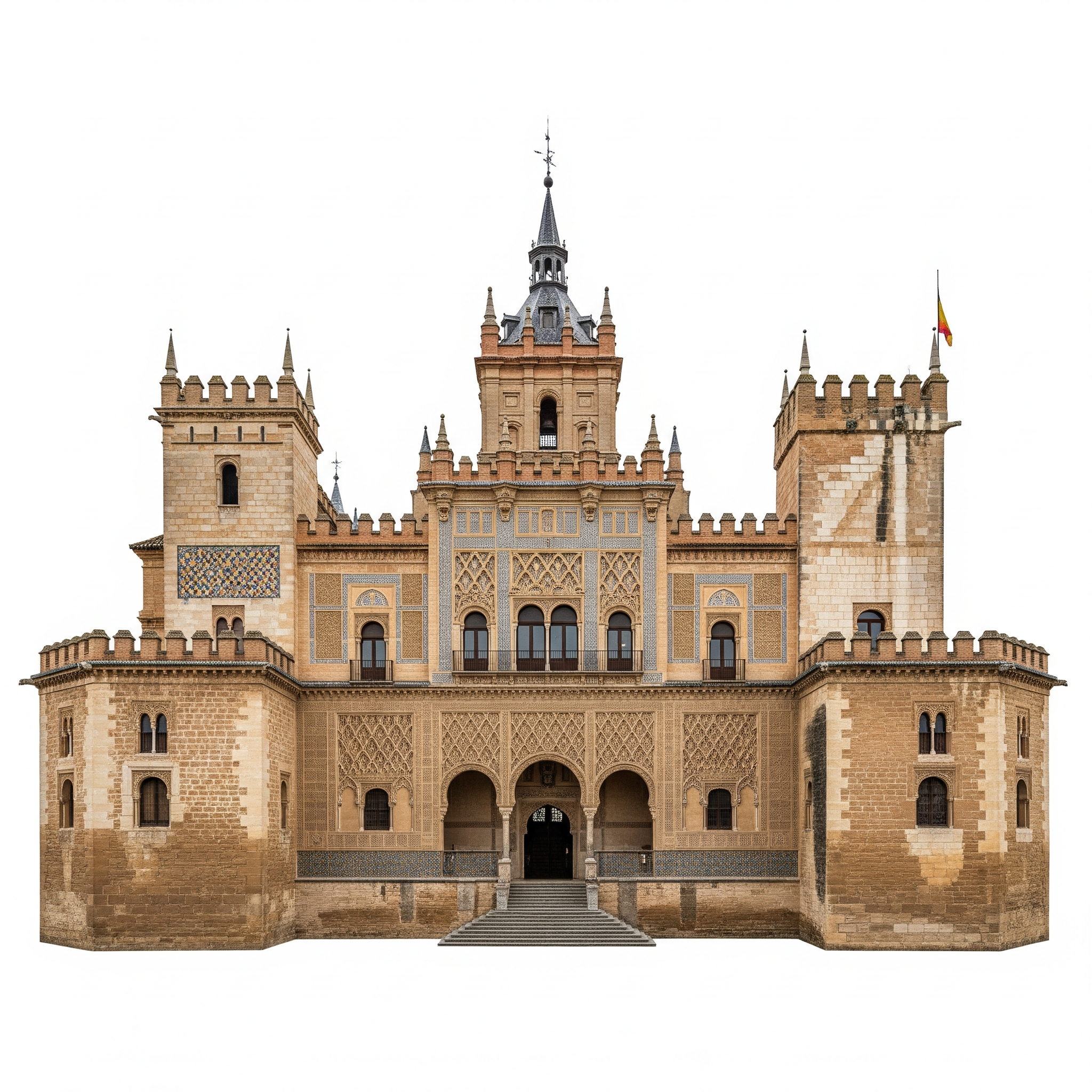
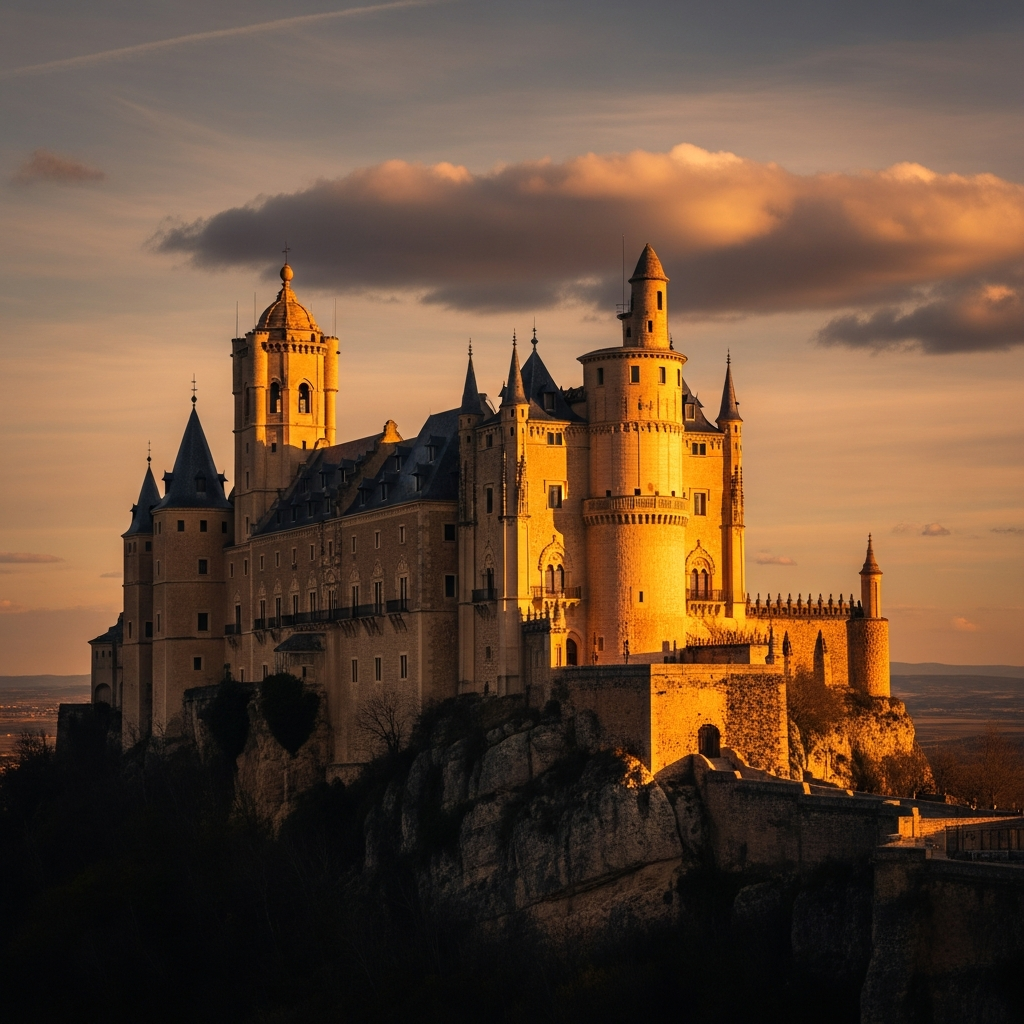
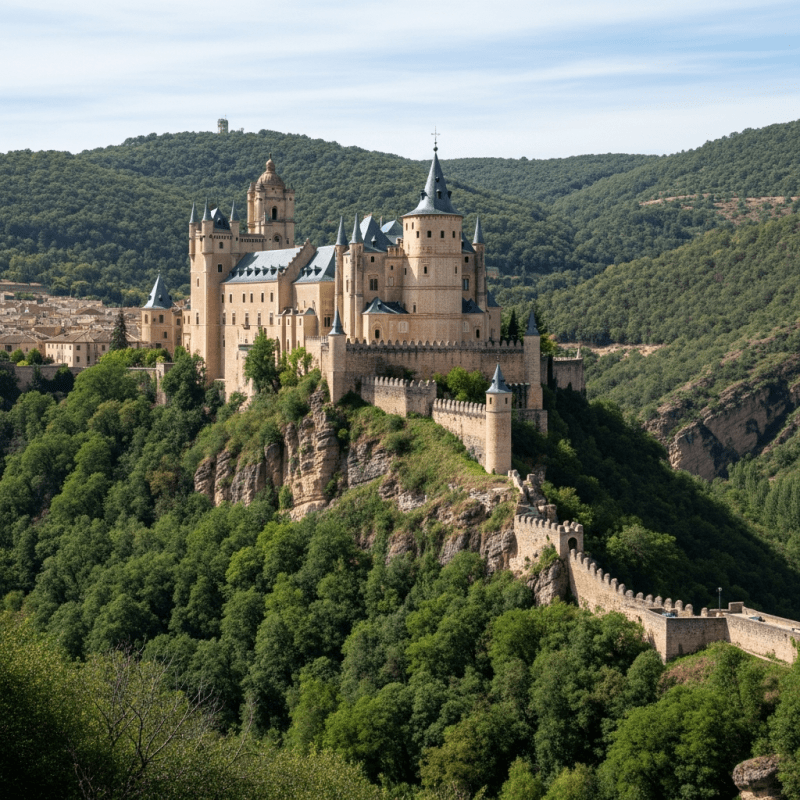
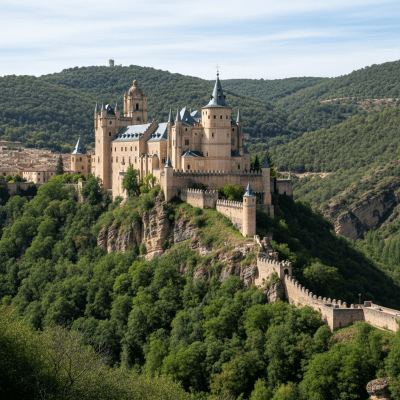
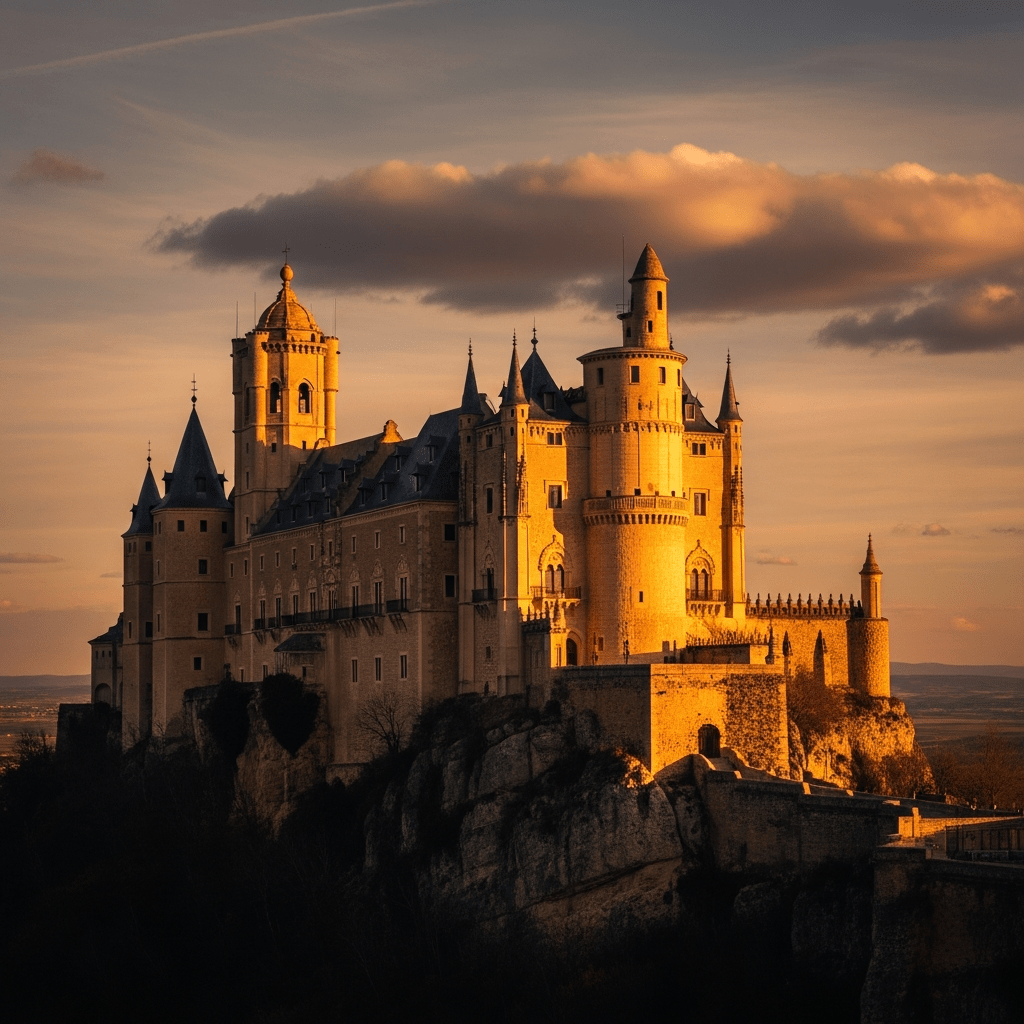
Alcázars captivate with their eclectic architecture, featuring fortified stone walls, imposing towers—sometimes adorned with horseshoe arches—and intricate courtyards filled with lush gardens. Decorative tilework (azulejos), ornate halls, and elaborate patios are common, while moats, battlements, and grand gatehouses reinforce their defensive nature. The Alcázar of Segovia, for instance, boasts a fairy-tale silhouette with steep slate roofs, while the Alcázar of Seville dazzles with its Mudejar ornamentation and harmonious blend of styles.

Behavior or Usage

Historically, Alcázars served as royal residences, seats of governance, and military strongholds. Under Islamic rule, they housed local rulers and governors; after the Reconquista, they became palaces for Christian monarchs, hosting courtly life, political events, and official ceremonies. Their enduring utility is reflected in their continued use for state functions and as cultural landmarks.

Merchandise & Prints

Bring this kind into your world � illustrated posters, mugs, and shirts.

Alcázar (Spanish Castle) Alcázar (Spanish Castle) Poster

Alcázar (Spanish Castle) Poster

Archival print, museum-grade paper

Alcázar (Spanish Castle) Alcázar (Spanish Castle) Mug

Alcázar (Spanish Castle) Mug

Stoneware mug, dishwasher safe

Alcázar (Spanish Castle) Alcázar (Spanish Castle) Shirt

Alcázar (Spanish Castle) Shirt

Soft cotton tee, unisex sizes

Attributes & Insights

Taxon-Specific Insights

🌍Cultural Significance

Alcázars are celebrated as masterpieces of architecture and decorative arts, embodying Spain's layered history and the confluence of Islamic and Christian cultures. They appear prominently in art, literature, and popular media, symbolizing royal power, historical continuity, and the beauty of cross-cultural exchange. The Alcázar of Seville, a UNESCO World Heritage Site, remains a living monument to these traditions.

📌Notable Facts

  • The term "Alcázar" is derived directly from Arabic, highlighting Spain's Islamic heritage.
  • Many Alcázars, such as those in Seville and Segovia, have been continuously expanded and modified over centuries, resulting in a rich layering of architectural styles.
  • The Alcázar of Seville is one of the oldest royal palaces still in use in Europe.
  • Alcázars often feature stunning gardens and courtyards designed for both relaxation and ceremonial display.
  • Some Alcázars are recognized as UNESCO World Heritage Sites, underscoring their global cultural importance.

🏰Architectural Features

Alcázars are distinguished by fortified walls, towers (often with horseshoe arches), moats, battlements, and imposing gatehouses. Their interiors reveal elaborate courtyards, lush gardens, and richly decorated halls adorned with tilework, stucco, and carved wood. The architectural style is a harmonious blend of Islamic (Mudejar), Gothic, Renaissance, and Baroque elements, reflecting the diverse influences that shaped each structure over time.

Visual Variations

High quality studio photograph of a Alcázar (Spanish Castle), belonging to the castles taxonomy
A realistic image of the Alcázar (Spanish Castle) from the castles taxonomy, situated in its historical or natural environment
A detailed cross-sectional illustration of a Alcázar (Spanish Castle), from the castles taxonomy
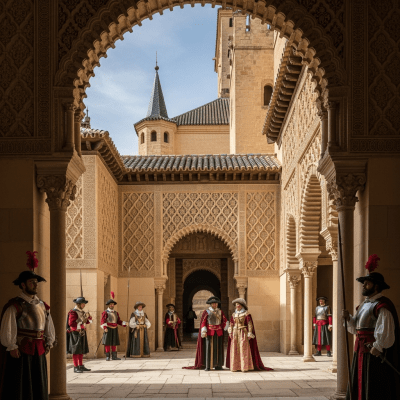
An image showing the Alcázar (Spanish Castle) from the castles taxonomy being used or inhabited historically
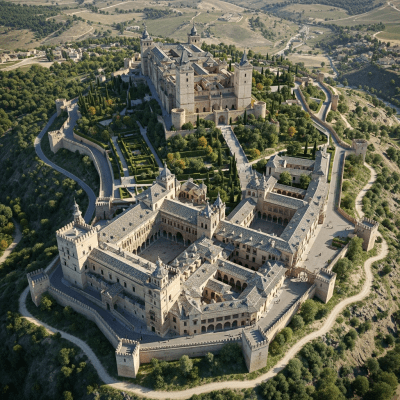
A bird's-eye view rendering of a Alcázar (Spanish Castle), classified in the castles taxonomy
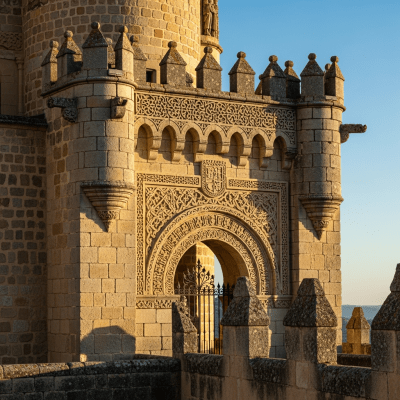
A close-up image focusing on unique architectural details of a Alcázar (Spanish Castle), from the castles taxonomy

Composition & Context

Taxon-Specific Insights

⚔️Historical Roles

Throughout history, Alcázars have functioned as royal residences, administrative centers, and military strongholds. They hosted monarchs, court officials, and significant events such as royal weddings, political treaties, and strategic military campaigns. Their dual role as both palace and fortress made them central to the governance and defense of Spanish realms.

🌍Famous Examples

  • Alcázar of Seville – Renowned for its Mudejar architecture and lush gardens; a UNESCO World Heritage Site.
  • Alcázar of Segovia – Famous for its fairy-tale silhouette and historical role as a royal residence and military academy.
  • Alcázar of Toledo – Noted for its commanding position and significance in Spanish military history.

🗺️Regional Variations

Within Spain, Alcázars vary by region, reflecting local traditions and the degree of Islamic or Christian influence. In Andalusia, Alcázars often display pronounced Mudejar and Moorish styles, while in Castile and León, Gothic and Renaissance elements are more prevalent. Terminology also differs: "Alcázar" denotes palace-castles, "castillo" refers to military castles, and "palacio" to ceremonial palaces, with some structures classified as hybrids due to their layered functions.

🛡️Preservation Status

Many Alcázars are well-preserved, thanks to ongoing restoration efforts and heritage protections. The Alcázar of Seville enjoys UNESCO World Heritage status, while others are designated as Bien de Interés Cultural (BIC) in Spain. These designations ensure careful maintenance and public access, allowing visitors to experience their historical and architectural splendor.

👻Legends And Myths

Alcázars are often surrounded by legends and folklore, from tales of hidden treasures and secret passages to stories of royal intrigue and ghostly apparitions. The Alcázar of Segovia, for example, is said to have inspired fairy-tale castles and is linked to stories of heroic knights and mysterious events. Such myths add a layer of enchantment to these storied monuments.

🎟️Visiting Tips

  • Check opening hours and ticket availability in advance, especially during peak tourist seasons.
  • Allow ample time to explore both the interiors and gardens, as many Alcázars feature extensive grounds and ornate rooms.
  • Guided tours can enhance your understanding of the history and architecture.
  • Respect designated areas and photography guidelines, as some spaces are still used for official functions.
  • Visit early in the day or late afternoon for a quieter experience and optimal lighting for photographs.

📝Terminology And Synonyms

"Alcázar" is derived from the Arabic al-qaṣr, meaning "castle" or "palace." Synonyms and related terms include fortaleza (fortress), castillo (castle), and palacio-fortaleza (palace-fortress). In Spanish heritage registers, Alcázars are distinguished from purely military castles and ceremonial palaces, reflecting their unique hybrid status and layered history.

Faq

  • What is the difference between an Alcázar and a Castillo?
    An Alcázar typically refers to a fortified palace with both defensive and residential functions, while a Castillo is a purely military castle.
  • Can you visit Alcázars today?
    Yes, many Alcázars are open to the public and serve as museums or cultural sites, with some still used for official events.
  • Are Alcázars unique to Spain?
    While the term is most commonly used in Spain, its origins are Arabic, and similar structures can be found in regions influenced by Islamic architecture.