Panettone
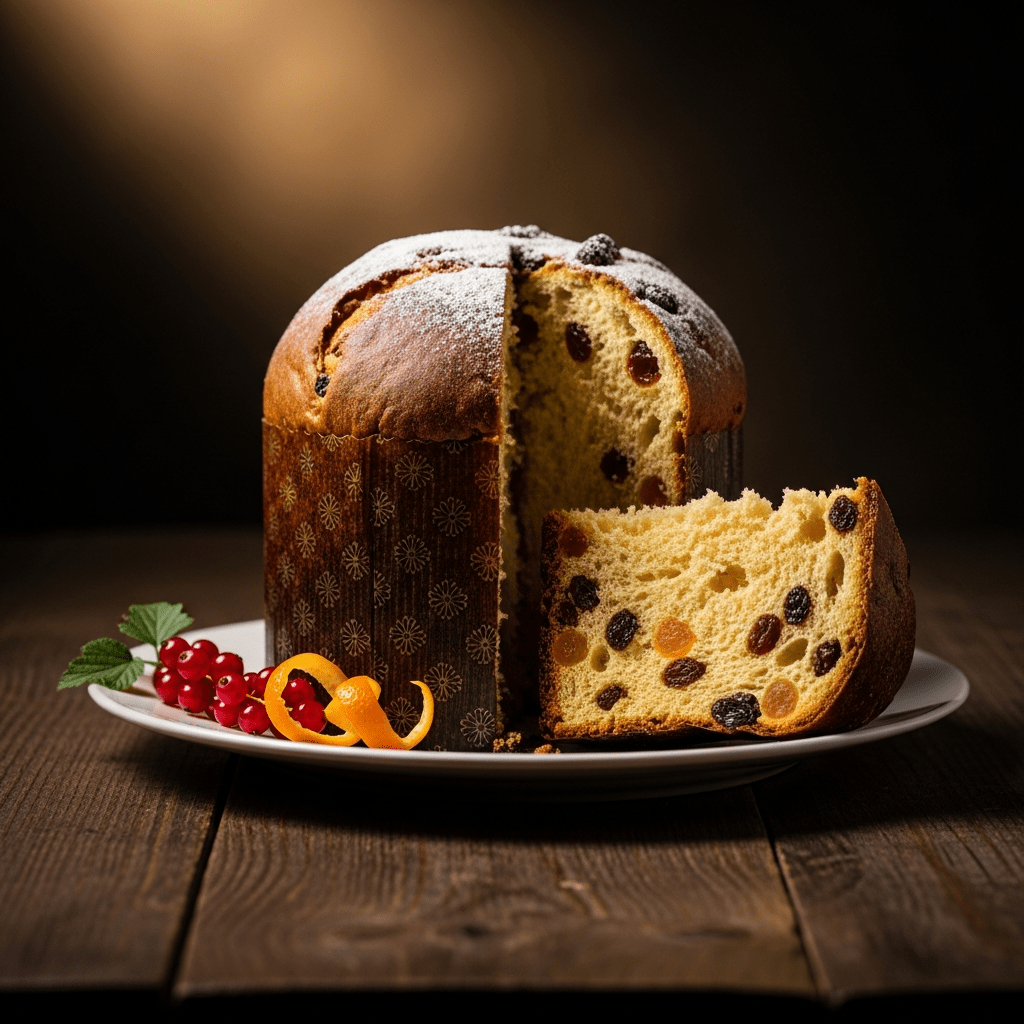
Panettone is a tall, dome-shaped Italian cake known for its light, airy crumb enriched with butter and studded with candied fruits and raisins, traditionally enjoyed during Christmas and New Year celebrations.
Panettone is a tall, dome-shaped Italian cake known for its light, airy crumb enriched with butter and studded with candied fruits and raisins, traditionally enjoyed during Christmas and New Year celebrations.
Originating in Milan, Lombardy, Italy, panettone’s roots trace back to at least the 15th or 16th centuries, with its modern form popularized in the 1920s by Milanese baker Angelo Motta. His innovation introduced the iconic tall, domed shape and enriched dough, establishing panettone as a festive staple both locally and worldwide.
Classified as a sweet bread, panettone belongs to a category of enriched, leavened cakes that blend bread and cake characteristics. It stands apart from typical sponge or butter cakes by its use of natural yeast and slow fermentation, placing it uniquely among traditional Italian holiday baked goods.
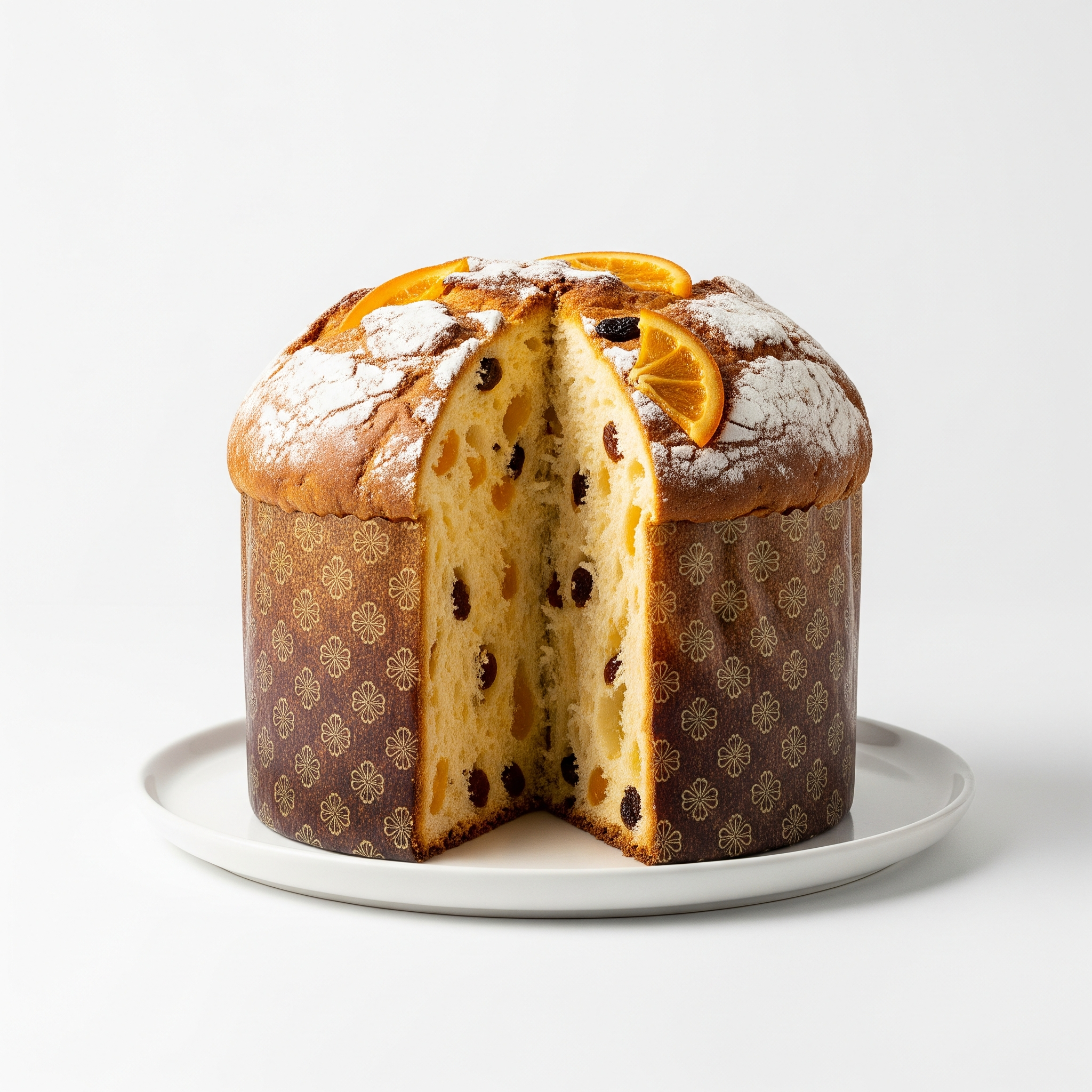
Panettone is typically tall and cylindrical with a domed top, measuring around 12 to 15 centimeters high. It is baked in a paper mold that supports its distinctive shape. The crumb is pale, light, and fluffy, generously dotted with colorful candied orange peel, citron, and plump raisins throughout its single-layer interior.
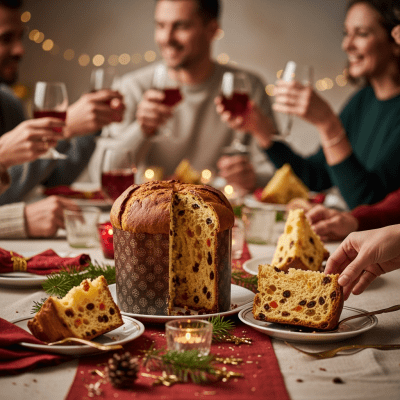
Panettone is traditionally sliced and served during the Christmas and New Year holidays, often accompanied by sweet wine, coffee, or hot chocolate. Beyond direct consumption, it is also repurposed in desserts such as bread pudding or French toast, showcasing its versatility in festive culinary traditions.
Bring this kind into your world � illustrated posters, mugs, and shirts.
Archival print, museum-grade paper
Buy Poster
Stoneware mug, dishwasher safe
Buy Mug
Soft cotton tee, unisex sizes
Buy ShirtAs a symbol of Italian festive baking, panettone holds a cherished place in holiday celebrations and gift-giving customs. Its presence in art and popular culture underscores its role as an emblem of warmth, family, and seasonal joy, while artisanal bakeries continue to preserve its traditional crafting methods.
Key ingredients defining panettone’s character include:

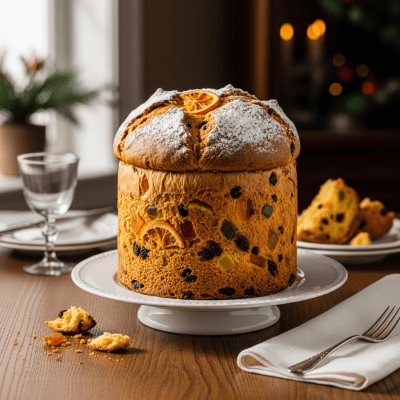
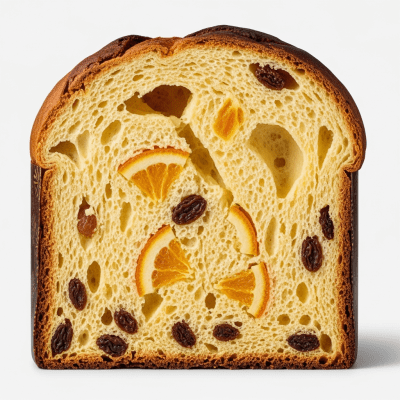
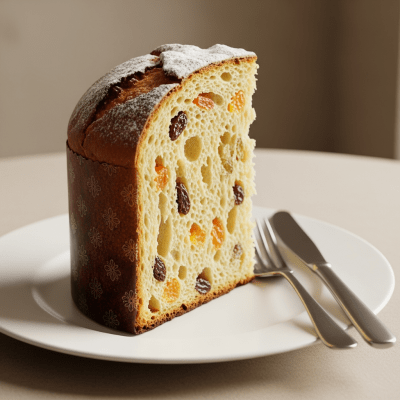
Panettone is prepared through a slow, multi-stage leavening process using natural yeast (a sourdough starter), which develops its characteristic airy texture. The enriched dough, combined with candied fruits and raisins, is then baked in a tall paper mold that supports its distinctive dome shape.
Panettone boasts a light and fluffy texture with a tender, buttery crumb. Its flavor is subtly sweet and enriched, punctuated by the bright, fruity notes of candied orange peel, citron, and raisins that provide bursts of sweetness and aroma throughout.
Dietary considerations: Panettone typically contains gluten, dairy, and eggs, making it unsuitable for those with related allergies or intolerances. It does not commonly contain soy. Variants may include chocolate chips or other dried fruits, but traditional recipes retain these allergens.
Notable regional variants of panettone include:
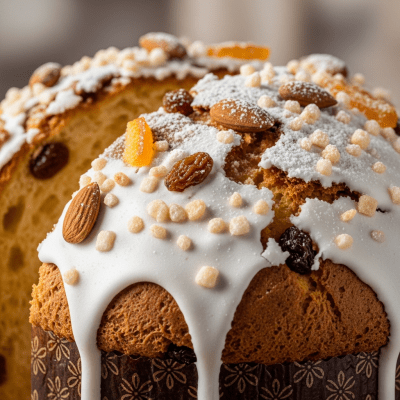
Panettone is traditionally presented simply, without elaborate decoration, relying on its tall, domed form and the colorful candied fruits embedded within for visual appeal. It is commonly wrapped in festive packaging during the holiday season and served sliced, often alongside sweet beverages or incorporated into desserts.