Mille-feuille
Mille-feuille is a classic French layered dessert featuring crisp puff pastry sheets alternated with rich pastry cream, often topped with delicate icing or fondant.
Mille-feuille is a classic French layered dessert featuring crisp puff pastry sheets alternated with rich pastry cream, often topped with delicate icing or fondant.
Originating in France during the 17th and 18th centuries, mille-feuille—meaning "a thousand leaves"—reflects the many thin layers of puff pastry that define it. While its exact inventor remains unknown, this elegant dessert became a staple of French patisserie culture and gained widespread popularity in Parisian bakeries. The English name "Napoleon" is a later linguistic adaptation with no verified connection to the emperor.
Mille-feuille is classified as a layered cake, though it straddles the line between cake and pastry. Its defining structure of multiple crisp pastry layers separated by creamy fillings places it within the broader family of French patisserie desserts, often grouped alongside other rich, multi-layered confections.
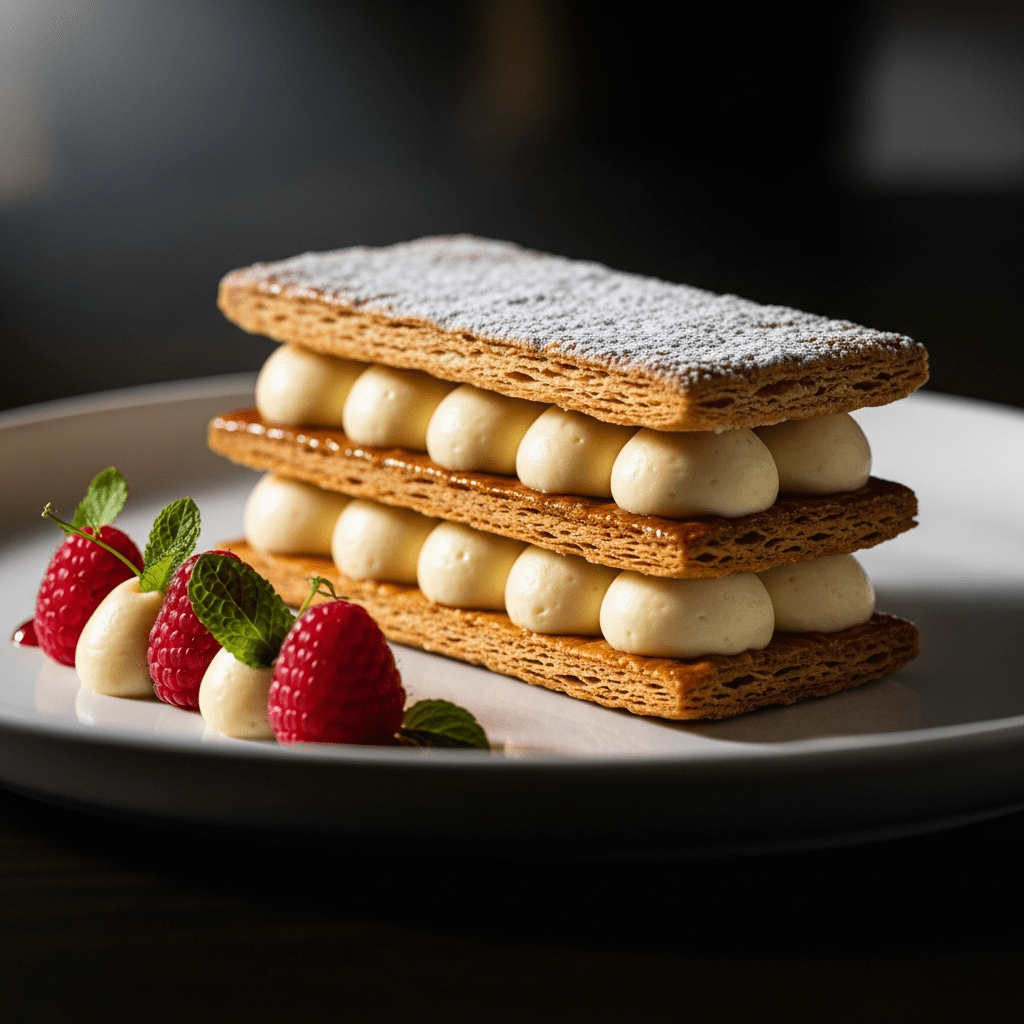
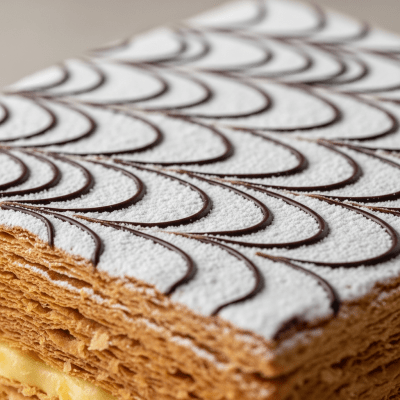
This dessert is typically rectangular or square, composed of three thin, crisp layers of golden puff pastry. Between these lie two generous layers of smooth, chilled pastry cream. The top is finished with a glossy fondant icing, often decorated with chocolate or combed patterns, and sometimes dusted lightly with powdered sugar, creating an inviting contrast of textures and colors.
Mille-feuille is enjoyed primarily as a refined dessert or sweet treat. It is commonly served in French patisseries and bakeries worldwide, suitable for everyday indulgence or special occasions. Its layered composition offers a pleasing balance of crispness and creaminess, making it a favored choice for afternoon tea or festive gatherings.
Bring this kind into your world � illustrated posters, mugs, and shirts.
Archival print, museum-grade paper
Buy Poster
Stoneware mug, dishwasher safe
Buy Mug
Soft cotton tee, unisex sizes
Buy ShirtEsteemed in French culinary tradition, mille-feuille symbolizes elegance and craftsmanship in pastry making. It appears frequently in cultural celebrations and is emblematic of classic European dessert artistry. Variants of the mille-feuille concept have permeated other cultures, adapting to local tastes while maintaining its signature layered form.
Key ingredients include crisp puff pastry made from flour, butter, water, and salt; rich pastry cream composed of milk, eggs, sugar, flour or cornstarch, and vanilla; and a finishing glaze of fondant or icing sugar.
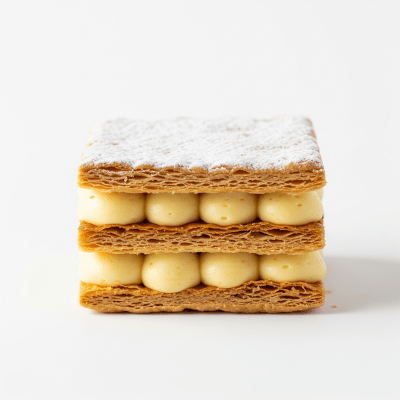
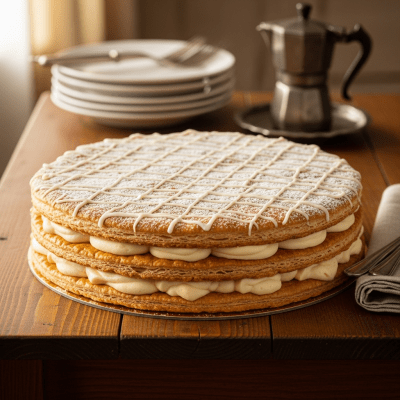
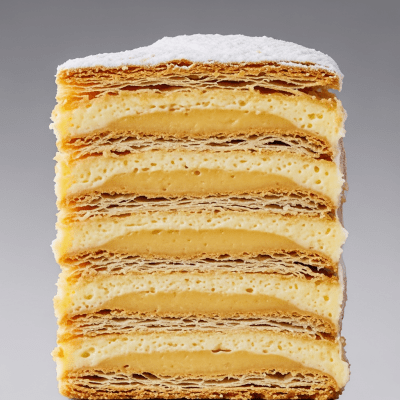

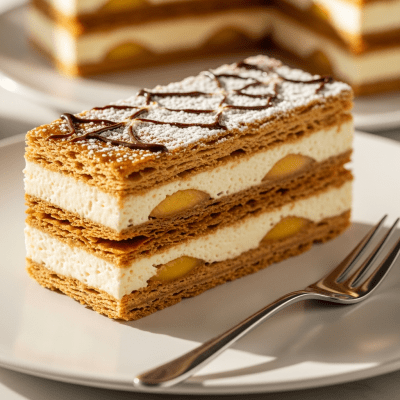
Preparation involves baking the puff pastry until golden and crisp, assembling it with chilled layers of smooth pastry cream, and finishing the top with a glossy fondant icing. Decorative touches such as chocolate combed patterns or powdered sugar are often applied to enhance visual appeal.
Mille-feuille offers a distinctive contrast between the crisp, flaky texture of the puff pastry and the creamy, velvety smoothness of the pastry cream. Flavor-wise, it balances buttery richness with sweet vanilla notes, complemented by the subtle sweetness of the fondant glaze.
⚠️ Common allergens: Contains gluten (wheat flour), dairy (milk, butter), and eggs. It is not suitable for vegans or those with gluten intolerance unless specially adapted. Some gluten-free and vegan versions exist but require alternative ingredients.
Notable regional variants include the Central European Cremeschnitte, which may use different creams or incorporate fruit fillings, and the Vanilla Slice popular in Australia, the UK, and New Zealand, characterized by a thicker custard and simpler icing.
Mille-feuille is commonly decorated with a smooth layer of fondant icing on top, often adorned with chocolate or combed patterns creating elegant marbling effects. It is typically cut into neat rectangular or square portions, showcasing its distinct layers and inviting a refined presentation suitable for both casual and formal settings.