Dobos Torte
Dobos Torte is a classic Hungarian layered cake known for its multiple thin sponge layers, rich chocolate buttercream, and distinctive caramel-glazed top, celebrated for both its elegant presentation and lasting freshness.
Dobos Torte is a classic Hungarian layered cake known for its multiple thin sponge layers, rich chocolate buttercream, and distinctive caramel-glazed top, celebrated for both its elegant presentation and lasting freshness.
Originating in Hungary in 1884, Dobos Torte was created by József C. Dobos, a renowned Hungarian confectioner. First unveiled at the National General Exhibition of Budapest, the cake was designed to endure long transport by using a durable chocolate buttercream instead of perishable whipped cream. Its recipe was later published in 1906, securing its place as a symbol of Hungarian and Central European patisserie tradition.
Dobos Torte belongs to the category of layered sponge cakes, specifically featuring multiple thin génoise sponge layers. It fits within Central European tortes, which typically emphasize rich buttercream fillings and elaborate layering rather than heavy flour content.
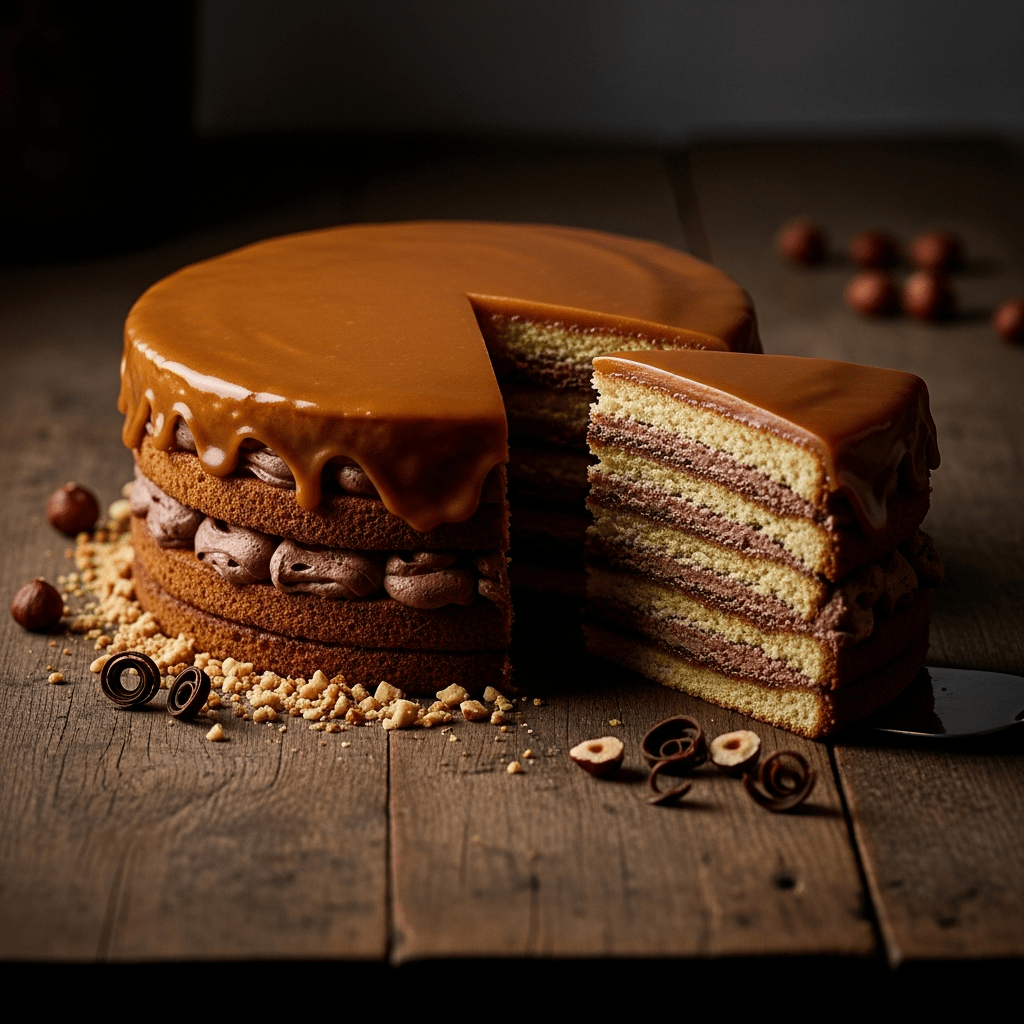
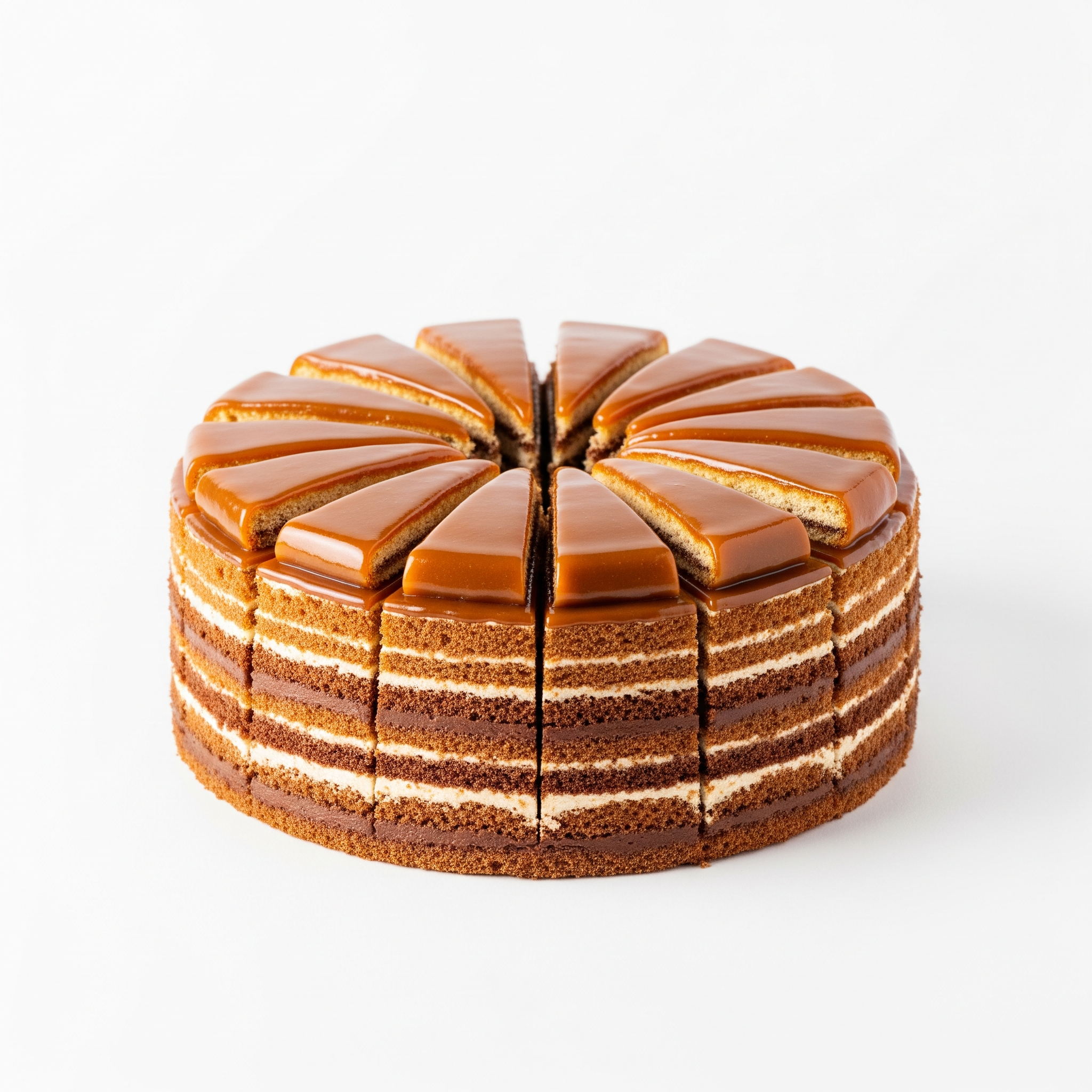
This cake is traditionally round but can also be rectangular, composed of five to seven thin, tender sponge layers. Each layer is generously coated with smooth chocolate buttercream, and the top is finished with a hard, glossy caramel glaze sliced into decorative wedges. The sides are often adorned with ground nuts such as hazelnuts, walnuts, or almonds, adding texture and visual appeal.
Dobos Torte is primarily served as a refined dessert at formal occasions including weddings, holidays, and birthdays. Its sturdy construction makes it suitable for transport and display in high-end patisseries. The cake invites slicing along the caramel wedges on top, offering a balanced bite of sponge, buttercream, and caramel crunch.
Bring this kind into your world � illustrated posters, mugs, and shirts.
Archival print, museum-grade paper
Buy Poster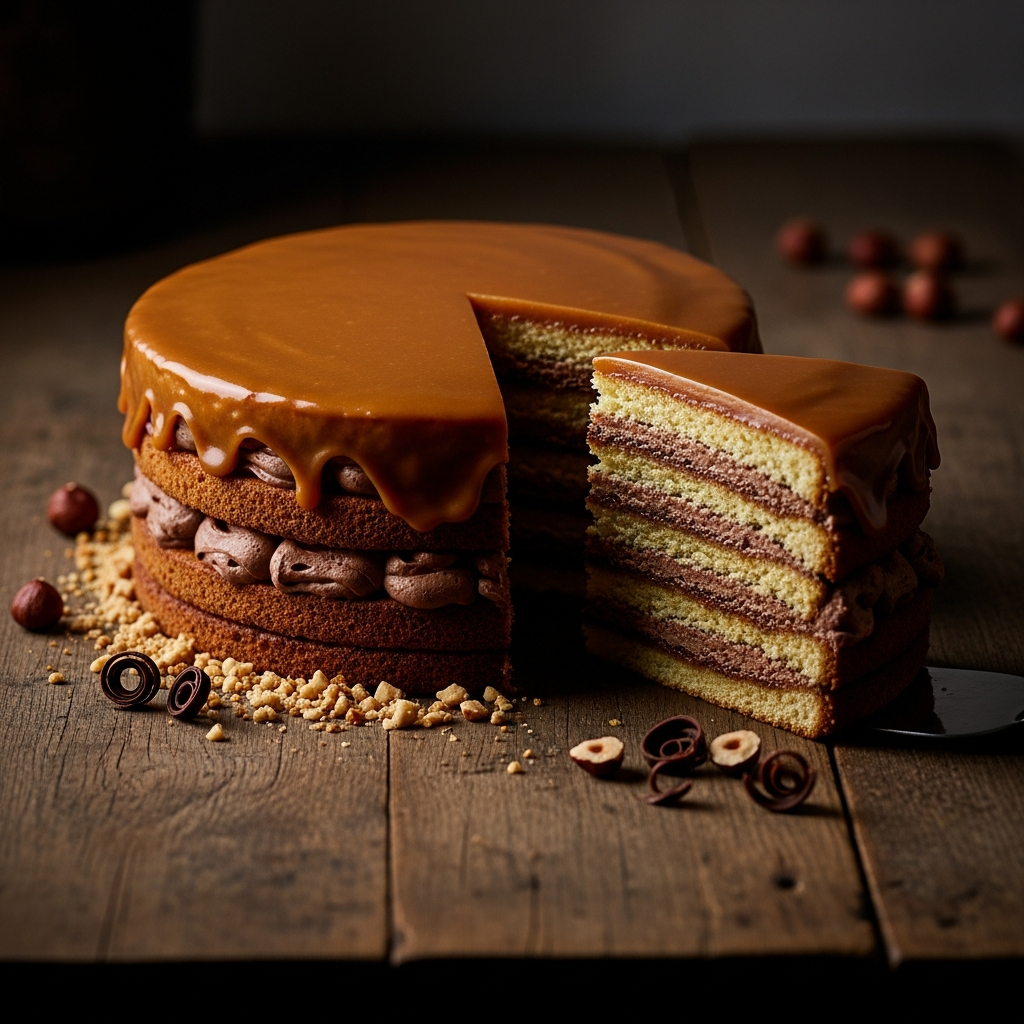
Stoneware mug, dishwasher safe
Buy Mug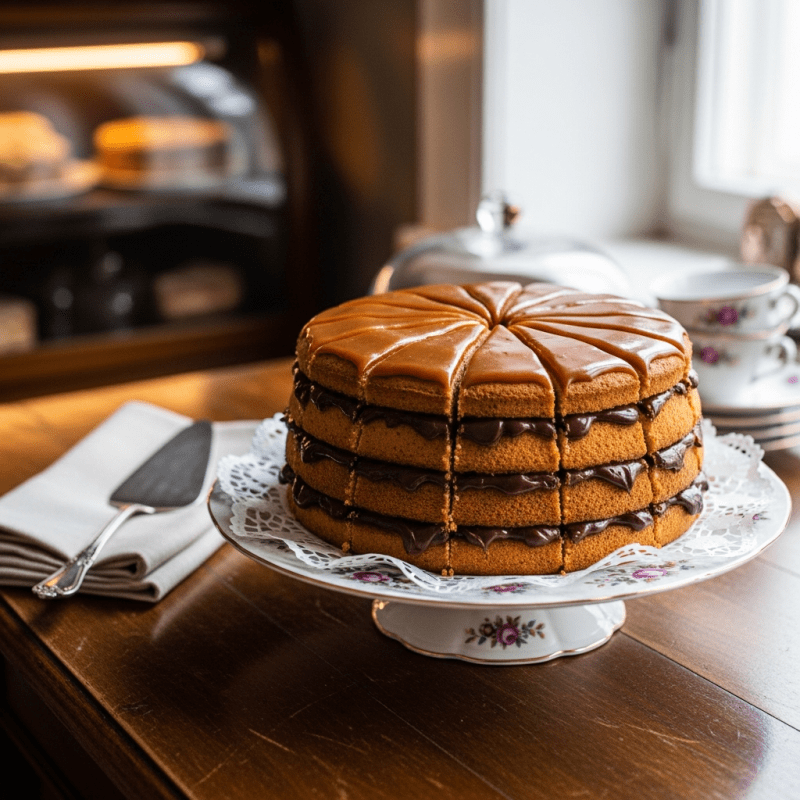
Soft cotton tee, unisex sizes
Buy ShirtAs a hallmark of Hungarian confectionery artistry, Dobos Torte holds cultural prestige throughout Central Europe. It represents innovation in cake preservation and presentation from the late 19th century and remains a symbol of elegance and craftsmanship in modern celebrations and culinary heritage.
Key ingredients defining Dobos Torte include eggs, flour, sugar, butter, high-quality chocolate, caramelized sugar for the top glaze, and optionally nuts such as hazelnuts, walnuts, or almonds for coating the sides.
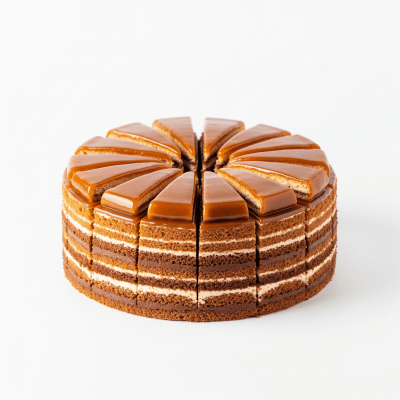
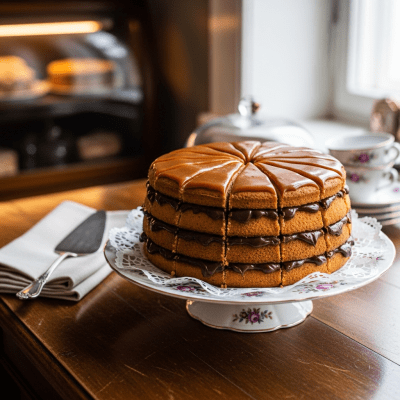
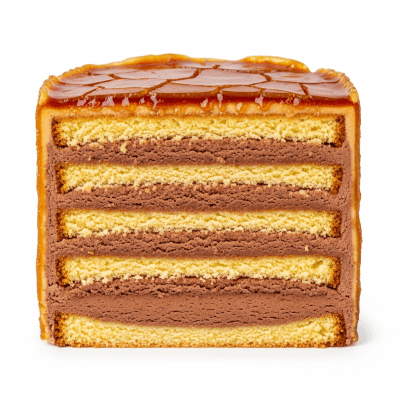
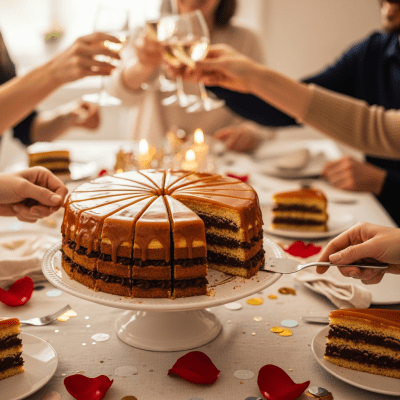
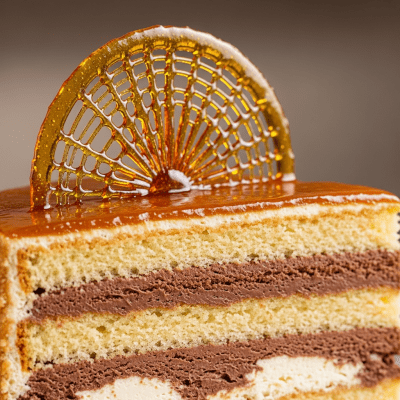
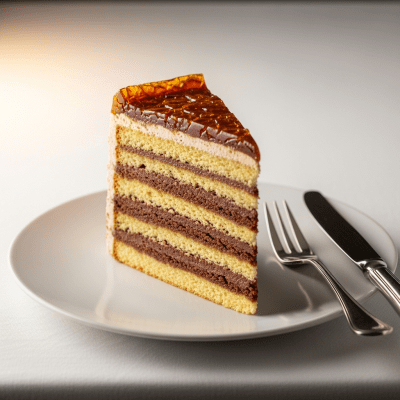
The cake is prepared by baking multiple thin génoise sponge layers individually. These layers are then assembled with rich chocolate buttercream between each. The finishing touch is a hard caramel glaze poured and set atop the cake, which is sliced into wedges before serving. The sides are often coated with ground nuts to complete the presentation.
Dobos Torte offers a harmonious combination of textures: thin, tender sponge layers provide lightness; the chocolate buttercream adds smooth, rich creaminess; and the caramel top delivers a satisfying hard, crunchy contrast. Flavor-wise, it balances sweet caramel notes with deep chocolate richness and subtle nuttiness when coated.
⚠️ Dietary considerations: Dobos Torte contains gluten, dairy, eggs, and often nuts, making it unsuitable for those with allergies to these ingredients or for vegan and gluten-free diets. It does not typically contain soy.
While the original Dobos Torte hails from Hungary, regional variants across Central Europe may feature different nuts—such as hazelnuts, walnuts, or almonds—in the side coating and slight modifications to the buttercream recipe. These subtle changes reflect local tastes while preserving the cake’s classic structure.
Dobos Torte is elegantly decorated with its signature hard caramel glaze on top, carefully sliced into wedges that guide serving portions. The sides are commonly coated with finely ground nuts, adding texture and visual warmth. It is presented as a round or rectangular multi-layered cake, often showcased in patisseries and formal dessert settings.