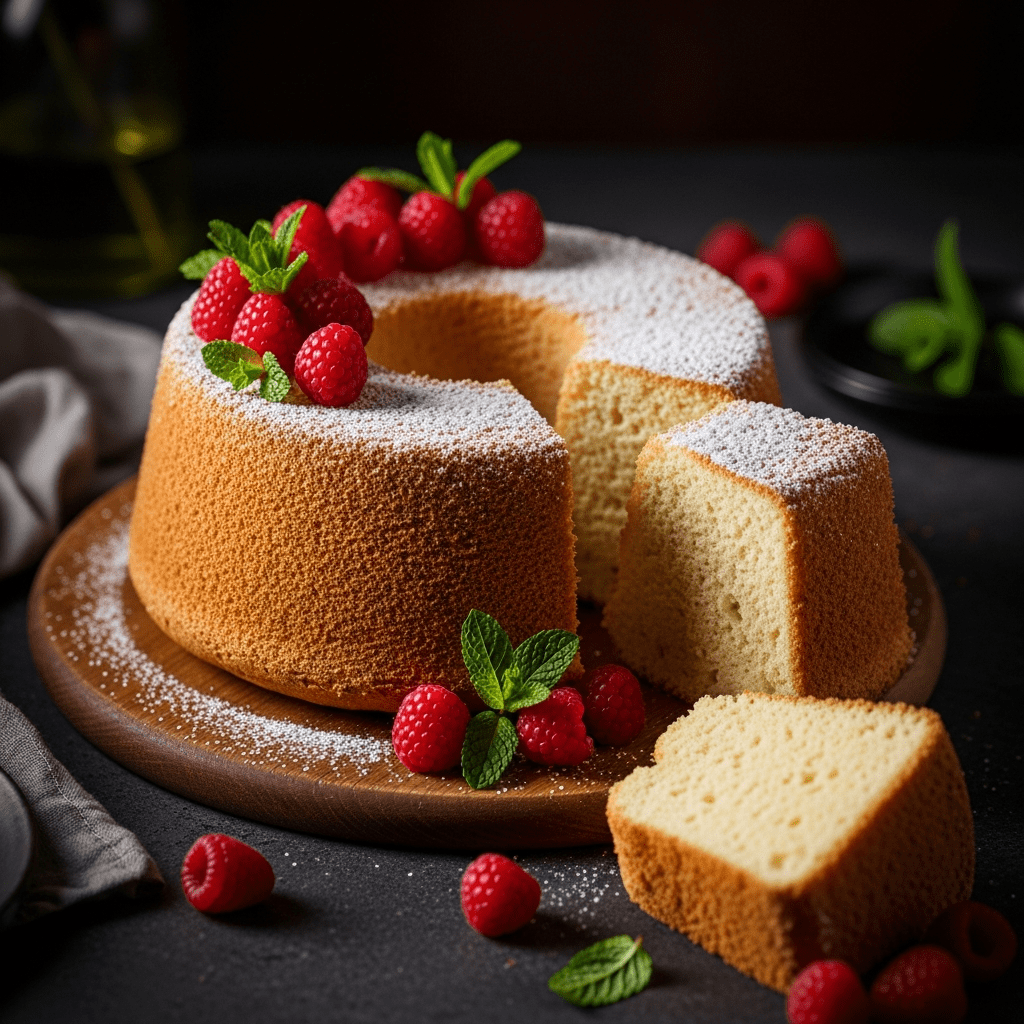
Chiffon Cake
Chiffon cake is a light, airy cake that uniquely blends the characteristics of sponge and butter cakes, using vegetable oil and whipped egg whites to create a tender, moist crumb.
Chiffon cake is a light, airy cake that uniquely blends the characteristics of sponge and butter cakes, using vegetable oil and whipped egg whites to create a tender, moist crumb.
Originating in the United States in the late 1940s, chiffon cake was invented by Harry Baker, a Los Angeles caterer who kept the recipe secret for over twenty years before selling it to General Mills in 1947. Its widespread popularity grew through Betty Crocker cookbooks and marketing, marking a significant innovation in American baking by bridging traditional sponge and butter cake techniques.
Chiffon cake belongs to the sponge cake family, distinguished by its hybrid preparation that incorporates both oil and whipped egg whites. This positions it between classic sponge cakes, which rely solely on egg aeration, and butter cakes, which use solid fats for richness.
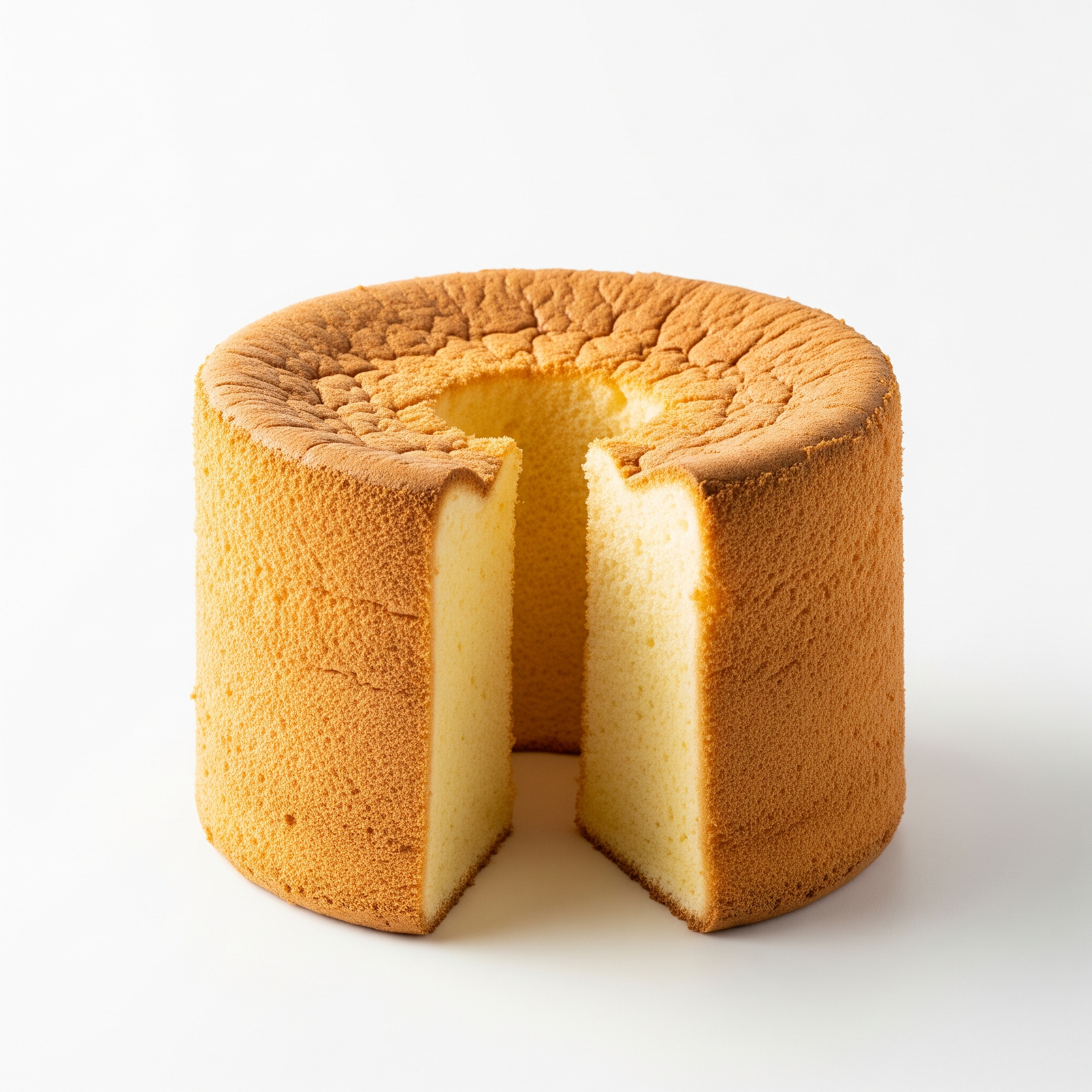
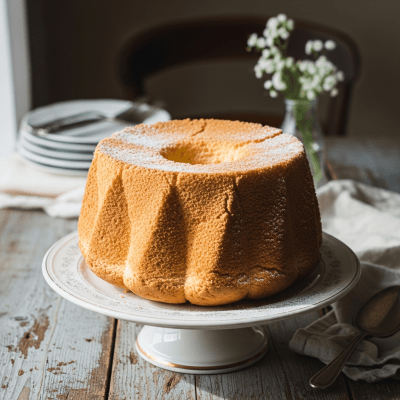
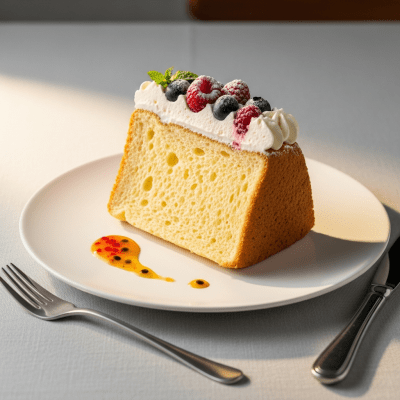
Typically baked in a tube pan, chiffon cake takes on a tall, ring-shaped form with a golden-brown exterior and pale, airy interior. It is usually a single-layer cake with a light, springy texture and often appears unadorned or with minimal decoration.
Chiffon cake is enjoyed as a versatile dessert or tea cake, suitable for birthdays, celebrations, or everyday occasions. Its lightness and moist crumb make it a favored choice both at home and in commercial bakeries, where it can be flavored or lightly adorned to suit various tastes.
Bring this kind into your world � illustrated posters, mugs, and shirts.
Archival print, museum-grade paper
Buy Poster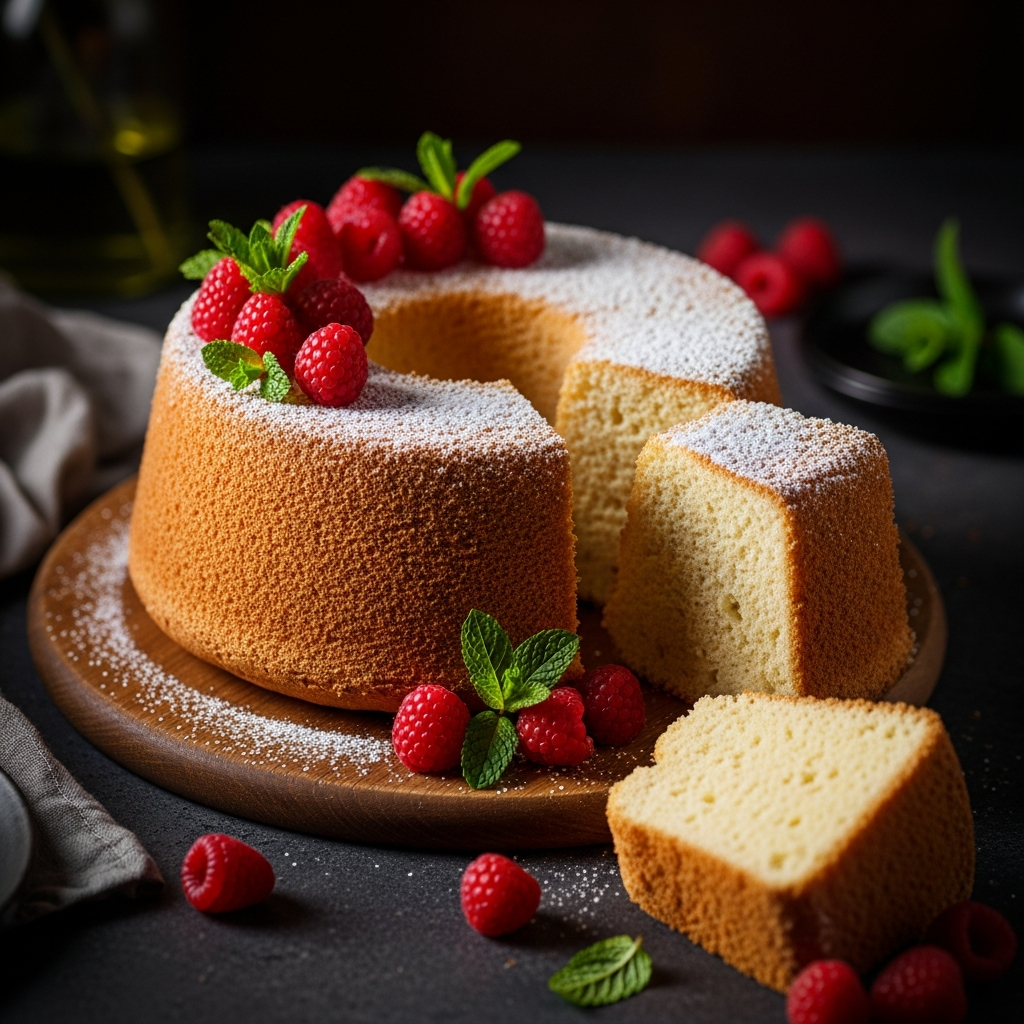
Stoneware mug, dishwasher safe
Buy Mug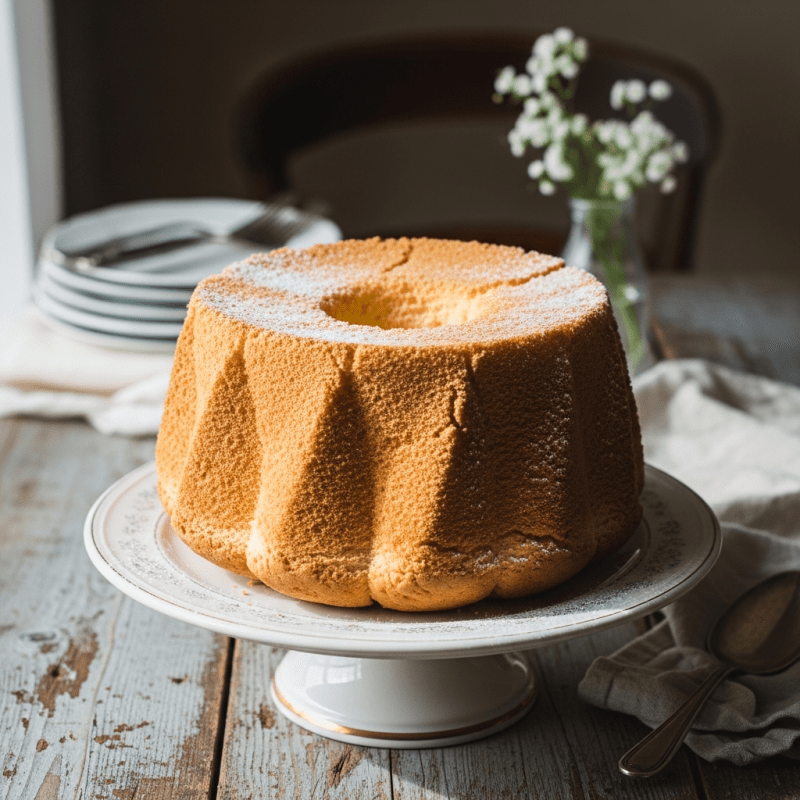
Soft cotton tee, unisex sizes
Buy ShirtWidely embraced in the United States and parts of Asia, chiffon cake has become a staple in bakeries and supermarkets. Its adaptability to diverse flavorings, such as pandan and matcha, reflects its cultural integration and ongoing popularity across different culinary traditions.
Key ingredients defining chiffon cake include flour, sugar, baking powder, vegetable oil, egg yolks, egg whites, and water or other liquids such as citrus juice.
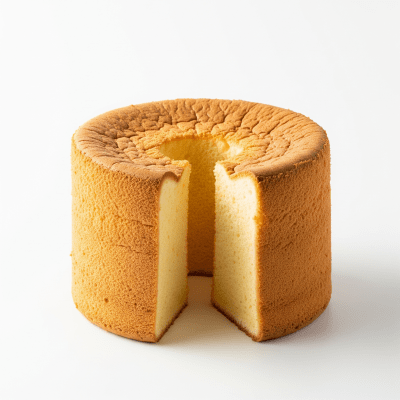

Preparation involves separating eggs, whipping the egg whites to stiff peaks, gently folding them into the batter made with oil and egg yolks, baking the mixture in a tube pan, and cooling the cake upside down to maintain volume.
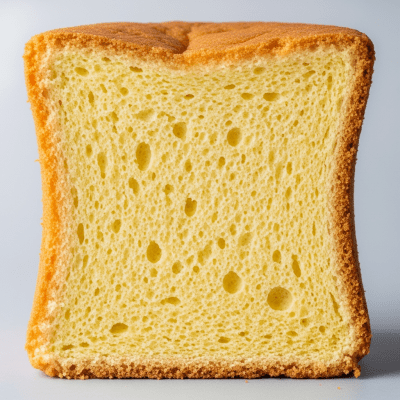
Chiffon cake is known for its light, moist, and springy texture with a delicate crumb. Flavor profiles often include vanilla, citrus zest, chocolate, or other extracts, lending a subtle yet satisfying taste.
Contains gluten: Yes, from wheat flour.
Contains eggs: Yes, both yolks and whites.
Contains dairy: Typically dairy-free unless frosting or filling includes dairy.
Contains soy: Generally no.
Dietary variants: While traditional recipes contain eggs and gluten, adaptations for gluten-free or vegan diets are uncommon but possible.
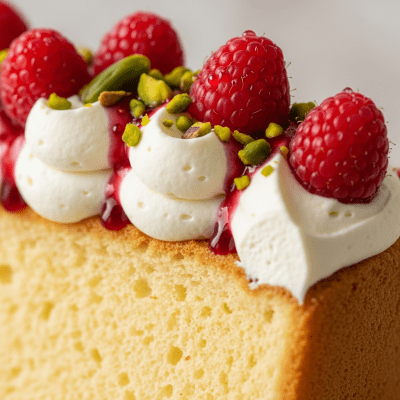
Chiffon cake is often presented simply, either unadorned or with a light glaze, whipped cream, or fresh fruit. Its airy texture and elegant shape lend themselves to minimalist decoration that highlights the cake’s delicate crumb and height.