Banana Bread
Banana Bread is a sweet, moist quick bread made primarily from mashed ripe bananas, typically baked in a rectangular loaf pan and classified as a cake due to its ingredients and preparation method.
Banana Bread is a sweet, moist quick bread made primarily from mashed ripe bananas, typically baked in a rectangular loaf pan and classified as a cake due to its ingredients and preparation method.
Banana Bread originated in the United States during the 1930s, emerging alongside the widespread use of baking powder and baking soda. Its rise in popularity is linked to the Great Depression, when resourceful bakers sought to use overripe bananas rather than discard them. The recipe evolved collectively without a single inventor, rooted in the tradition of quick breads that rely on chemical leaveners instead of yeast.
Though named "bread," Banana Bread is classified within the quick bread family, a subgroup of cakes characterized by the use of chemical leavening agents instead of yeast. Culinary authorities recognize it as a cake because of its cake-like ingredients and baking method, placing it at the intersection of cake and bread in both home and commercial baking.
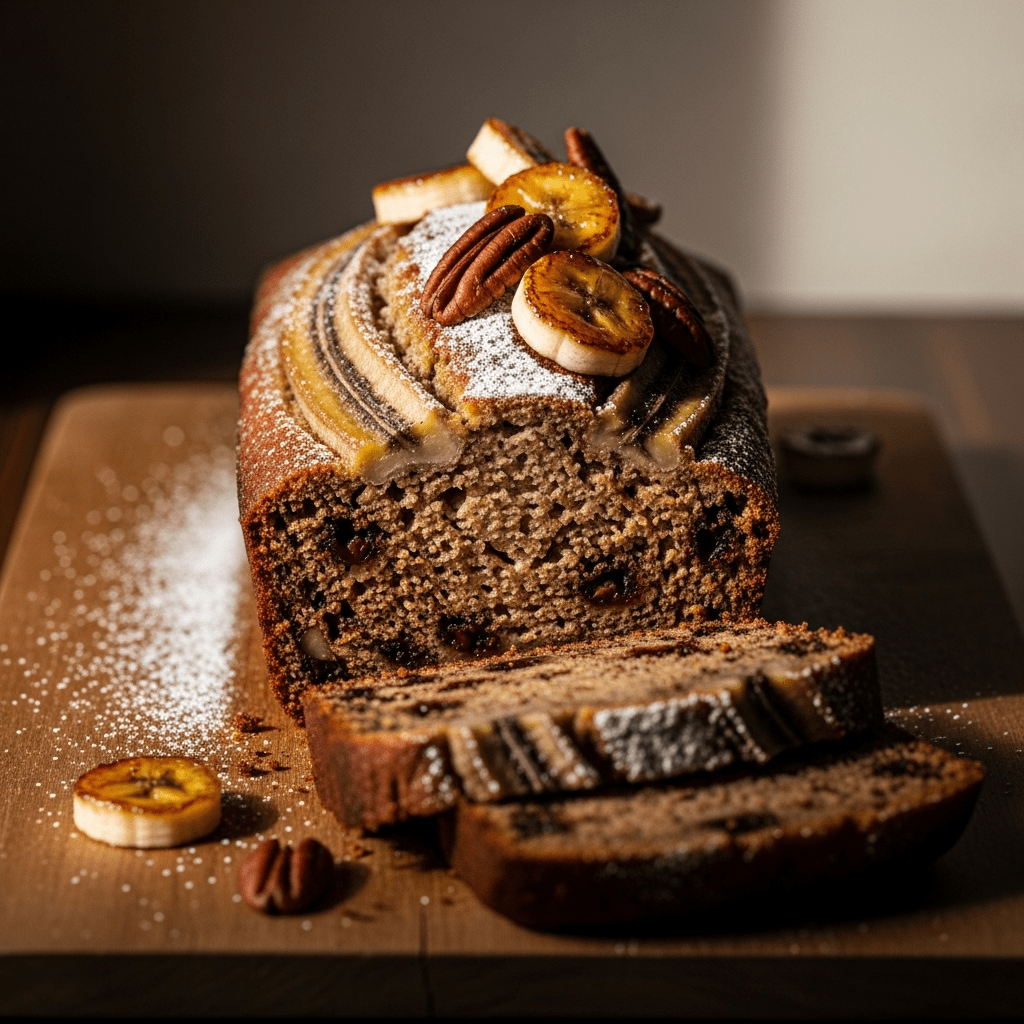
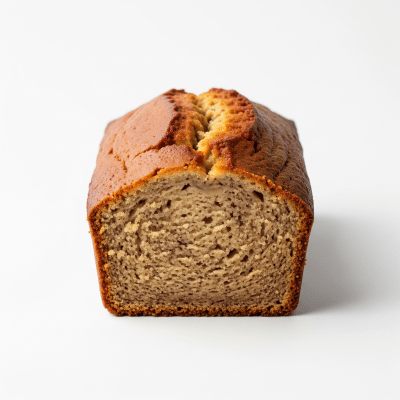
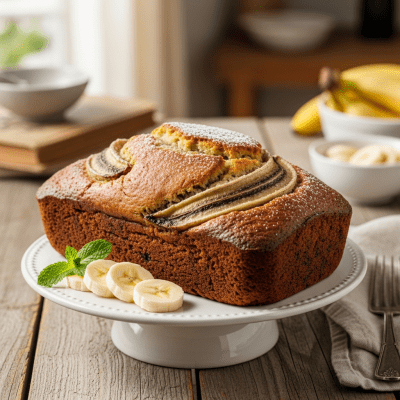
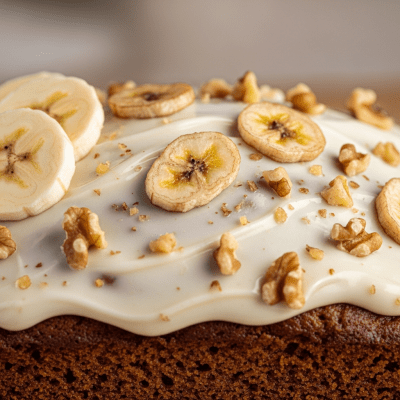
Banana Bread is typically baked in a rectangular loaf pan, resulting in a single-layered, dense, and moist crumb with a golden-brown crust. It is usually undecorated but may include toppings such as chopped nuts or a light glaze, lending subtle texture and visual appeal.
Banana Bread serves as a versatile food enjoyed as breakfast, a snack, or dessert. It is commonly baked at home, sold in cafes, and offered commercially in bakeries and supermarkets across North America, Australia, and the UK. Its popularity stems from both its comforting flavor and its practical use of overripe bananas, embodying a spirit of resourcefulness.
Bring this kind into your world � illustrated posters, mugs, and shirts.

Archival print, museum-grade paper
Buy Poster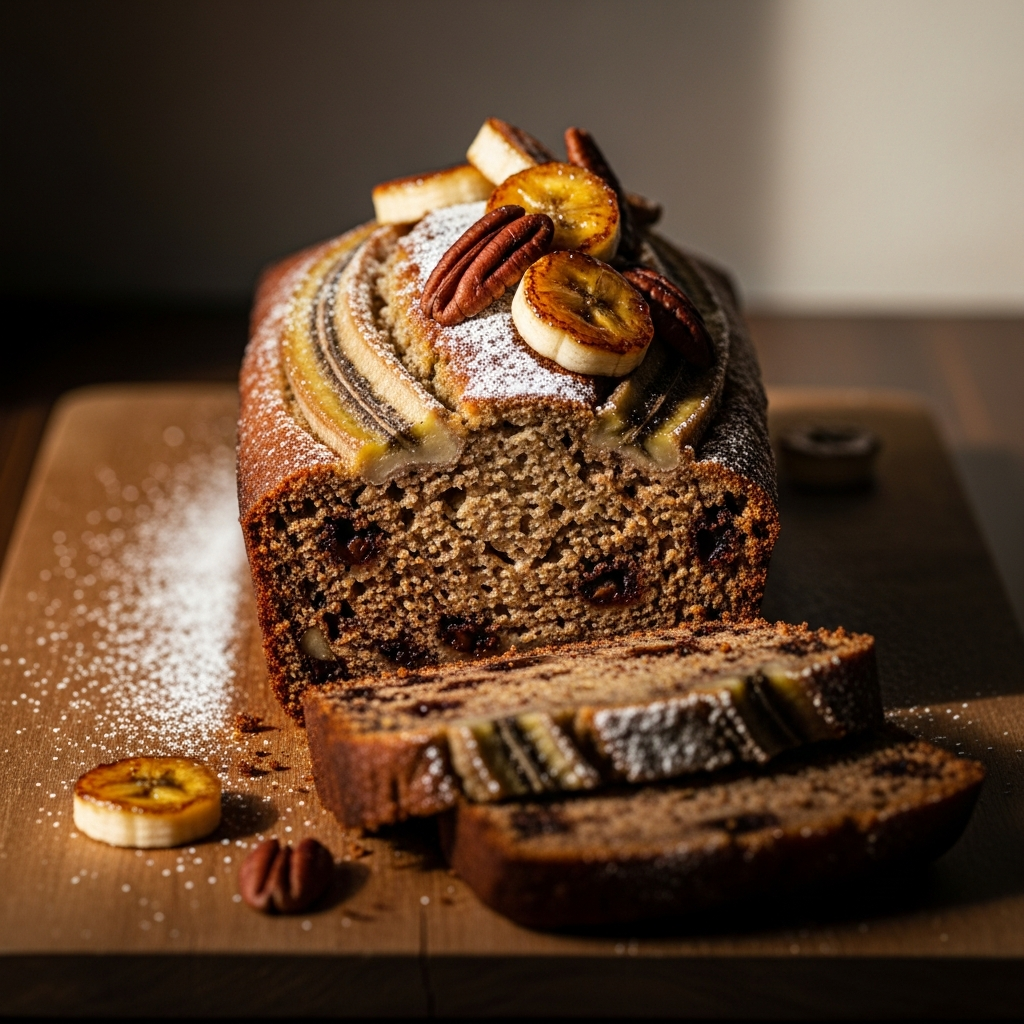
Stoneware mug, dishwasher safe
Buy Mug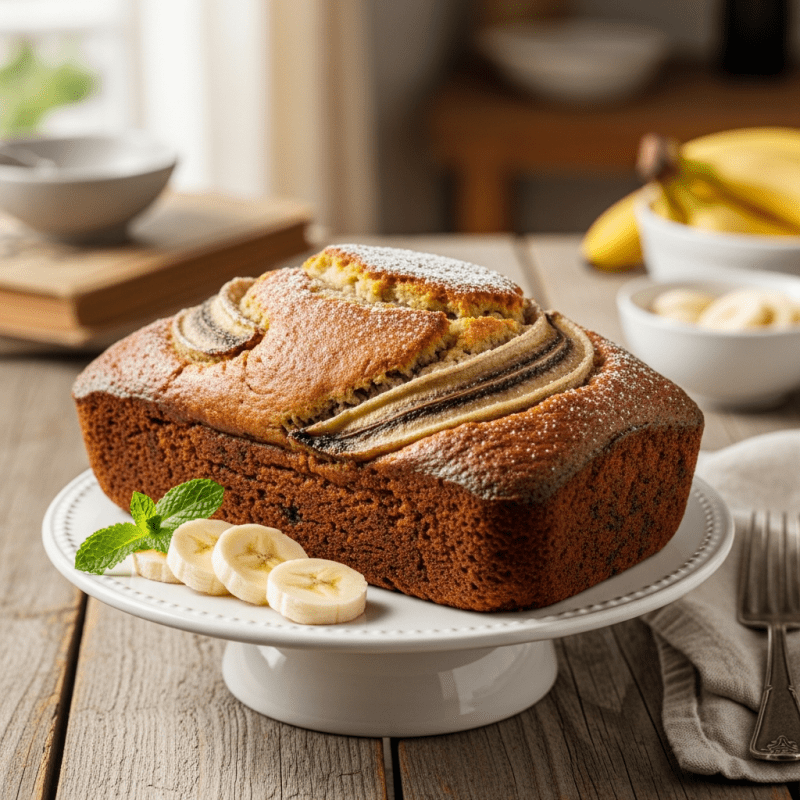
Soft cotton tee, unisex sizes
Buy ShirtBanana Bread is widely regarded as a symbol of comfort food and home baking ingenuity. Though not tied to specific holidays, it holds a cherished place in everyday culinary culture, often associated with warmth, thriftiness, and casual gatherings. Its presence in cafes and commercial markets underscores its broad appeal and cultural integration.
Key ingredients defining Banana Bread include mashed ripe bananas, wheat flour, sugar, eggs, butter or oil, baking powder or baking soda, and salt.

Banana Bread is prepared by mixing wet and dry ingredients separately before combining them. The batter is then poured into a rectangular loaf pan and baked at moderate temperatures, typically between 175–180°C (350°F), until cooked through.
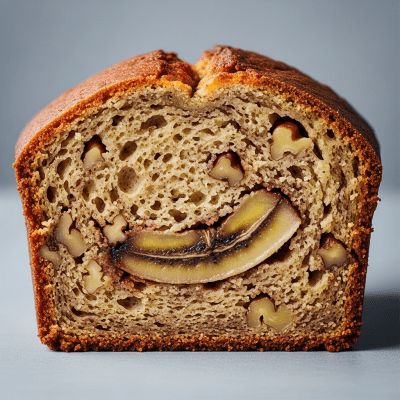
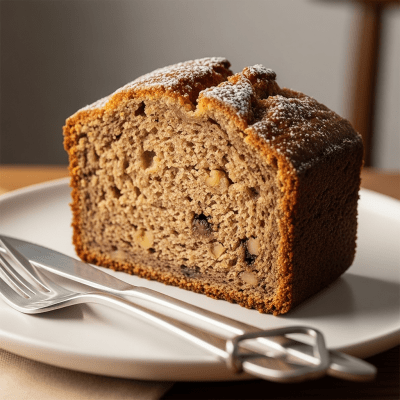
Banana Bread features a dense yet moist crumb with a golden-brown crust. Its flavor is dominated by ripe banana sweetness, often complemented by additions such as nuts, chocolate chips, cinnamon, and nutmeg for warmth and complexity.
Banana Bread typically contains gluten (from wheat flour), dairy (butter or milk), and eggs, making these common allergens. It generally does not contain soy. Popular dietary variants include gluten-free, vegan, and nut-free versions to accommodate various dietary restrictions.
In Australia and the UK, a related variant called Banana Cake is popular. This version tends to be lighter in texture and often frosted, distinguishing it from the denser, loaf-style Banana Bread common in North America.
Banana Bread is commonly presented simply, often sliced and served plain or with minimal decoration. Some recipes include toppings such as chopped nuts or a thin glaze to enhance texture and appearance, but it is rarely elaborately decorated.