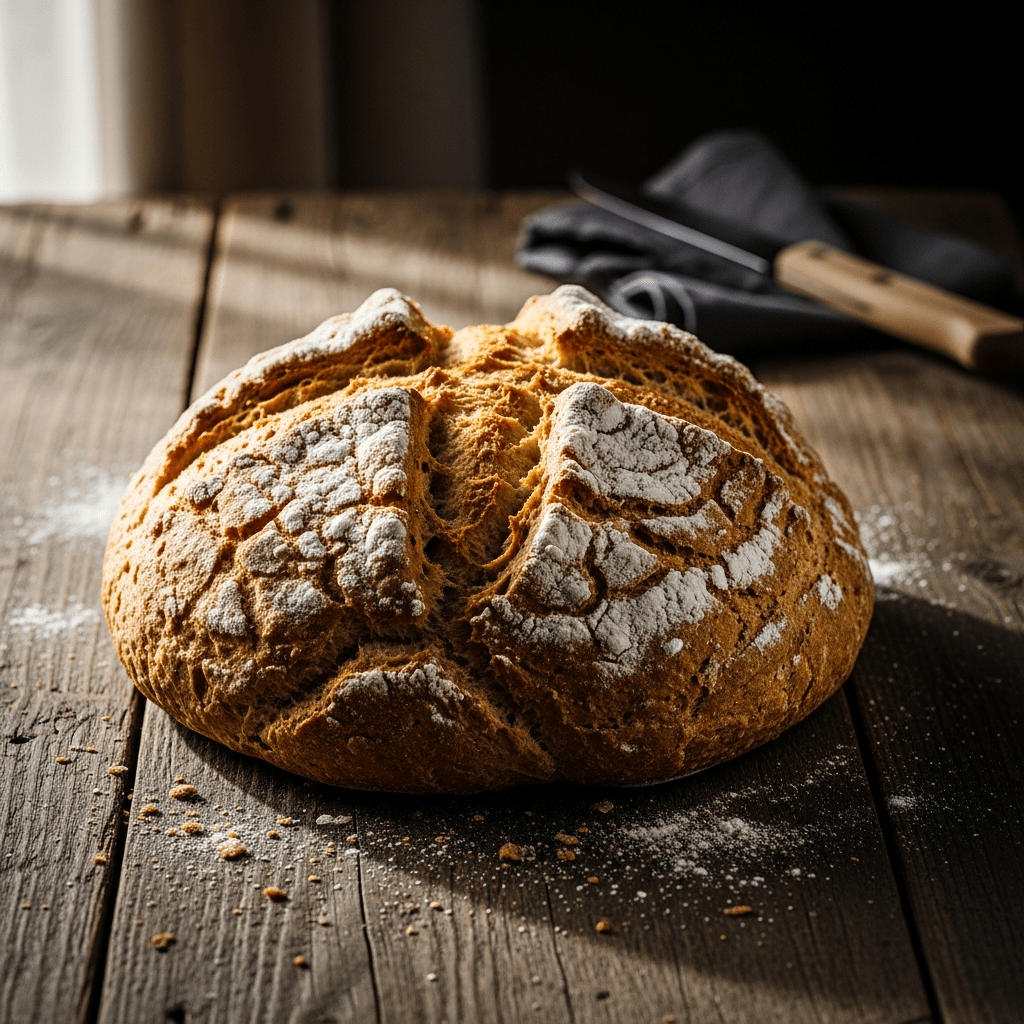
Soda Bread
Soda bread is a traditional quick bread that uses baking soda as its primary leavening agent instead of yeast or sourdough, prized for its rapid preparation and rustic texture.
Soda bread is a traditional quick bread that uses baking soda as its primary leavening agent instead of yeast or sourdough, prized for its rapid preparation and rustic texture.
Soda bread originated in Ireland in the early 19th century, emerging from rural households adapting wheat flour recipes to the newly available chemical leavening agent, baking soda. Its creation reflects practical innovation rather than formal breeding or institutional development.
Classified as a quick bread within the broader bread family, soda bread is distinguished by its chemical leavening method using baking soda, setting it apart from yeast-leavened or sourdough breads.
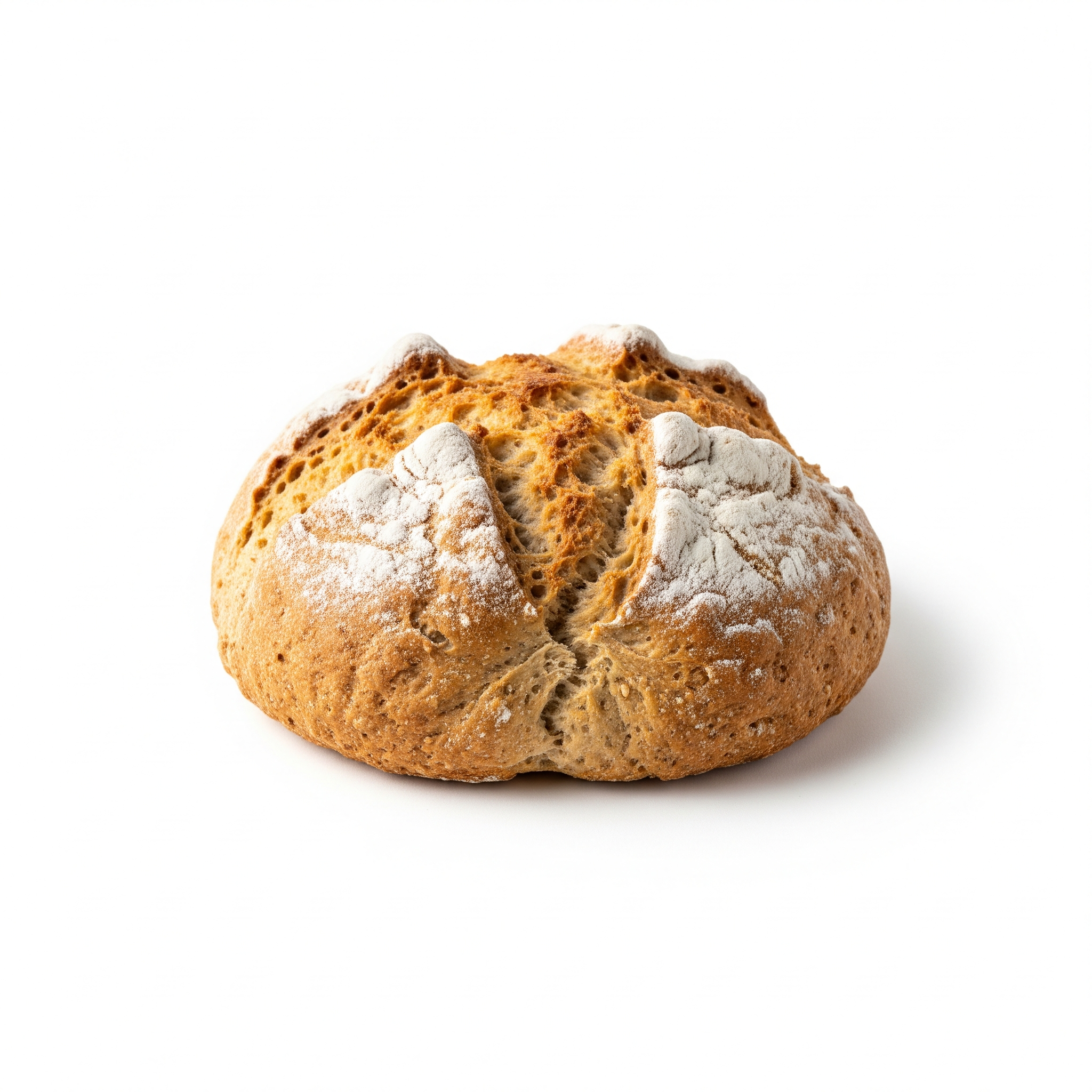
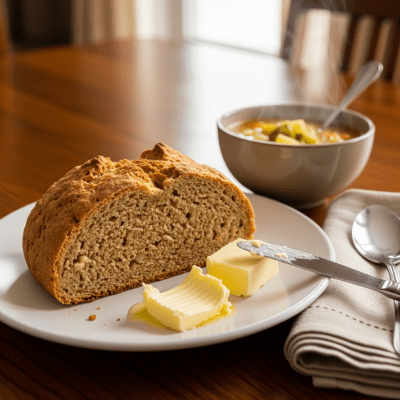
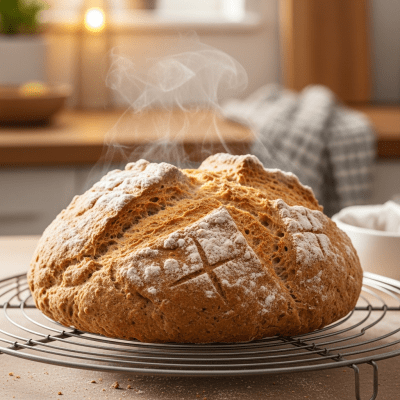
Soda bread typically takes the form of a round loaf with a rustic crust marked by a cross cut on top, traditionally made to aid baking and folklore. Its crumb is dense yet tender with a coarse texture, and its color ranges from pale when made with white flour to brown in wholemeal versions. Loaves commonly weigh between 500 grams and 1 kilogram.
Functioning as a staple side bread, soda bread is valued for its quick preparation and adaptability. It is commonly sliced and toasted, served alongside butter, soups, or stews. Due to its crumbly texture, it is less suited for sandwiches but remains a versatile accompaniment in meals.
Bring this kind into your world � illustrated posters, mugs, and shirts.
Archival print, museum-grade paper
Buy Poster
Stoneware mug, dishwasher safe
Buy Mug
Soft cotton tee, unisex sizes
Buy ShirtSoda bread holds a cherished place in Irish cuisine and culture, symbolizing resourcefulness and tradition. The characteristic cross cut on top is steeped in folklore, believed to "let the fairies out." It also appears in Scottish and Irish diaspora communities, reflecting cultural continuity and adaptation.
Primary ingredients include wheat flour, baking soda as the leavening agent, and buttermilk or soured milk, which reacts with the baking soda to produce carbon dioxide for rising.


Soda bread relies on chemical leavening through baking soda rather than microbial fermentation. The reaction between baking soda and acidic components in buttermilk or soured milk produces carbon dioxide instantly, eliminating the need for fermentation time or starter cultures.
The nutritional profile varies with flour type; wholemeal soda bread offers higher dietary fiber compared to white flour versions. It provides a wholesome source of carbohydrates with modest fiber content, supporting digestive health.
Soda bread has a short shelf life and is best consumed fresh, as it dries out quickly without preservatives. Typical storage involves keeping it at room temperature for a day or two, after which it may stale or become dry.
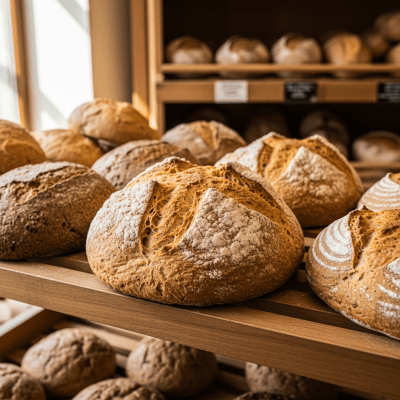
Commonly served as a staple side bread in Irish cuisine, soda bread accompanies butter, hearty soups, and stews. It is ideal for slicing and toasting, enhancing its texture and flavor. Variants with added raisins or seeds provide additional taste dimensions.
Regional variations include the Ulster and southern United States versions that often use buttermilk or soured milk. In Scotland, related breads such as soda scones and soda farls are cooked on a griddle rather than baked, reflecting local culinary traditions.
Soda bread is widely produced commercially by bakeries and home bakers, especially in Ireland, Scotland, and Irish diaspora communities in the United States. Its simplicity and quick preparation make it a popular choice in both traditional and modern markets.