House Sparrow
The House Sparrow (Passer domesticus) is a small, adaptable bird found across nearly every continent, instantly recognizable for its close association with human settlements and its lively, social nature.
The House Sparrow (Passer domesticus) is a small, adaptable bird found across nearly every continent, instantly recognizable for its close association with human settlements and its lively, social nature.
Native to Eurasia—spanning Europe, the Middle East, and parts of Asia—the House Sparrow was first described by Carl Linnaeus in 1758. Its global spread is a direct result of human activity, especially through shipping and colonial expansion, which introduced the species to North America, Australia, Africa, and South America. Today, its presence in cities, towns, and farmlands worldwide is a testament to its remarkable ability to thrive alongside people.
The House Sparrow belongs to the order Passeriformes, family Passeridae, and genus Passer. As a member of the class Aves, it shares evolutionary roots with all modern birds, and is specifically classified among the true sparrows—a group distinguished by their seed-eating habits and stout bills. Its scientific name is Passer domesticus, and its taxonomy reflects both its lineage and its adaptation to living in close proximity to humans.
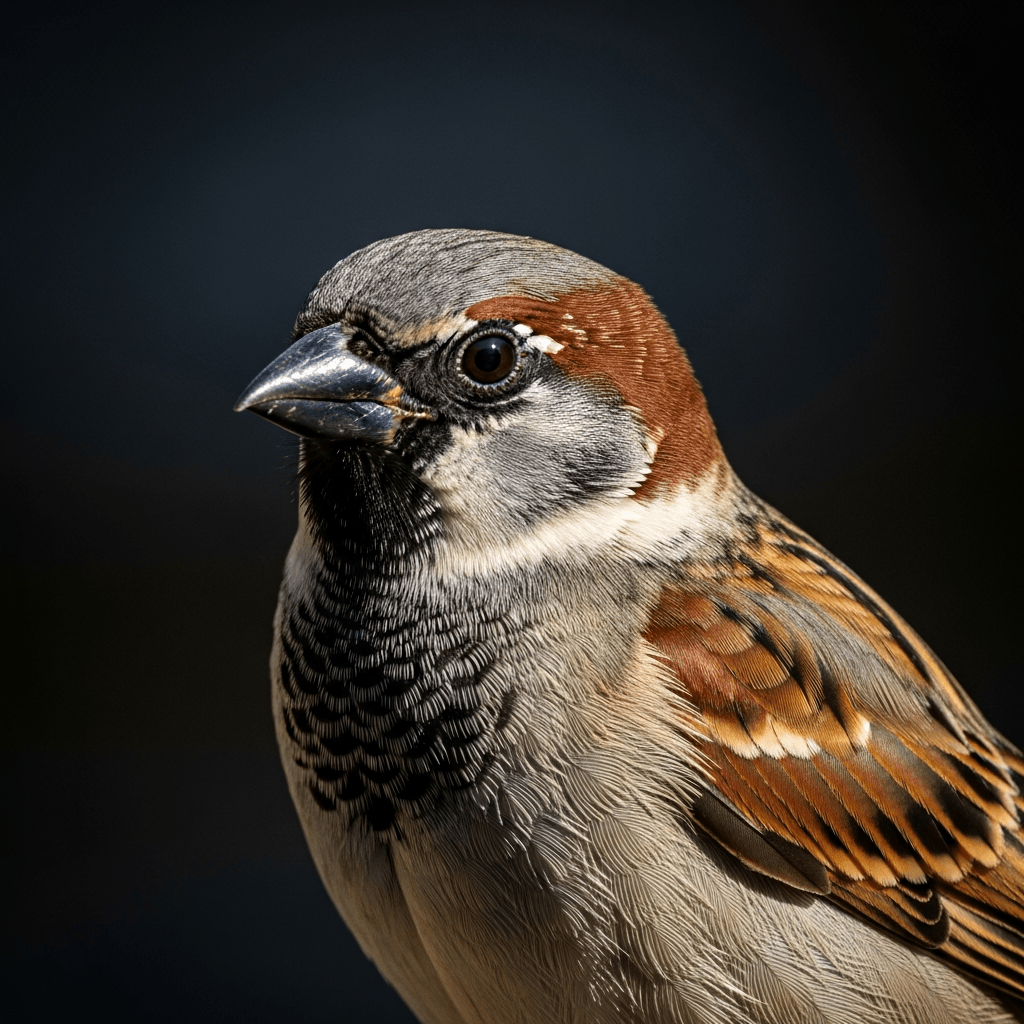
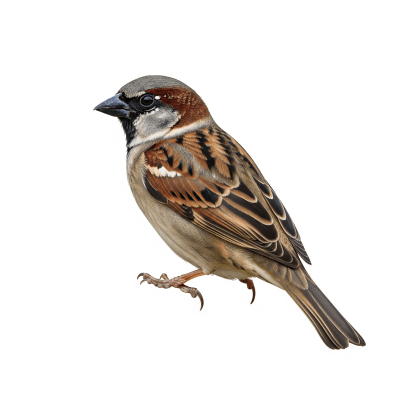
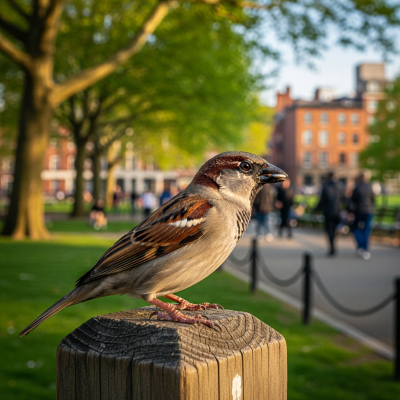
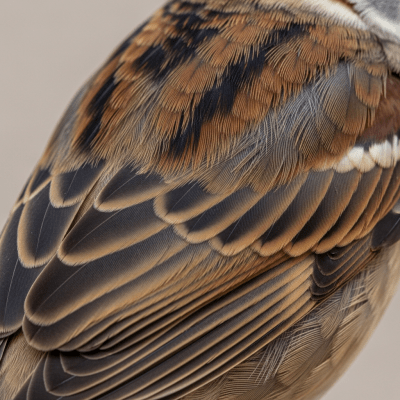
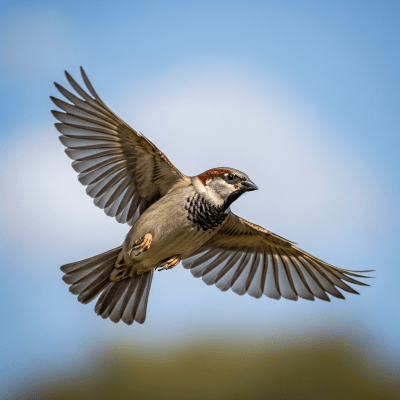
Compact and lively, the House Sparrow measures about 14–18 cm in length and weighs 24–39 grams. Males are easily identified by their gray crown, chestnut nape, bold black bib, and white cheeks, while females and juveniles are more subdued, sporting brown, streaked plumage. The species exhibits clear sexual dimorphism, with males displaying more vivid markings. Its small size and agile movements make it a familiar sight darting through gardens, parks, and city streets.
House Sparrows are highly social, often forming noisy flocks outside the breeding season. They nest in cavities, crevices, and especially in man-made structures, showing a strong preference for urban and suburban environments. Their rapid reproductive rate allows them to raise multiple broods per year. As omnivores, they feed on seeds, grains, insects, and food scraps, adapting their diet to local resources. Their presence helps control insect populations, but they can also become agricultural pests by consuming crops.
Bring this kind into your world � illustrated posters, mugs, and shirts.

Archival print, museum-grade paper
Buy Poster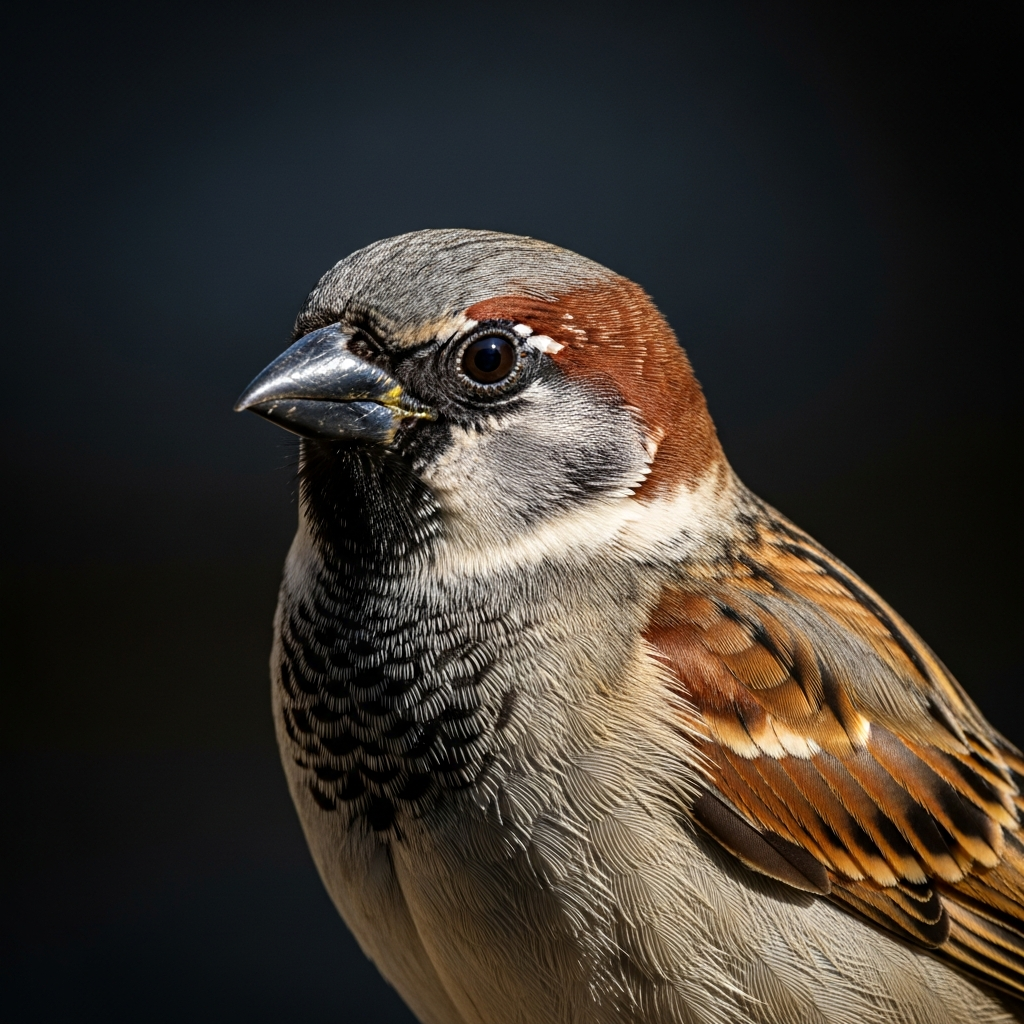
Stoneware mug, dishwasher safe
Buy Mug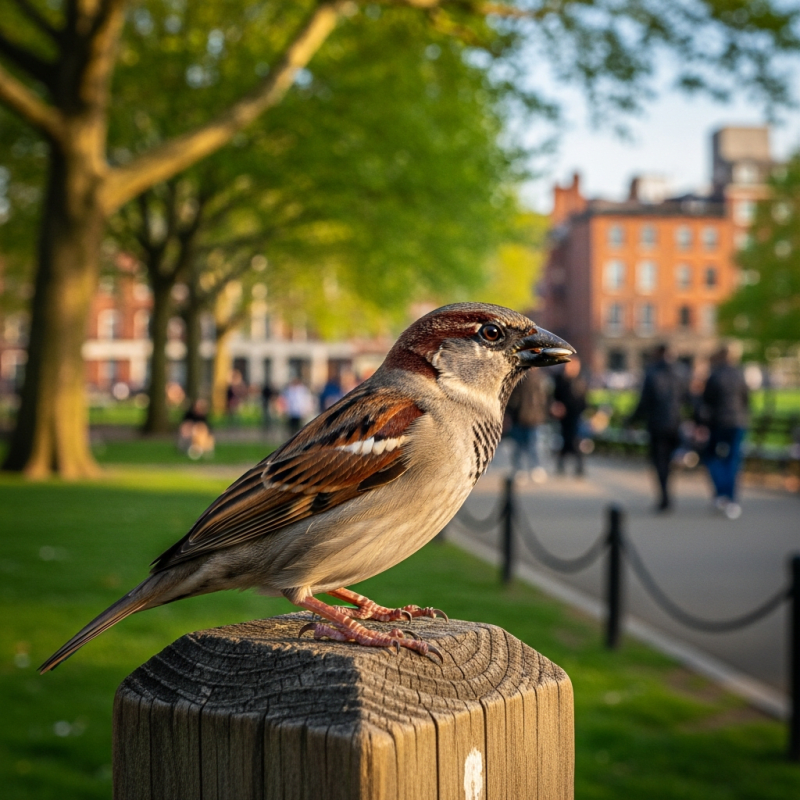
Soft cotton tee, unisex sizes
Buy ShirtThe House Sparrow has long been woven into the fabric of human culture. Its ubiquity in cities and villages has made it a symbol of everyday life, resilience, and adaptability. In literature, art, and folklore, sparrows often represent simplicity and companionship. Regional names and stories reflect its close relationship with people, and its cheerful chirping is a familiar soundtrack in urban landscapes across the globe.
House Sparrows are closely tied to human settlements and are found in urban, suburban, and rural areas worldwide. Originally native to Eurasia, they now inhabit cities, towns, and farmlands across North America, Australia, Africa, and South America, thanks to introductions by humans. Their nests are commonly built in buildings, crevices, and other structures, making them one of the most widely distributed birds on the planet.
Omnivorous by nature, House Sparrows primarily feed on seeds and grains but readily consume insects and food scraps. Their flexible diet allows them to thrive in diverse environments, from city streets to rural fields. They forage on the ground and in low vegetation, often in flocks, and are quick to exploit new food sources provided by human activity.
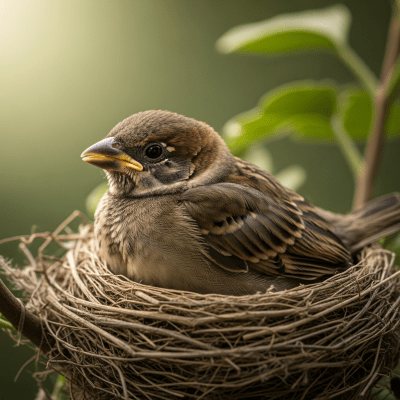
House Sparrows are prolific breeders, often raising multiple broods each year. They nest in cavities, crevices, and especially in man-made structures such as eaves and vents. Both parents share in feeding the young. While specific clutch sizes and breeding seasons vary by region, their rapid reproductive rate ensures stable populations where conditions are favorable.
Globally, the House Sparrow is not considered threatened and remains abundant. However, populations have declined in some areas due to habitat loss, pollution, and changes in urban environments. Their resilience to climate and urban pressures has helped them persist, but ongoing monitoring is important to address local declines.
House Sparrows play a dual role in human economies and ecosystems. In agriculture, they are sometimes viewed as pests for consuming crops, but they also provide ecological benefits by controlling insect populations. Their adaptability and omnivorous diet make them integral to urban and rural food webs, influencing both pest management and biodiversity.
Unlike chickens or pigeons, House Sparrows have not been domesticated for food or companionship. However, their close association with humans has led to the emergence of regional subspecies and slight morphological differences noted in local checklists. Their global spread is a result of human-mediated introductions rather than selective breeding.